Last updated November 23, 2026
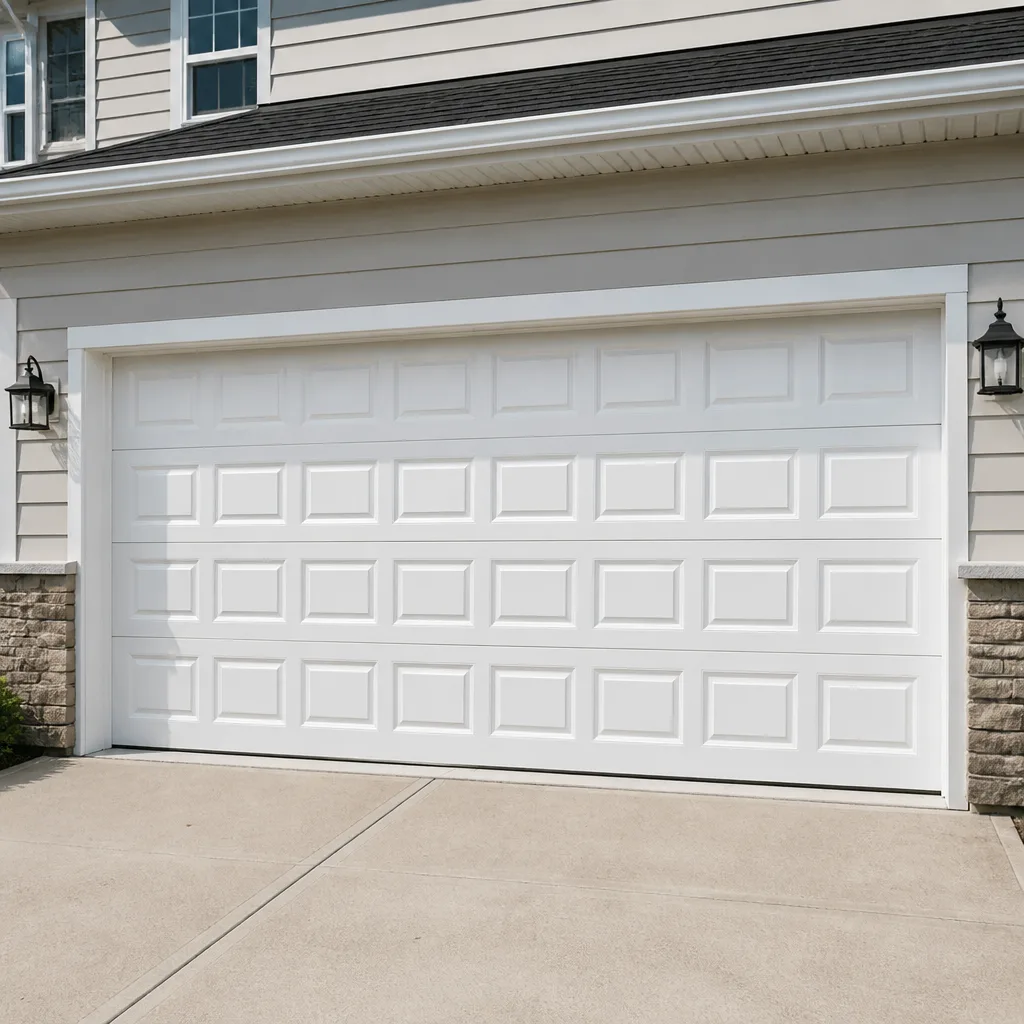 Raised-panel steel
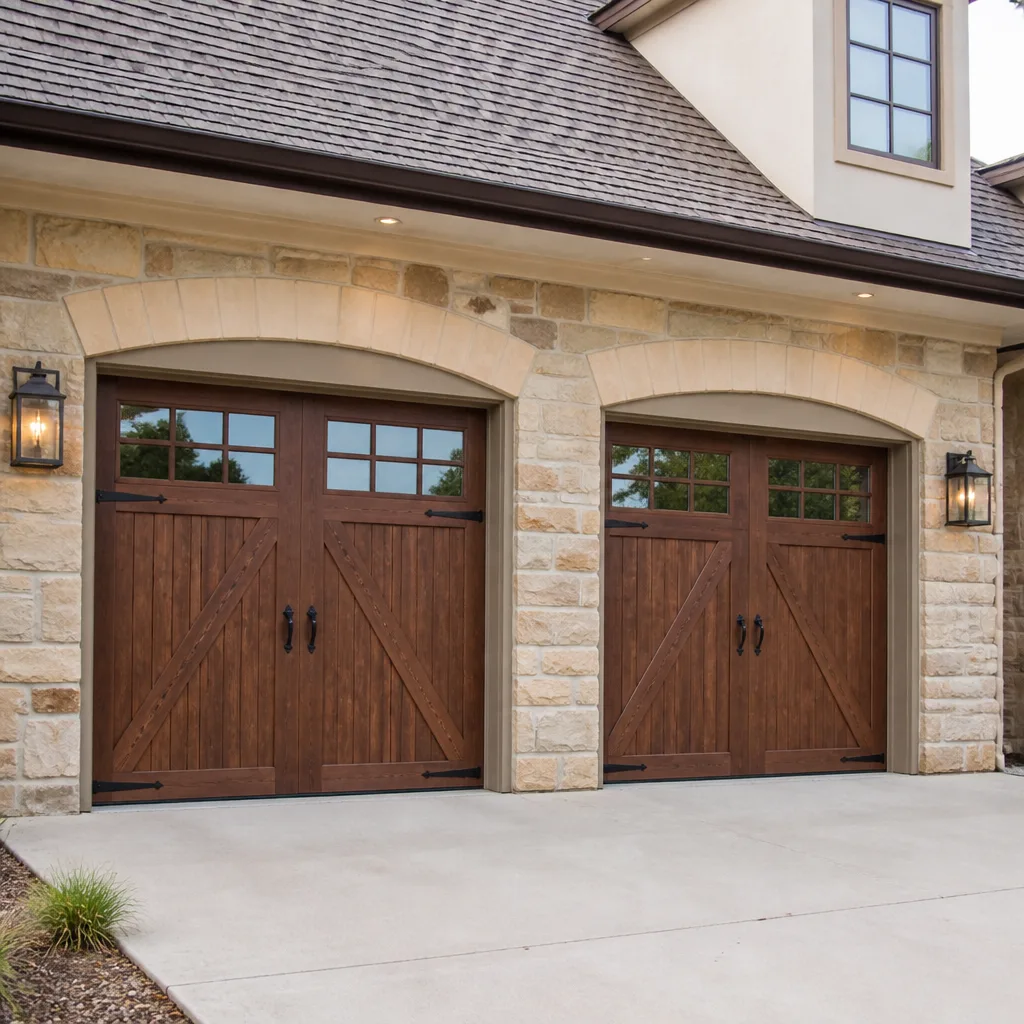 Carriage house
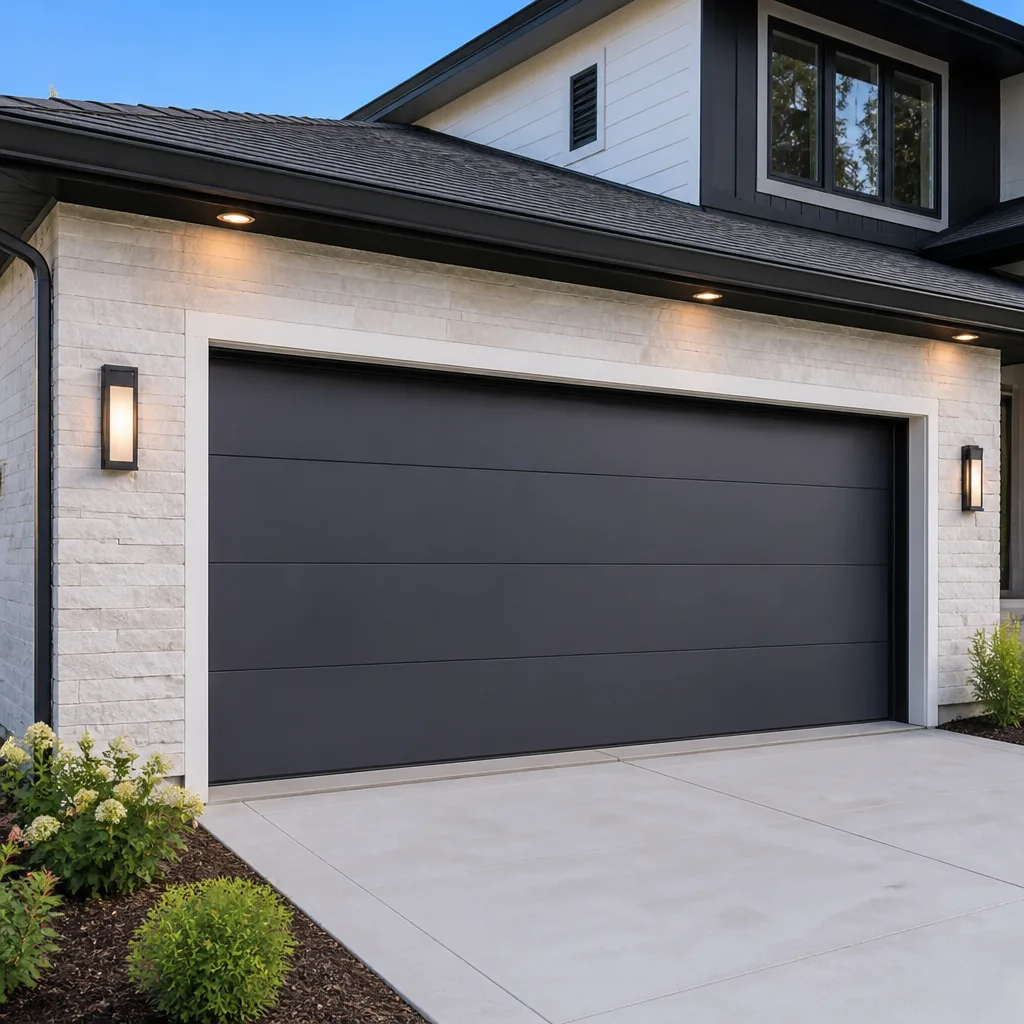 Modern flush
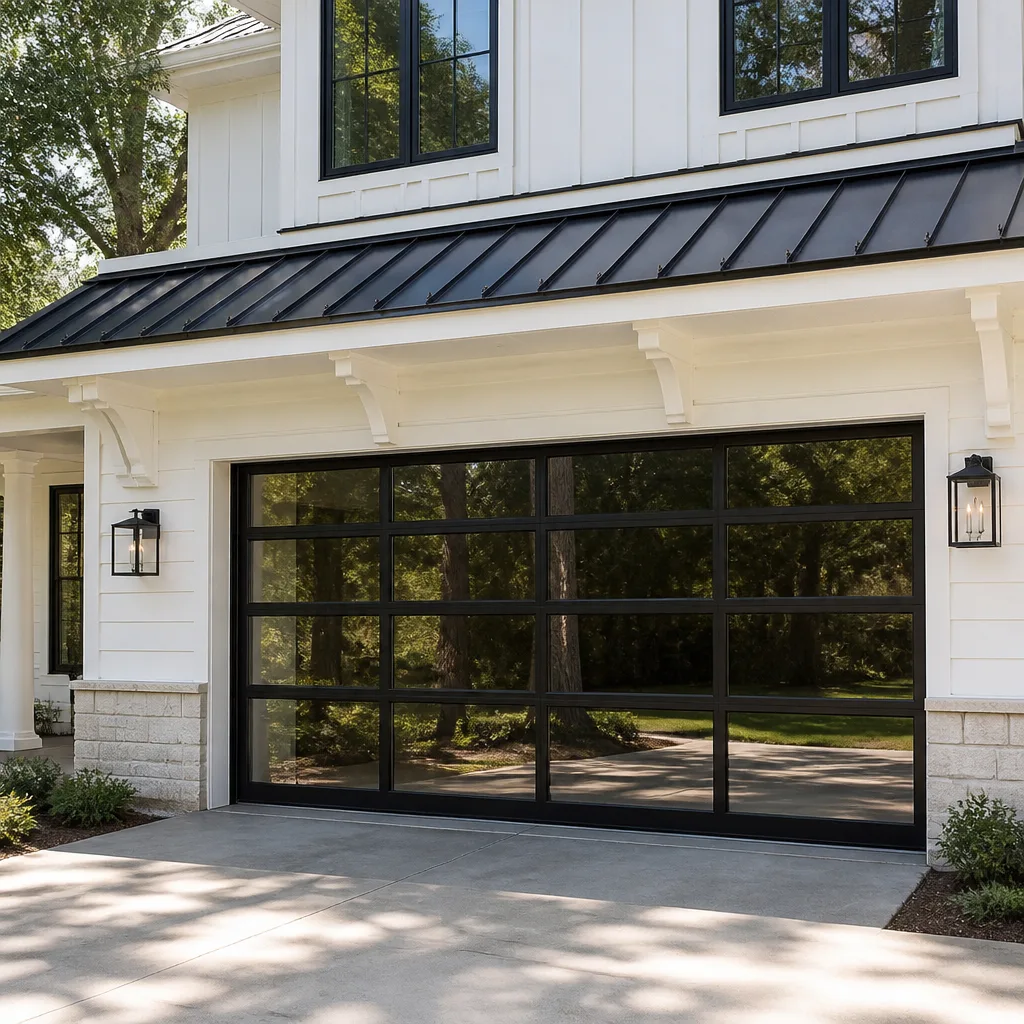 Full-view glass
 LiftMaster openers
 Chamberlain openers
Full 25-point door and opener safety check with every visit - springs, cables, rollers, tracks, and your LiftMaster or Chamberlain opener included
You get a price before we start. It does not change when the pro arrives.
Get your free estimateGarage Door Emergency Preparedness Guide for Merritt Island Homes
Most garage door emergency guides make one big mistake: they treat every failure the same way. On Merritt Island, that’s a problem. A snapped torsion spring and a storm-damaged door are two completely different emergencies, and they call for two completely different responses. One is a mechanical failure you can often secure overnight. The other can leave your home exposed right when wind and rain are heading your way. Mixing up the two is how small problems turn into expensive ones. This guide separates them clearly, with separate checklists, decision points, and prep steps. You’ll learn how to override your opener safely, how to tell whether a door is safe to leave in place, how to prep before storm season, and exactly what to say when you call for help. It’s written for Merritt Island homeowners who rely on their garage as the main way in and out.
Quick Answer
Garage door emergencies in Merritt Island fall into two categories: mechanical failures (springs, cables, off-track doors, dead openers) and storm-related failures (wind damage, panel buckling, impact damage). Mechanical failures are usually secured with the manual release and a call for Merritt Island Garage Door Repair Pros; storm-damaged doors should be photographed for insurance first, then professionally assessed. Never force a door with a broken spring or a door that has jumped its track.
Styles & brands we work with
- Raised-panel steel
- Carriage house
- Modern flush
- Full-view glass
- LiftMaster openers
- Chamberlain openers
Table of Contents
- The Two Kinds of Garage Door Emergencies
- Step-by-Step Manual Override by Opener Brand
- Is Your Door Safe to Leave in Place? A Decision Tree
- Pre-Storm Garage Door Prep Checklist
- What to Tell the Dispatcher When You Call
- Post-Storm Damage Documentation for Insurance
- Why Spring and Cable Failures Are Different
- Routine Checks That Prevent Emergencies
The Two Kinds of Garage Door Emergencies
Every garage door failure on Merritt Island eventually lands in one of two buckets, and knowing which one you’re in shapes everything that follows. Get this right and the rest of the response falls into place.
Mechanical failures are internal to the door system. A torsion spring breaks. A lift cable frays and snaps. A roller pops out of the track and the door jams crooked. An opener motor dies or the logic board stops responding. These happen without warning, usually at the worst possible time, and they leave the door stuck in whatever position it was in.
Storm-related failures come from outside forces. A gust lifts a section and buckles a panel. Debris dents or bends a track. Wind load pushes a door out of its vertical track. These failures often look worse than they are, but they can also compromise the opening’s seal against weather right when you need it most.
Here’s why the distinction matters:
- Mechanical failures are usually safe to leave secured overnight if you can get the door down and locked. You call, describe the part, and schedule the repair.
- Storm-related failures need documentation before anyone touches the door, and they sometimes need emergency securing (boarding, bracing, or temporary support) because the opening is exposed.
- Mixed failures exist. A storm can shake a spring loose, or wind load can finish off a cable that was already weak. When a storm is involved, treat it as storm damage first.
In our experience, homeowners who understand which bucket they’re in waste far less time on the phone and get faster, more accurate service. The rest of this guide is built around that split.
Step-by-Step Manual Override by Opener Brand
When your opener won’t respond and the door is stuck, the manual release is your first tool. Every garage door opener sold in Merritt Island homes has one, but where it lives and how it behaves depends on the brand. Before you pull anything, do these safety checks:
- Make sure no one is under or near the door. A released door can drop suddenly.
- Check the door’s position. If the door is fully open, hold it or have someone support it before releasing, because an open door with a broken spring will fall.
- Look for a broken spring or slack cable. If either is visible, do not operate the door manually at all. Call for garage door spring repair instead.
- Locate the release cord. It’s the red or black handle hanging from the opener rail.
Once those checks pass, here’s the general override process by brand family:
- LiftMaster and Chamberlain: These share the myQ ecosystem and nearly identical release hardware. Pull the release cord straight down and toward the door (not sideways). The trolley disconnects and the door moves freely by hand. To re-engage, run the opener and let the trolley reconnect on its own, or pull the cord toward the opener to reset the carriage.
- Craftsman: Older Craftsman units often have a stiffer release mechanism. Pull firmly and steadily rather than yanking. The trolley carriage slides free, and you can lift the door manually.
- Wayne Dalton: Wayne Dalton openers (often paired with their iDrive systems) use a release that may be a lever rather than a cord on some models. If you don’t see a hanging cord, check the opener housing for a lever or a pull-tab.
- Genie: Genie release cords work the same way as LiftMaster, but the re-engage step differs. After manual operation, run the opener once and let the carriage click back into the trolley.
- Raynor: Raynor openers typically use a standard cord-and-trolley setup. Pull down, operate by hand, then re-engage by cycling the opener.
If the door still won’t budge after a clean release, stop. That usually means a mechanical bind, and it’s a sign to call for garage door opener repair or a door service call.
Is Your Door Safe to Leave in Place? A Decision Tree
“If in doubt, call” is not useful advice when it’s 11 PM and you need to know whether to sleep with a gaping garage opening. Here’s a decision tree with specific, observable criteria you can check yourself.
Step 1: Is the door down and resting in its tracks?
- If yes, move to Step 2.
- If no, and the door is stuck open or crooked, do not force it. A door that has left both tracks can fall. Secure the area and call for emergency service.
Step 2: Can you see a broken spring?
- If yes and the door is down, it’s generally safe to leave secured overnight. Don’t cycle it. Schedule garage door spring repair.
- If no, move to Step 3.
Step 3: Are the cables intact and under tension?
- Look along both sides of the door. Slack, dangling, or frayed cables mean the door is not safe to operate. Leave it down and call.
- If cables look tight and even, move to Step 4.
Step 4: Do the panels show buckling, separation, or a gap to the frame?
- If yes, that’s storm damage territory. Photograph it (see the insurance section below) and call for assessment.
- If no, and the door is down, it’s likely safe to leave in place until a technician arrives.
Step 5: Is the door locked or can you lock it?
- If you can slide the manual lock bars or a slide lock, do it. Secure overnight and schedule a visit.
- If you can’t lock it, and it’s an exterior opening, treat it as a security issue and call for emergency service.
This decision tree isn’t a substitute for a technician’s eyes, but it tells you whether to spend the night on the phone or wait for a scheduled visit. In our experience, about half of “emergency” calls resolve to a safe overnight and a morning repair.
Pre-Storm Garage Door Prep Checklist
Storm season on Merritt Island rewards preparation. A garage door that passes a few structural checks is far less likely to fail under wind load, and the prep takes less than an hour. Here’s the checklist we walk homeowners through before storm season every year.
- Check the slide locks and center lock. Slide locks are the vertical bolts that engage the door into the track. They should slide freely and engage firmly. A door without functioning slide locks will lift under wind load. If yours are stuck or missing, that’s a prep item to fix before the season.
- Inspect the horizontal braces. These are the crossbars that stiffen the door’s face. Look for rust, bending, or loose fasteners. A sagging brace means the door has lost rigidity and is more likely to buckle.
- Test the rollers and hinges. Rollers that have flat-spotted or hinges that are loose let the door move out of plumb. A door that rattles in normal use will rattle far more in wind.
- Look at the tracks. Vertical tracks should be straight and attached at every bracket. Storm prep is the time to fix a bent track, not after.
- Check the weather seal. A torn bottom seal lets water in under the door. Replace it before the season, not during a storm.
- Confirm the manual release works. You want to know the cord moves freely before you need it. Test it once in calm weather and re-engage it.
- Consider a brace or reinforcement kit. If your door is older or shows any flex, a horizontal reinforcement strut adds stiffness. It’s a small cost compared to panel failure.
We work on the brand you already have, so if your door is a Clopay, Amarr, or older Wayne Dalton, we know its construction and what it can and can’t take in wind. If you’re planning a replacement before storm season, a sturdier door is worth discussing with our team during a free measure. This is a planning item, not a same-day fix, so schedule it early.
What to Tell the Dispatcher When You Call
The single biggest time-saver in a garage door emergency is giving the person on the phone the right mechanical details. A technician who arrives prepared with the right parts finishes faster, and that often means a lower after-hours bill. Here’s what to have ready before you dial.
- The door’s position. Fully open, fully closed, or stuck halfway?
- What you see and hear. A bang followed by a dead door usually means a broken spring. A grinding noise often means a gear or bearing. A door that runs but won’t close is usually a sensor or opener logic issue.
- The spring type. Torsion springs run horizontally above the door; extension springs run along the sides. Knowing which you have tells the technician what to bring. If you don’t know, describe what you see.
- The opener brand and age. LiftMaster, Chamberlain, Genie, Craftsman, Raynor, Wayne Dalton, and the rest each have their own common failure points. Tell the dispatcher the brand name on the housing and roughly how old the unit is.
- Whether the door is secure. Can you lock it? Is the opening exposed to the outside?
- Whether this follows a storm. If wind or debris was involved, say so. We treat storm-related calls with a different triage.
- Your address and nearest cross street. On Merritt Island, cross streets like Courtenay Parkway or SR 520 help route a technician fast.
When you have those details in hand, the call is short. Doing the documentation first when it’s a storm event also means you can hand the dispatcher a clean story.
Post-Storm Damage Documentation for Insurance
If a storm damaged your garage door, what you photograph before repairs begin can make or break your claim. Insurers want clear, dated evidence of the damage as it was, untouched. Follow this order.
- Photograph the whole door first. A wide shot from the street showing the full door and frame in context.
- Photograph each damaged section individually. Close-ups of buckled panels, bent tracks, separated hinges, or a gap at the frame.
- Photograph the opener and tracks. Document whether the opener was affected and how the tracks look.
- Photograph the surrounding area. Debris, dents to nearby surfaces, or anything that shows how the damage happened.
- Note the date and time. Write it down, and if your phone stamps the photos, keep the originals.
- Don’t move or repair anything before photographing. It’s a common mistake that costs claims. Temporary securing (boarding an opening) is different, but document first.
Once you have the photos, call your insurer and describe the damage in the same terms. Then call us. We can work with your insurer when a claim is in progress, and we can give you a written estimate for the repair or replacement. That estimate plus your photos is usually what the claim needs. If the door needs a full replacement rather than a repair, our installation service covers the same brands the door came with.
Why Spring and Cable Failures Are Different
Of all the parts on a garage door, springs and cables are the ones that hurt people. Both are under heavy tension, and when one fails, it can let go violently. This is why spring repair is a named service for us, and why we never talk a homeowner into a DIY fix.
Here’s what you need to know about spring and cable safety:
- Torsion springs store enough energy to break a bone or cause serious injury if they release unexpectedly. If you see a clean break in a torsion spring, do not touch it, do not cycle the door, and do not try to lift the door to “test” whether it will open.
- Extension springs run along the sides and can snap toward anyone standing nearby. They’re less common on newer doors but still present in older Merritt Island homes.
- Lift cables are the thin braided cables that connect the door to the drum and track. A frayed or snapped cable is a structural failure, not a nuisance. Don’t try to re-hang it.
We handle both. Our technicians have up to 11 years of experience, and spring work is one of the most hazardous repairs in the trade. If you’re facing a broken spring or a slack cable, call us at (855) 337-1671. A phone call is free and far cheaper than a hospital visit.
If the failure happened during a storm, treat it as a storm event first: document, secure the opening, then schedule spring repair. Doing the two steps in that order keeps your claim intact and your home protected.
Routine Checks That Prevent Emergencies
Most garage door emergencies on Merritt Island didn’t start the day they happened. They built up over months of small wear that nobody checked. These are the routine checks that catch problems early.
- Listen to your door. A door that has gotten louder, grinds, or squeals is telling you something. Grease the tracks, lubricate the rollers and hinges, and tighten loose bolts. If the noise persists, book a service call.
- Test your safety reverse. Place a 2×4 flat on the ground under the door and close it. The door should reverse on contact. If it doesn’t, that’s an opener safety issue and worth a call.
- Check the balance test. Disconnect the opener and lift the door halfway by hand. A balanced door stays put. A door that drifts down has a weakened spring and is a garage door spring repair candidate.
- Look at your cables once a month. Check for fraying, kinks, or uneven tension. Cables are cheap to replace before they snap.
- Watch the tracks. Straight tracks and tight brackets prevent the door from jumping. A bent track is a slow-developing emergency.
These checks take about ten minutes. In our experience, routine checks catch the majority of failures before they turn into emergency calls. If one of these checks surfaces a problem, a service call now is almost always cheaper than an emergency call later. And for a full new door, our garage door repair team can assess whether a repair or replacement is the better path.
Common Mistakes to Avoid
- Forcing a stuck door. Yanking on a door with a broken spring or a jumped track twists the tracks and can bend the panels. It turns a small repair into a full replacement.
- Pulling the manual release on an open, unbalanced door. An open door with a broken spring can drop on anyone beneath it. Check the door’s balance and hold it before you release.
- Repairing storm damage before photographing it. Insurers want documentation first. If you patch or board the door before the photos, the claim gets harder.
- Ignoring a slow, grinding door. Noise today is an emergency tomorrow. Schedule a service call while it’s still a repair.
- Calling for a spring repair without the part details. Tell the dispatcher whether it’s torsion or extension and which side failed. The technician arrives with the right part.
- Assuming every opener uses the same manual release. LiftMaster, Chamberlain, Craftsman, Genie, Wayne Dalton, and Raynor each have their own release mechanism. Read the opener label before you pull.
- Skipping the pre-storm slide lock and brace check. A door without working slide locks is significantly more likely to fail under wind load. Check it before the first storm, not during.
See the difference
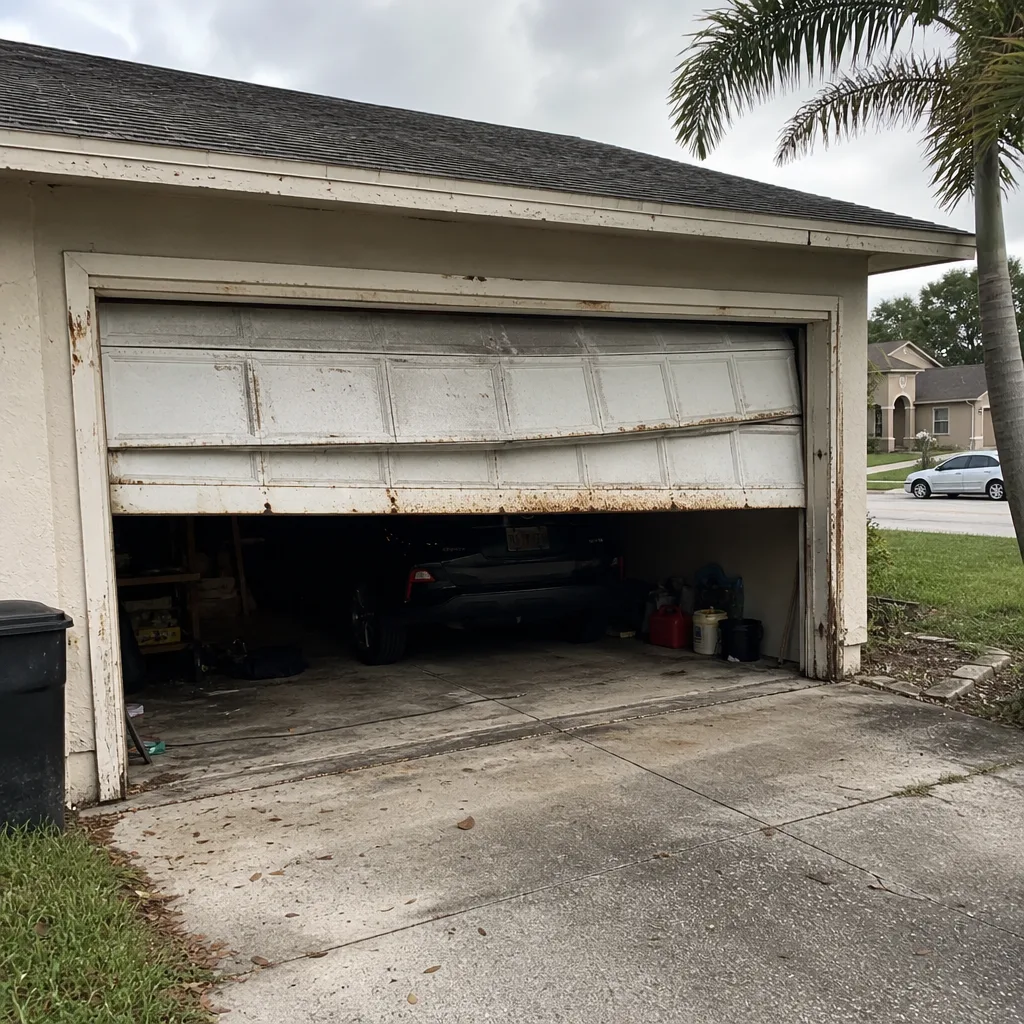 Before
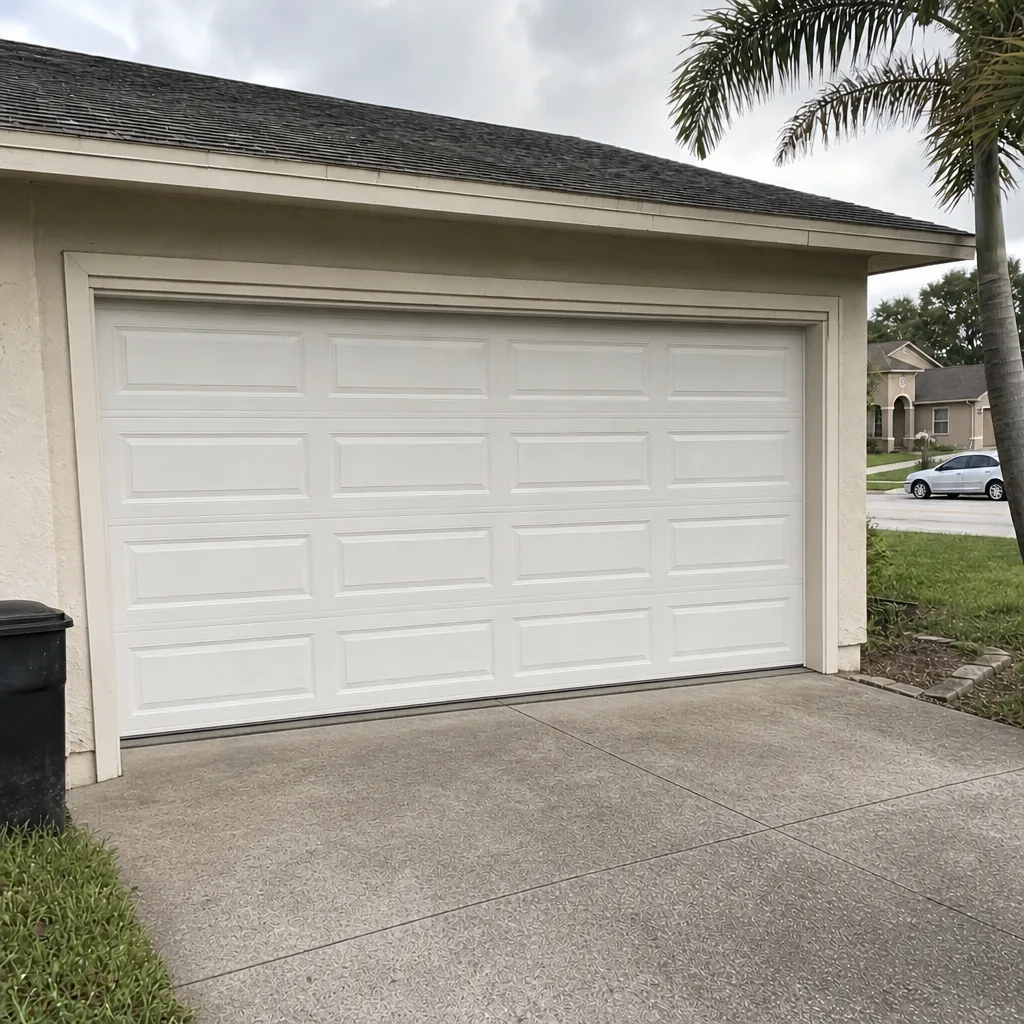 After
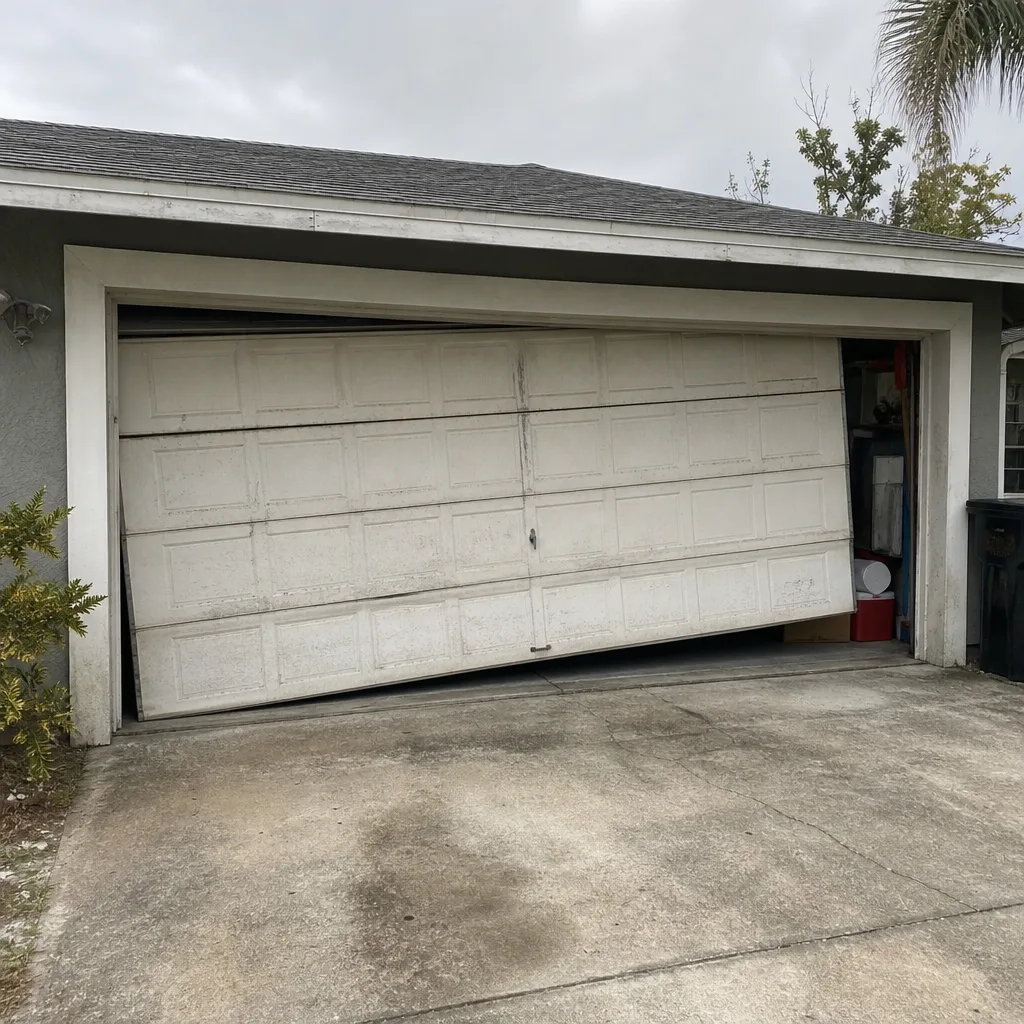 Before
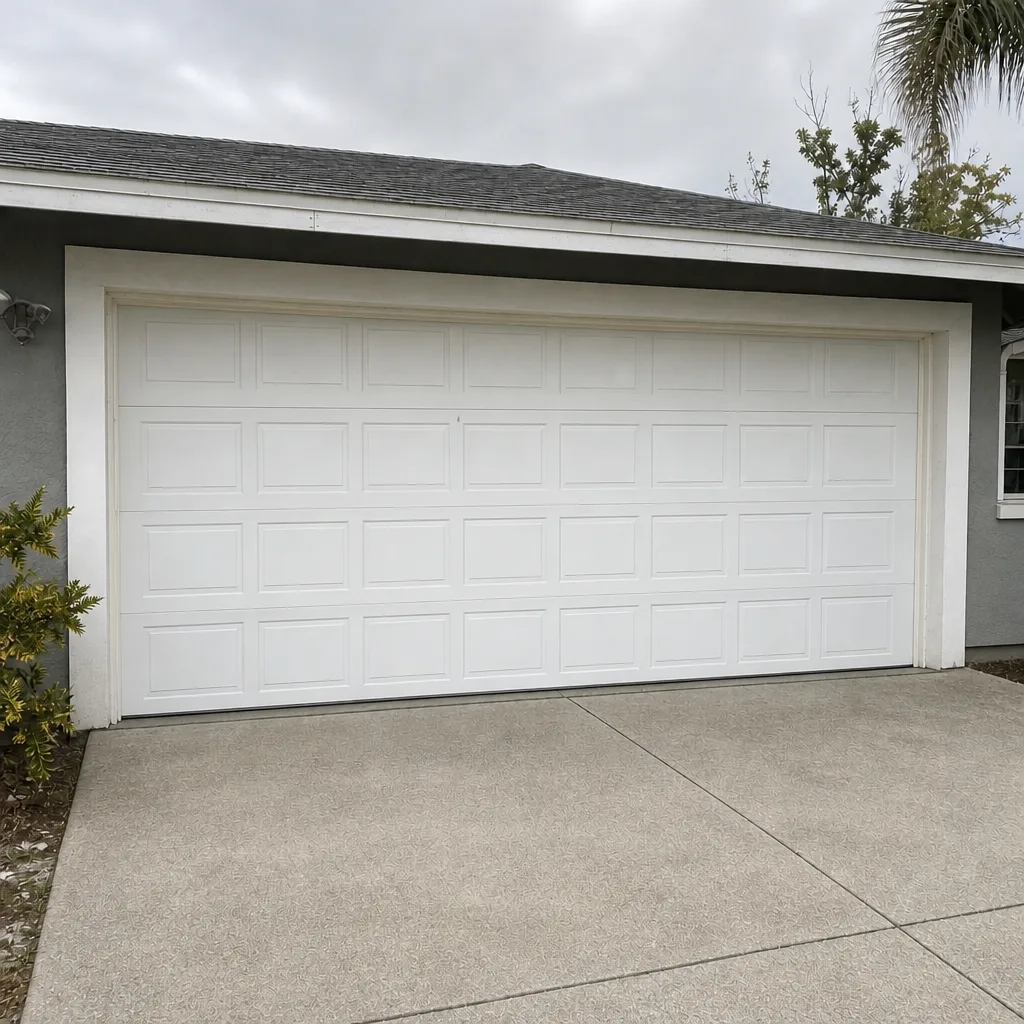 After
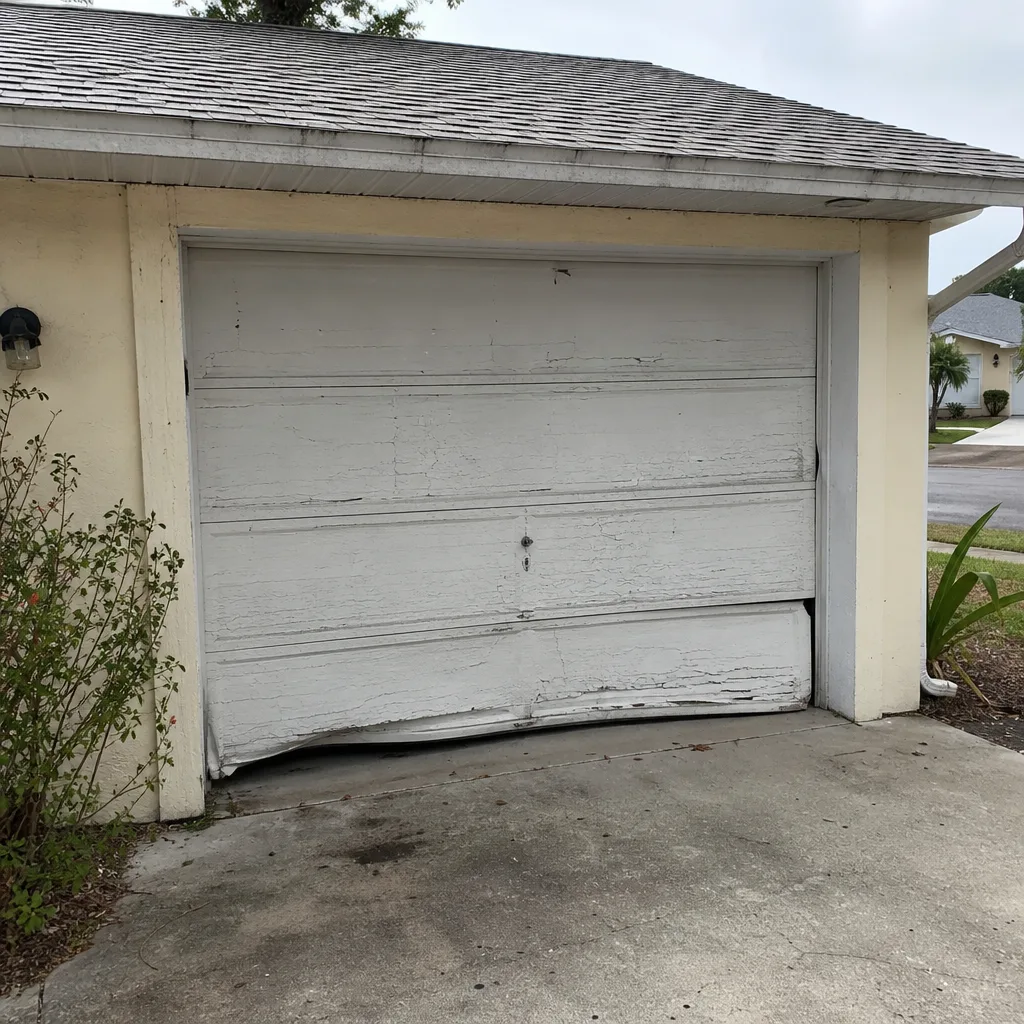 Before
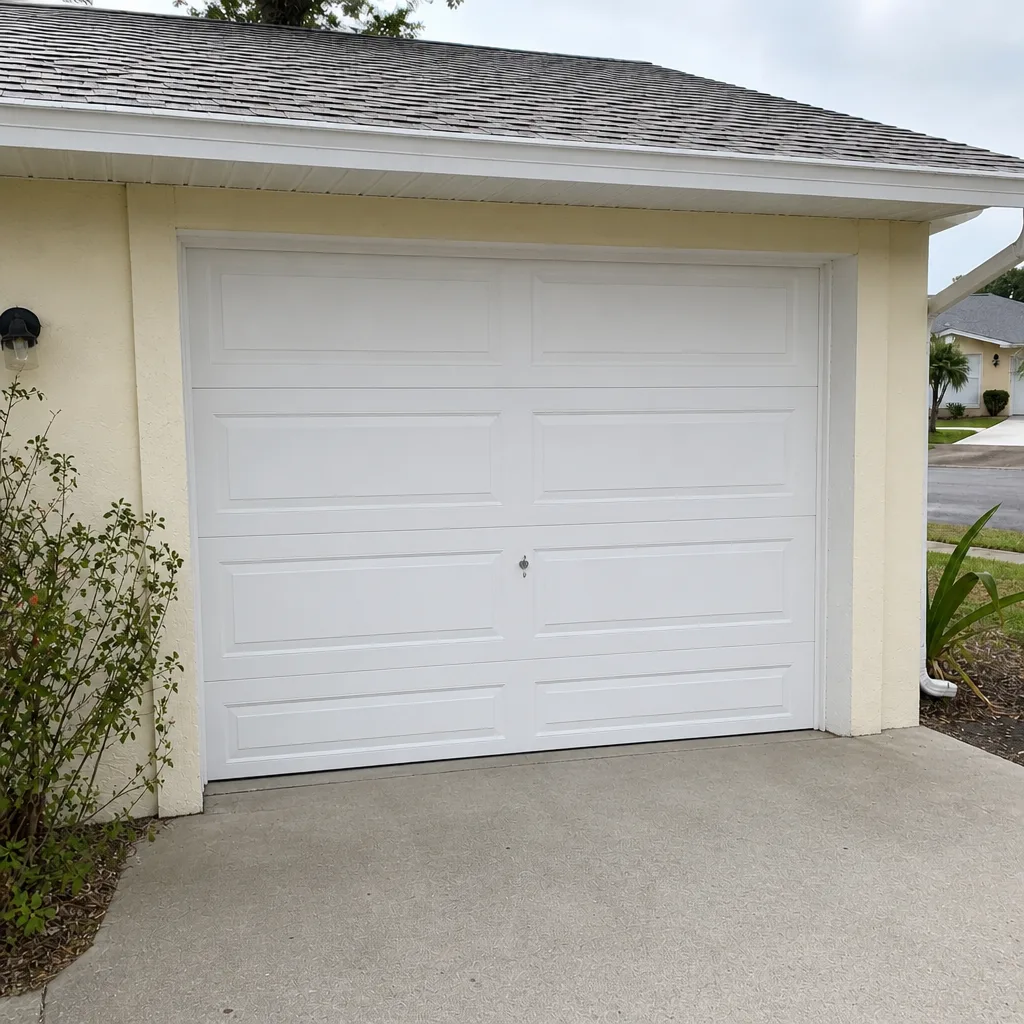 After
When to Call a Professional
Call a professional when the door is down but won’t open, when a spring or cable has visibly failed, when the door has jumped the track, when the opener grinds or won’t respond, or when a storm has buckled or separated a panel. Also call when the opening can’t be secured overnight and it’s an exterior entry point. These are the situations where a trained technician’s eyes and hands keep the job safe and the repair right the first time. Our team works on the brand you already have, whether it’s a LiftMaster opener or an older Raynor door, and we handle both repair and full installation in one visit.
Merritt Island Garage Door Repair Pros offers free estimates in Merritt Island. Call (855) 337-1671 and we’ll get a technician or a scheduled visit out to you.
Frequently Asked Questions
Pull the manual release cord to disconnect the opener, lower the door by hand if it’s safe to do so, and lock it. Then check for a broken spring or a slack cable, and call for emergency service if the opening is exposed and can’t be secured. If a storm caused the failure, photograph the damage before touching anything. Call (855) 337-1671 for an exact quote, and estimates are free.
Spring repair pricing depends on whether you have one spring or a matched pair, and on the door’s size. A matched pair is usually replaced together, so a pair costs about twice a single spring. We give a written estimate before any work starts, so the quoted price is the price. Call (855) 337-1671 for an exact quote, and estimates are free.
Light storm damage, like a dented panel or a bent track, is often repairable. A door with buckled panels, separated hinges, or a compromised frame usually needs replacement. We assess the door on site and tell you which path makes sense, and we can work with your insurer if a claim is involved. Call (855) 337-1671 to book a free estimate.
Same-day and emergency service is a core offering, not an upsell. Call (855) 337-1671 and tell the dispatcher the door’s position, the part that failed, and your opener brand, and we’ll get you the earliest available visit. Estimates are free.
The price is quoted and agreed before any work starts, and the written estimate is what you pay. If the on-site assessment turns up something the phone call couldn’t reveal, we talk it through before we touch the door. No surprise invoices. Call (855) 337-1671 for an exact quote.
Yes. Test the manual release once in calm weather so you know it works, then re-engage it. Check the slide locks and horizontal braces at the same time, because those are the parts that keep a door in place under wind load. If anything feels stiff or stuck, book a service call before the season. Call (855) 337-1671 for a free estimate.
The Bottom Line
Garage door emergencies in Merritt Island come in two flavors: mechanical failures and storm-related failures, and they need different responses. Mechanical failures are usually secured with the manual release and a scheduled repair; storm failures need documentation first, then assessment. Know your door’s brand and opener type before you call, so the technician arrives with the right parts. Check slide locks and horizontal braces before storm season, run the routine checks monthly, and never force a door with a broken spring or a jumped track. If you’re not sure which emergency you’re facing, call (855) 337-1671. Free estimates, a written price before any work, and a team that works on the brand you already have.
Written by the team at Merritt Island Garage Door Repair Pros.