Last updated November 23, 2026
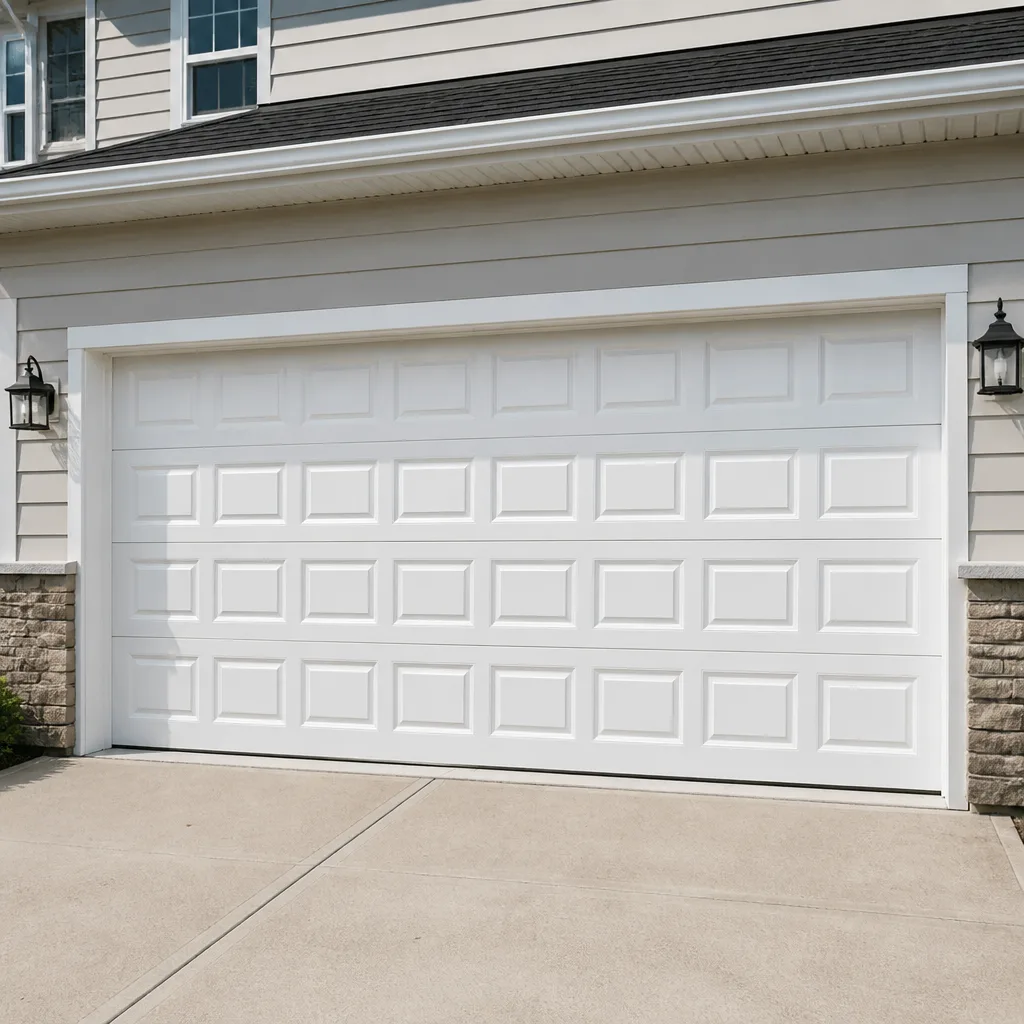 Raised-panel steel
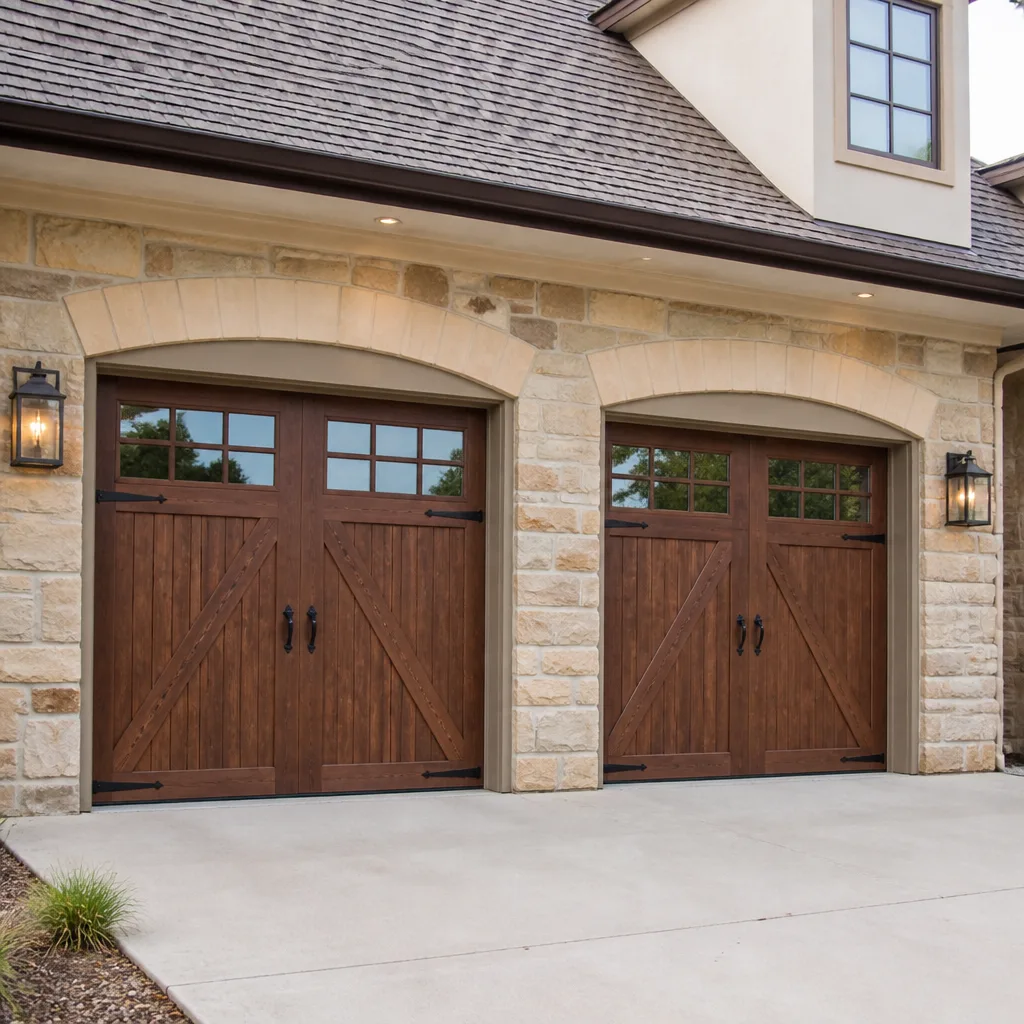 Carriage house
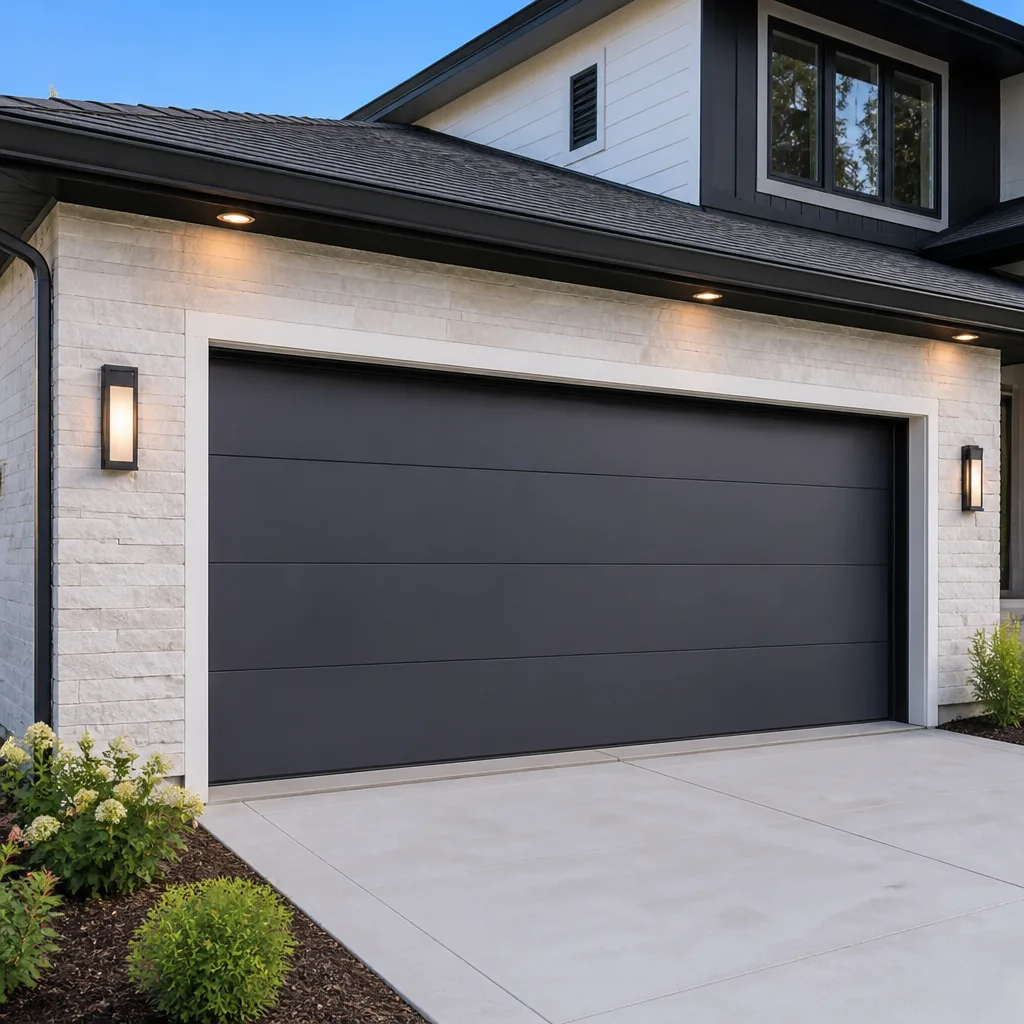 Modern flush
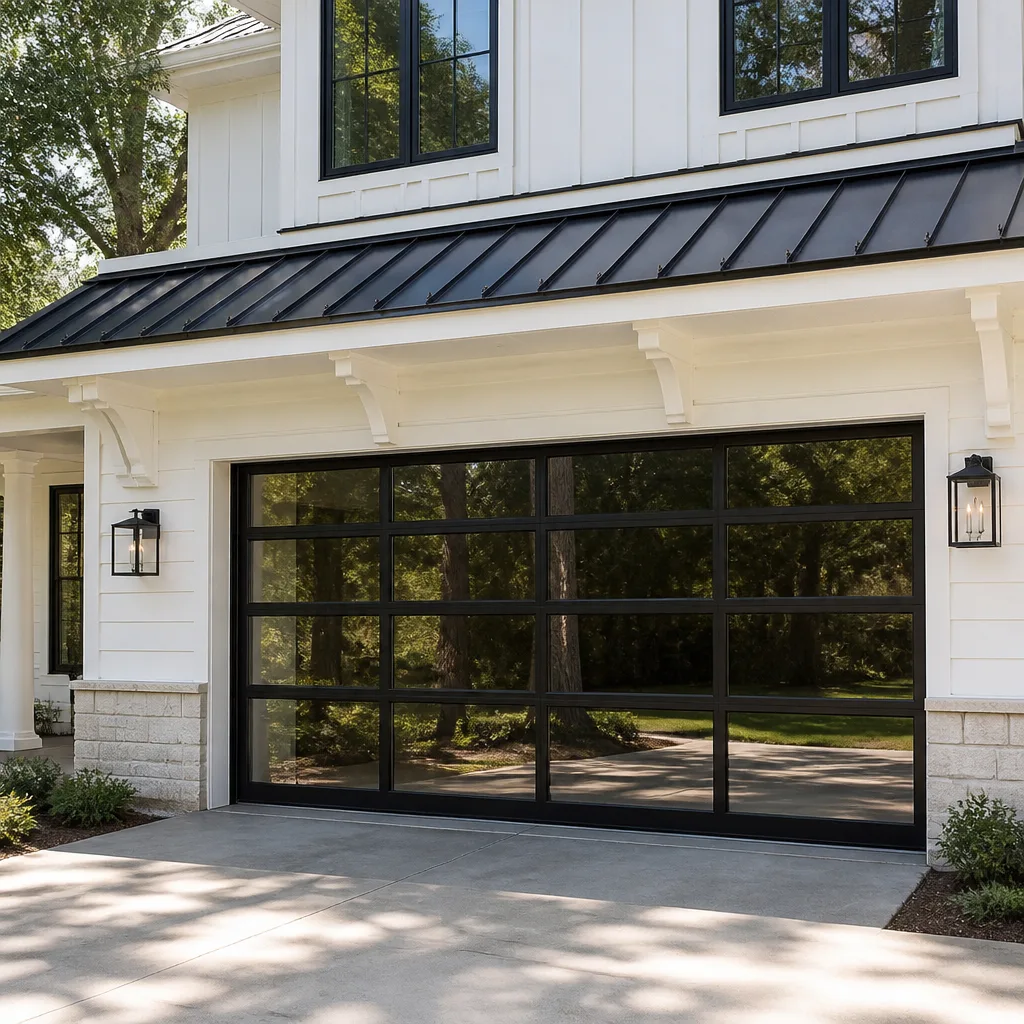 Full-view glass
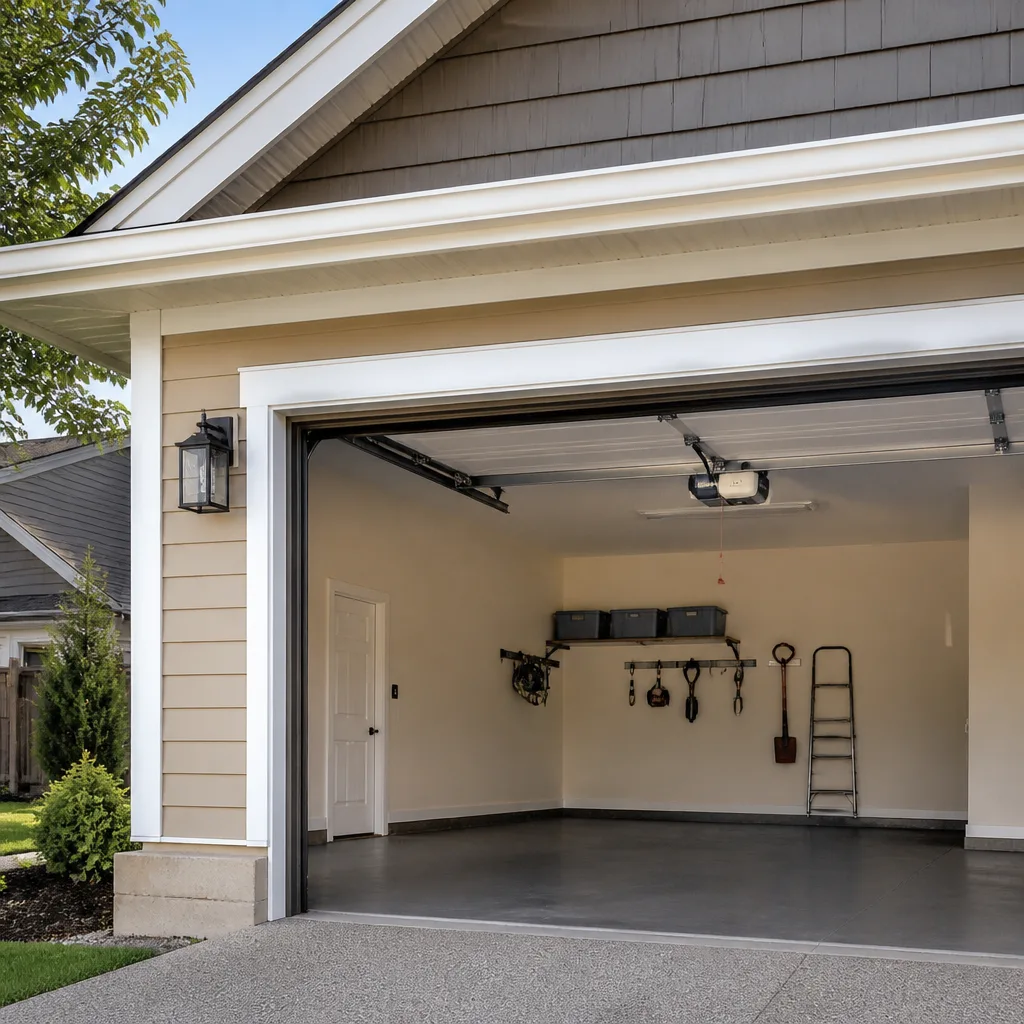 LiftMaster openers
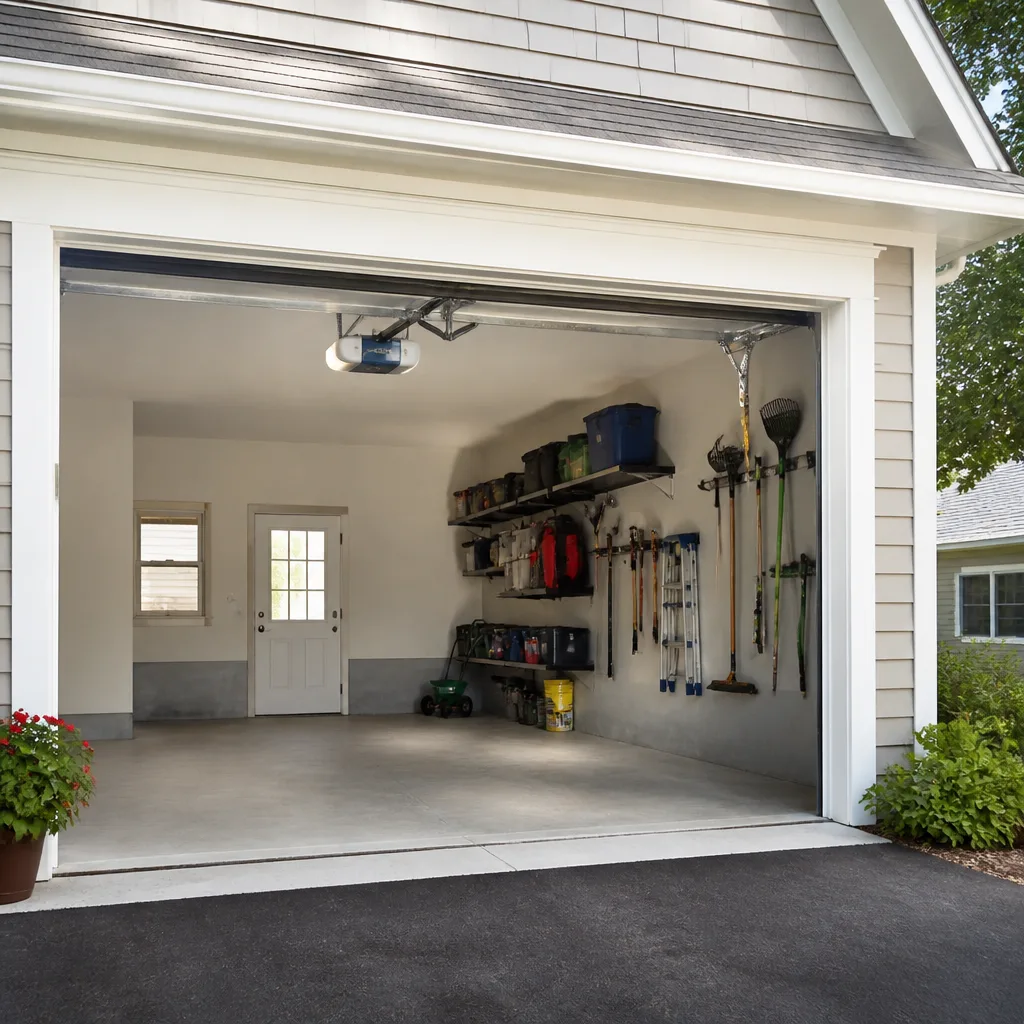 Chamberlain openers
Full 25-point door and opener safety check with every visit - springs, cables, rollers, tracks, and your LiftMaster or Chamberlain opener included
You get a price before we start. It does not change when the pro arrives.
Get your free estimateGarage Door Permits, Codes & Inspections in Merritt Island, FL: What You Need to Know
Most homeowners treat a garage door replacement like swapping out a light fixture. Buy the door, get it installed, done. But in Brevard County, a replaced door is a structural opening in your home’s wind envelope, and the paper trail behind it matters as much as the door itself. The counterintuitive part: a like-for-like repair is usually just maintenance, while changing the door’s size, material, or mounting can pull you into the permitting process. This guide walks Merritt Island homeowners through when a permit is required, what a Florida Product Approval number is and how to verify one, what wind-load design pressures mean on a door’s label, how a Brevard County inspection actually runs, and how unpermitted work plays out at resale and at claim time. Read it before you sign anything.
Quick Answer
In Brevard County, replacing a garage door with a different door – different size, material, model, or mounting – generally requires a permit because the door is part of your home’s wind-load protection, while a like-for-like repair of the existing door or its hardware usually does not. The installed door needs a valid Florida Product Approval number or an approved engineering method, and a county inspector verifies the installation before the permit closes. When in doubt, call the Brevard County building department and ask about your specific door; we can also tell you what a permit-ready installation looks like.
Styles & brands we work with
- Raised-panel steel
- Carriage house
- Modern flush
- Full-view glass
- LiftMaster openers
- Chamberlain openers
Table of Contents
- When does a garage door replacement need a permit in Merritt Island?
- What is a Florida Product Approval number, and why does it matter?
- Wind-load design pressure: what the numbers on the door label actually mean
- How a Brevard County garage door inspection runs, step by step
- How unpermitted door work affects homeowners insurance and named-storm claims
- How to choose an installer who gets the compliance part right
- What happens at resale when the permit is missing
- What does permitted garage door work cost in Merritt Island?
When does a garage door replacement need a permit in Merritt Island?
A garage door replacement in Merritt Island generally needs a permit when the new door is not a true like-for-like swap of the existing door. The trigger isn’t the price of the door – it’s whether the door’s size, material, manufacturer, wind-load rating, or the way it mounts to the opening changes. Change any of those and the county treats the work as a replacement that needs its own approval, because the door is a component of your home’s wind envelope. In practical terms, the question to ask yourself is: “Is the new door identical to the old one in every way that matters for wind resistance?” If the answer is no, assume a permit.
Brevard County’s building department sets the actual threshold, and the rule can shift as the Florida Building Code updates. We always tell Merritt Island homeowners to call the county and confirm directly for their exact address and door model. Don’t take a contractor’s word alone, and don’t take ours alone either – the county is the authority.
What usually counts as repair, not replacement
- Replacing a broken torsion or extension spring on the existing door
- Swapping out a frayed cable or worn roller
- Repairing or replacing a worn opener unit on the existing door
- Straightening a bent track or adjusting hinges on the original door
- Replacing weather seals along the bottom or sides of the same door
What usually triggers a permit
- Changing the door’s width or height
- Switching from steel to wood, or from a solid door to a glass-panel door
- Replacing the whole door panel system with a different make or model
- Changing the mounting or reinforcing the header for a new door
- Any change that moves the door’s rated wind-load performance
If you’re near the river side of Merritt Island or in a neighborhood tucked between the barge canal and Sykes Creek, the wind zone that applies to your home is the same county-wide wind standard, not something looser. Don’t assume a neighborhood exemption exists. There isn’t one to rely on.
What is a Florida Product Approval number, and why does it matter?
A Florida Product Approval (FPA) number is a state-issued identifier that says a specific garage door product has been tested and certified to meet Florida’s wind-load requirements for a specific design pressure. It’s not a brand name or a manufacturer’s marketing claim – it’s a registration in the state’s public database that a county inspector can look up. Every door installed under a permit in Brevard County has to tie back to an approved product or an approved engineering method, and the FPA number is how the installer proves it.
We’ve seen homeowners buy a door off a truck without ever asking for that number. That’s the single biggest compliance mistake we encounter in Merritt Island, and it shows up later, when the permit gets pulled or a claim gets filed.
How to verify an FPA number before you install
- Ask the contractor for the FPA number in writing, along with the manufacturer and model of the door they plan to install.
- Look the number up in the Florida Building Commission’s product approval database. It’s public and searchable.
- Confirm the approved product matches your door’s dimensions and wind-load rating – approvals are product-and-size specific, not blanket.
- Ask for the installation instructions that came with the approval. Inspectors check the install against those, not against the contractor’s memory.
- If the contractor can’t produce a number, or the number doesn’t match, that’s a red flag. Walk away.
Any installer who genuinely knows the door they’re installing, whether it’s a Clopay, Amarr, or Wayne Dalton unit, should be able to hand you the FPA number without a delay. If they hedge, they either don’t have it or don’t understand the requirement. Either way, you’re the one exposed.
Wind-load design pressure: what the numbers on the door label actually mean
The label on a garage door often reads something like “+30/-38” – plus and minus numbers in pounds per square foot. Those are wind-load design pressures, and they describe the force the door is rated to withstand pushing in (positive pressure) and pulling out (negative pressure, or suction). Here on Merritt Island, a hurricane or severe thunderstorm doesn’t just push on a door; it also creates suction on the leeward side, which is why the negative number matters as much as the positive one. A door rated for +30/-38 is tested to hold against those pressures without the panels bowing, the hinges separating, or the assembly lifting out of the track.
What the label doesn’t tell you is whether the door matches your home’s specific required design pressure. That requirement is set by the code based on your location, the height of the opening, and how exposed the door is. That’s where the FPA number and the engineer’s or manufacturer’s documentation come in. The door’s rating must meet or exceed what your home is required to handle.
What to look for on the label
- The positive and negative design pressure numbers (usually shown as +X/-X)
- The manufacturer’s name and the door model
- The FPA number, if it’s printed on the door or its paperwork
- Reinforcement details – struts or upgraded hinges the approval requires
- The installation instruction reference, so the inspector can match the install to the approval
If the door model has been upgraded – say, with extra struts or heavier hinges – the approval paperwork needs to reflect that. A door installed correctly but without the required reinforcement can fail inspection even though it “works” fine. That’s the kind of detail we look at before we ever pull a door out of the box.
How a Brevard County garage door inspection runs, step by step
Once the permit is issued and the door is installed, a Brevard County inspector comes out to verify the work. The inspection isn’t glamorous – it’s a checklist – but knowing what’s on it turns a stressful step into a quick one. The inspector is confirming that the door in front of them is the door described in the approved plans, fastened and reinforced the way the approval says, and installed by someone who followed the paperwork.
What the inspector typically checks
- Confirms the installed door matches the permit application – manufacturer, model, size, and FPA number.
- Verifies the labeling on the door and any required reinforcement is present.
- Checks the fastening and mounting to the framing matches the installation instructions.
- Looks at whether the door opens and closes cleanly without binding in the track.
- Verifies the safety reverse functions and photo-eye alignment, since these are required safety features.
- Reviews the permit placard placement and finalizes the paperwork if everything matches.
What fails most often
- Mismatched product: the door installed doesn’t match the permit – different model or size than what was approved.
- Missing reinforcement: struts or upgraded hinges the approval requires weren’t installed.
- Label missing or covered: the door’s label is painted over, removed, or missing.
- FPA number doesn’t apply to the door’s size: the installer used a general approval that doesn’t cover the dimensions.
- Improper fastening: screws or anchors that don’t match the instructions – often an installer substituting what was on the truck.
How to prepare: get a copy of the FPA number and installation instructions from your installer before the inspection, make sure the door’s label is visible, and be on-site if you can. If you’d rather not manage that part, we walk Merritt Island homeowners through it before the inspector ever shows up. It’s the least dramatic part of the job, and the one most often botched. If the door has an opener, a LiftMaster or Chamberlain unit with photo-eye sensors needs those sensors correctly aligned at inspection time too – a small thing that fails more often than it should. That’s also a good moment to double-check the door itself doesn’t need garage door repair before the inspector arrives.
How unpermitted door work affects homeowners insurance and named-storm claims
Unpermitted garage door work can become a real problem when you file a claim after a named storm in Brevard County. Insurers routinely ask for proof that a door was permitted and inspected, because the door is part of the wind envelope they’re underwriting. If the work never went through the county, the insurer may treat the door as non-compliant, and coverage for damage tied to that door can be disputed, delayed, or denied. We aren’t your insurance company and we can’t tell you how any specific policy will respond – but we can tell you the question comes up, and it comes up most often after the storm that actually tests the door.
Where the exposure shows up
- Claim review: the adjuster asks for the permit and inspection history on the garage door.
- Wind mitigation credits: the credit your home receives for wind-resistant features may require documentation you may not have.
- Coverage disputes: some insurers have pushed back on damage tied to unpermitted openings.
- Policy renewal: documentation questions can arise at renewal or during a coverage review.
None of this is a scare tactic – it’s what happens when a door gets replaced without paperwork. The fix is straightforward. If your door was replaced and you’re not sure whether a permit was pulled, call the Brevard County building department and ask them to check the address. If there’s no permit on record, ask what the process is for getting one after the fact. Affordable homeowner garage door work in Merritt Island still has to clear the same county step, and the paperwork is your evidence when it counts.
How to choose an installer who gets the compliance part right
Most garage door installers can hang a door. Fewer can hand you a permit package that will pass a Brevard County inspection the first time. The tell is simple: ask what FPA number they plan to install and whether they’ll pull the permit themselves, and watch how they answer. We’ve seen the difference between installers who know the code forward and back and those who treat the permit as somebody else’s problem. Here’s what we’d look for if we were the ones hiring.
Questions to ask before you sign
- “Will you pull the permit, or do I?” A competent installer either handles this or explains exactly how you do it.
- “What FPA number applies to the door you’re installing, and can you show me the approval for my door’s size?” If they can’t, that’s your answer.
- “Who handles the inspection scheduling and any corrections?” You want someone who accepts responsibility for the punch list.
- “What’s the wind-load rating on the door, and how does it compare to my home’s requirement?” A specific answer here separates specialists from generalists.
- “Do you service the door and opener after install if something’s off?” Every brand has quirks – a Wayne Dalton door with an odd hinge geometry, a Craftsman opener paired with a non-original remote. An installer who services the brand they install can resolve those without a second phone call.
We’re brand-familiar with LiftMaster and Chamberlain openers, Clopay and Amarr doors, Wayne Dalton, Raynor, Genie, and Craftsman – and we know how to look the paperwork up for all of them. If your door needs garage door opener repair after install, or something in the opener’s system needs a warranty look, we stay hands-on. That matters more than a lower bottom-line bid, because a cheap install that fails inspection costs you time and another round of calls.
What happens at resale when the permit is missing
When you sell a home in Merritt Island, the county permit history for your garage door becomes part of the disclosure package. Florida sellers are required to disclose known code violations, and in some cases an unpermitted garage door replacement counts. Buyers, their agents, and their lenders all look at permit records during due diligence. If the door’s permit isn’t there, the conversation starts with “what else wasn’t permitted?” – which is a much harder question to answer than a garage door one.
What sellers typically face
- Questions at due diligence: the buyer’s agent pulls permit history and asks for the door’s.
- Buyer requests for correction: the buyer asks you to permit the door before closing, or discounts the price.
- Lender scrutiny: particularly on wind-related components, lenders may require documentation that the door matches the home’s wind envelope.
- Disclosure obligations: as the seller, you’re responsible for what you know about code compliance on improvements you made.
- Appraisal implications: no formal permit history can affect how the door is counted in the home’s wind-resistant features.
The practical lesson is simple. If you’re replacing a door in Merritt Island, get the permit even when it costs you a few weeks of patience. The resale conversation becomes a one-line answer after that – “the door was permitted and inspected, here’s the record.”
What does permitted garage door work cost in Merritt Island?
Permitted garage door work in Merritt Island runs a range because the permit is only one part of the bill. A new single-car door installation, permit included, typically lands in the mid-hundreds to low thousands depending on door type and how much framing or reinforcement the approval requires. You’re paying for the door, the install, the permit fee, and any reinforcements the FPA documentation calls for. What you’re not paying for is the risk of doing it without paperwork. Here’s how that looks in line-item form.
| Item | Typical estimated range |
|---|---|
| Standard single-car door installed, permitted | $1,200 – $2,600 |
| Standard double-car door installed, permitted | $2,200 – $4,500 |
| Hurricane-rated door installed, permitted | $1,900 – $3,800 single; $3,200 – $6,500 double |
| Reinforcement required by the door’s approval | $150 – $450 |
| County permit fee (paid to the county) | varies by valuation; confirm with the county |
| Spring replacement, one spring, existing door | $180 – $340 |
| Spring replacement, matched pair | about twice a single spring |
| Opener replacement on existing door | $280 – $650 |
These are typical estimates, not quotes. The written estimate you receive sets the final price, and we quote and confirm it before any work starts. If spring work comes up while the door’s under review, a matched pair is usually replaced together – we’ll show you that separately rather than rolling it into a line. For more on the spring-specific range, see garage door spring repair.
Common Mistakes to Avoid
- Buying a door without checking the FPA number. A door with no verifiable state approval leaves your permit stuck and your claim on shaky ground. Always ask for the number before install.
- Assuming “like-for-like” without verifying. A different manufacturer or size isn’t like-for-like, even if the door looks similar from the street. Confirm with the county in writing if you’re unsure.
- Letting the installer talk you out of a permit. “Nobody pulls that in Merritt Island” is a sentence you should be skeptical of. The county and your insurer both expect the paperwork.
- Hiding the door’s label behind paint or trim. The inspector needs to see it, and cover-ups turn a routine inspection into a fail. Keep the label visible.
- Skipping the install instructions. Inspectors walk the install against the FPA documentation, not against the contractor’s shortcut. If the paperwork says extra struts, extra struts go on.
- Not checking permit history before buying a home in Merritt Island. Pull it during due diligence. It’s public and easy, and it protects you from inheriting someone else’s problem.
- Pairing a new door with the wrong opener. If your LiftMaster or Chamberlain opener was set up for the old door’s weight, a heavier door can stress the opener and the door. Match the opener to the door’s lift.
- Assuming permit fees are a negotiation. The county charges what it charges. A bid that says “permit included” but hides a much higher fee elsewhere isn’t a bargain.
See the difference
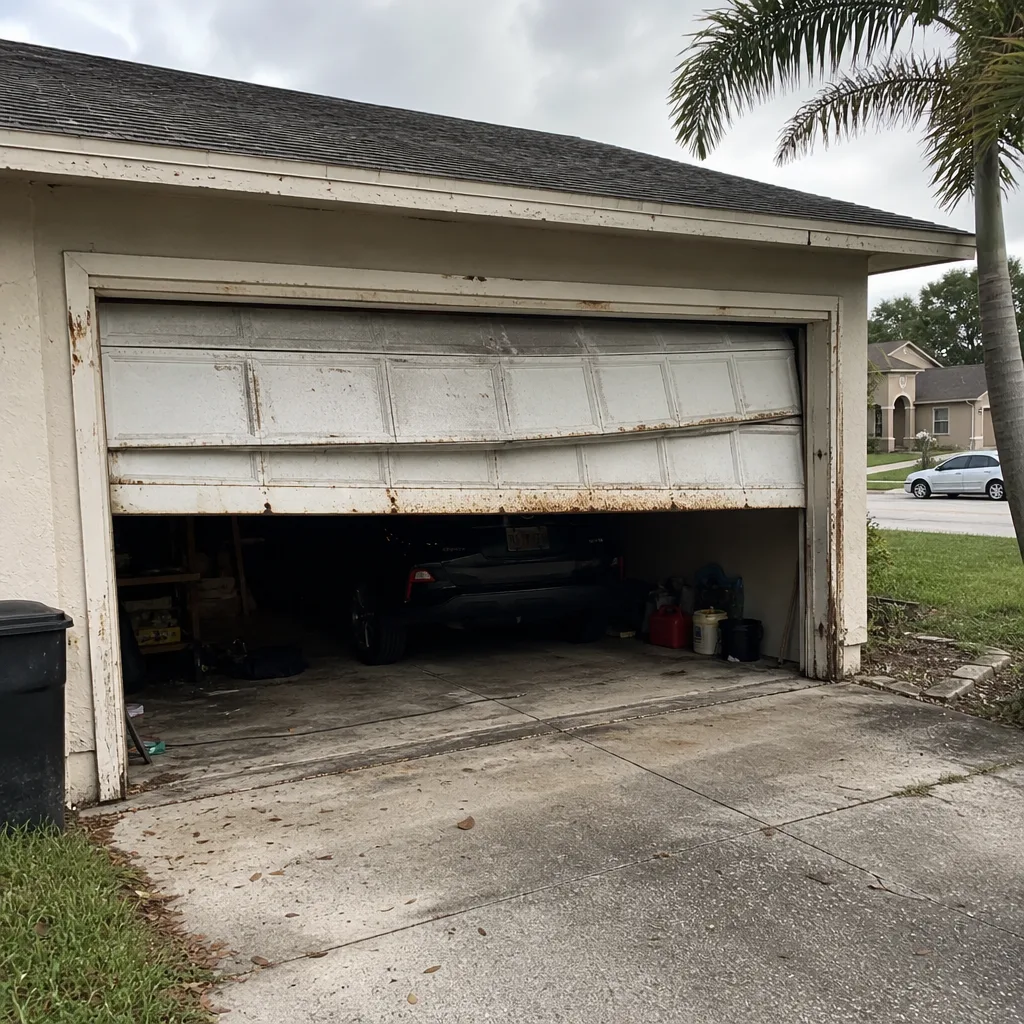 Before
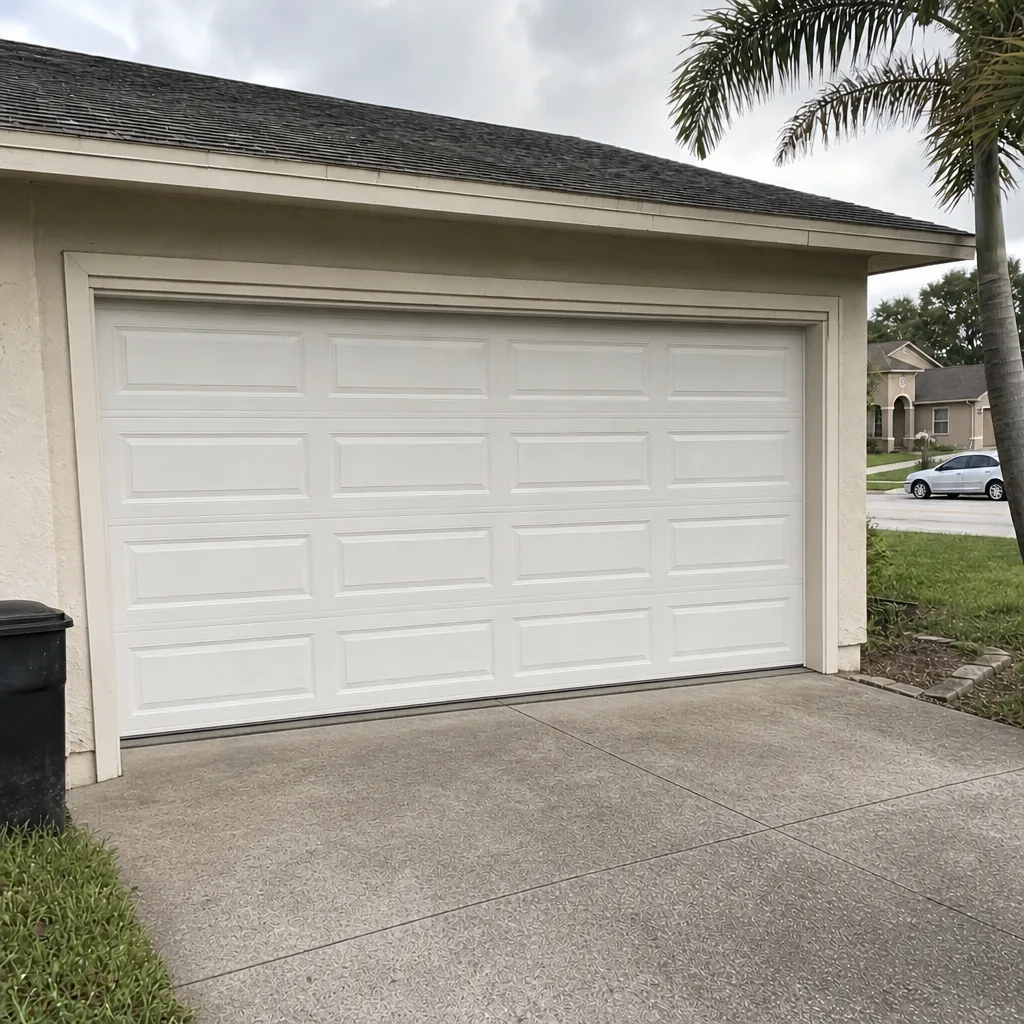 After
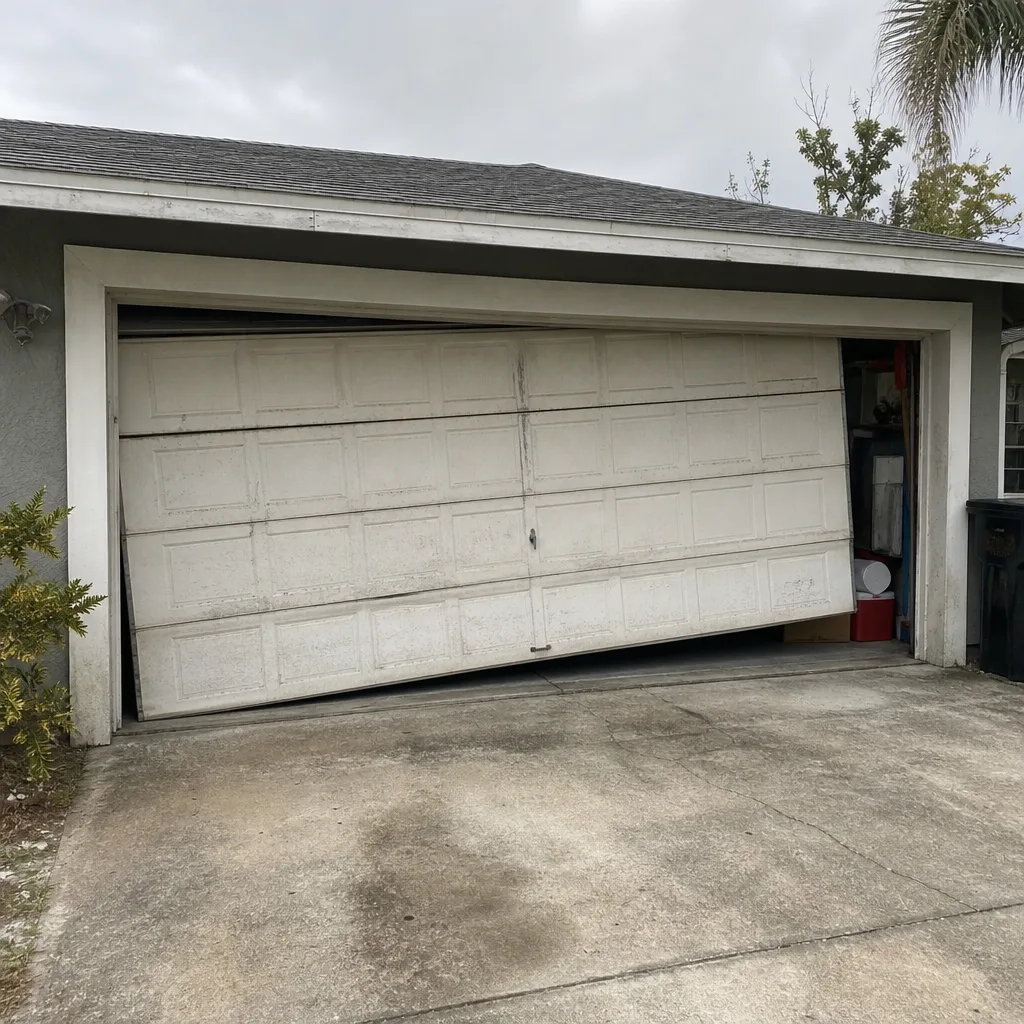 Before
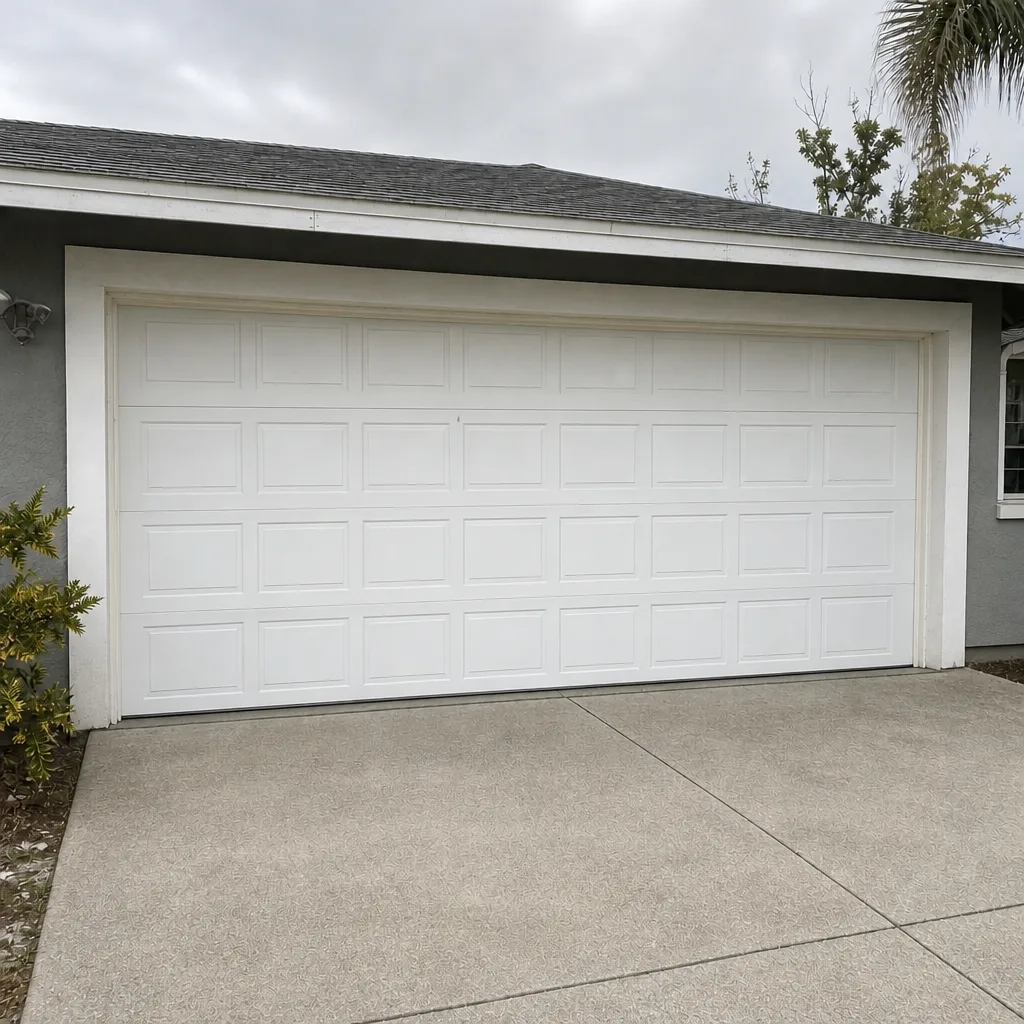 After
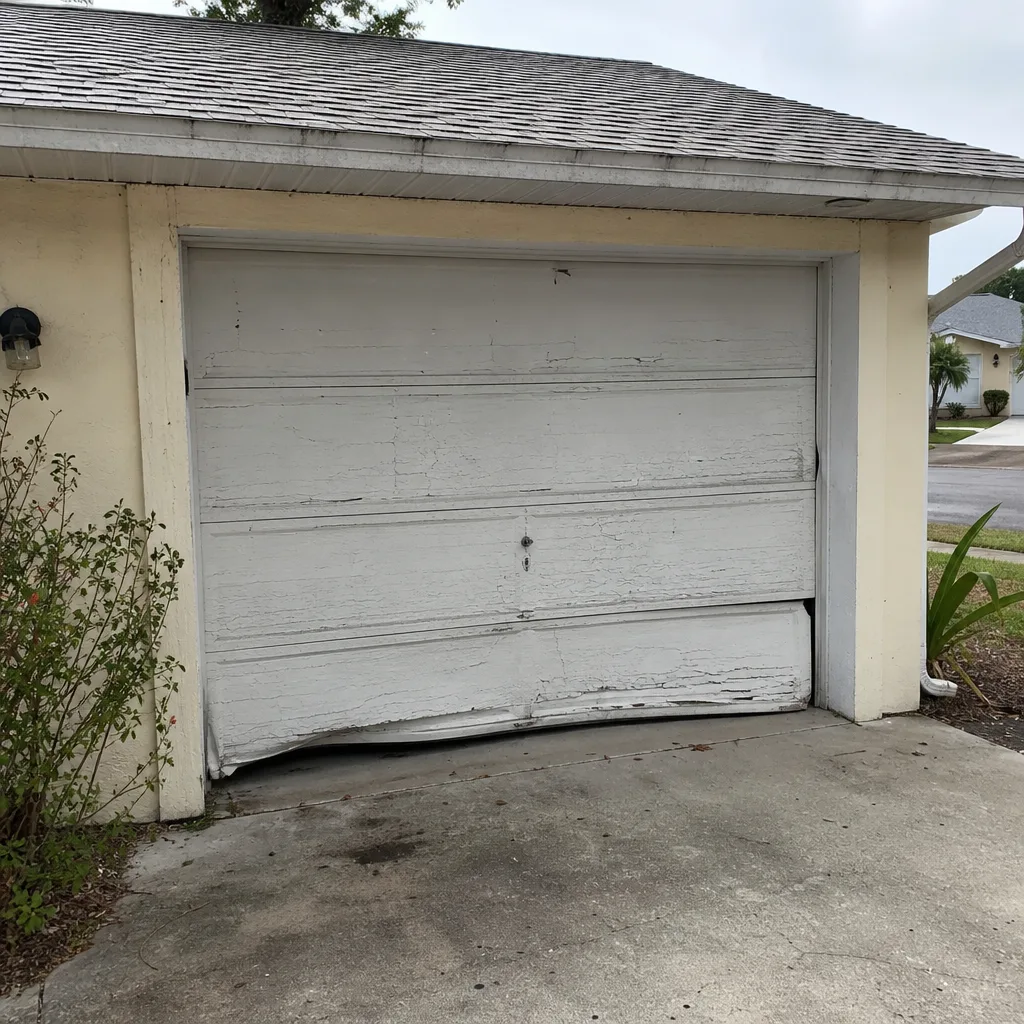 Before
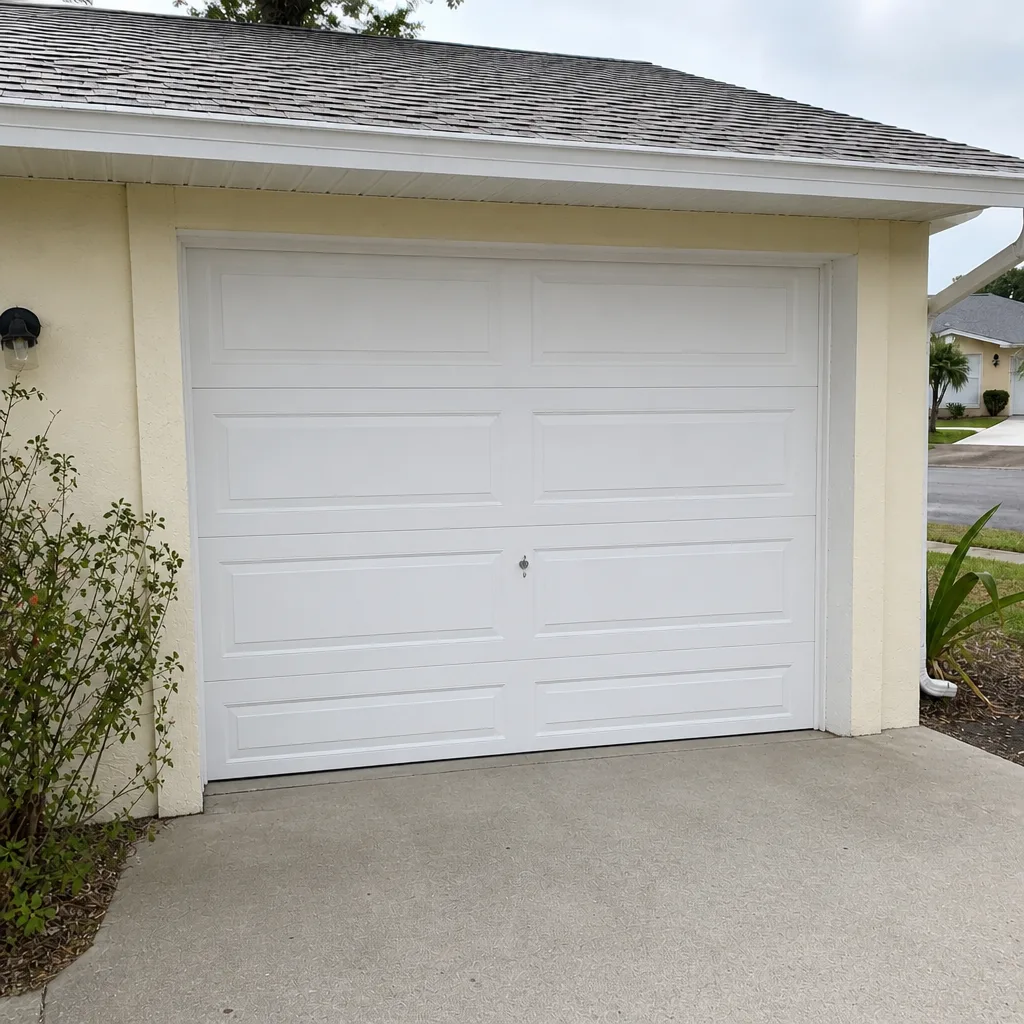 After
When to Call a Professional
Call a professional when the work touches the spring system, the torsion tube, the cables, or anything that must be tracked against an FPA approval. Those are mechanical jobs where a mistake causes injury or a failed inspection – not something to take on at home. Call when a door is refusing to close, a spring has snapped (that’s a hard-stop situation, not a “jiggle it” situation), an opener has stopped responding, or a door is visibly out of square in its track. Call when you’re planning a replacement and want the permit and FPA documentation sorted before the install is scheduled. Merritt Island Garage Door Repair Pros offers free estimates in Merritt Island – call (855) 337-1671. Our technicians have up to 11 years of experience, and we work with the brand you already have, whether that’s LiftMaster, Chamberlain, Genie, Clopay, Amarr, Wayne Dalton, Craftsman, or Raynor. We see a door through from measure to inspection.
Frequently Asked Questions
Usually yes, if the replacement door differs from the old one in size, material, make, or wind-load rating – because the door is part of your home’s wind envelope and the install has to match an approved product. A pure like-for-like repair of the existing door or its hardware generally does not require one. Confirm your specific door with the Brevard County building department; if you’d like us to walk through the paperwork before you call, call (855) 337-1671 – estimates are free.
A standard single-car door installed with permit typically runs $1,200 to $2,600, a double-car runs $2,200 to $4,500, and hurricane-rated doors run higher. The permit fee itself varies by valuation and is confirmed with the county. The written estimate sets the final price, and we quote before any work starts. Call (855) 337-1671 for an exact quote – estimates are free.
It’s a state-issued identifier confirming a specific garage door model has been tested and certified to meet Florida’s wind-load requirements for a specific design pressure. You can verify one in the Florida Building Commission’s public product approval database, and the number should match your door’s make, model, and size. Ask your installer for it in writing before the door ships – and call (855) 337-1671 if you’d like us to help confirm the number for your address.
It can complicate resale and insurance claims tied to your garage door, because the county and the insurer both want the documentation. The door itself may be perfectly fine; the paperwork is what’s missing. Call the Brevard County building department to check the address and ask what the process is for getting a permit after the fact. We can help you with the door-side documentation and install corrections – call (855) 337-1671.
The inspector verifies the installed door matches the permit and the FPA documentation, that any required reinforcement is in place, that the label is visible, and that the door opens and closes properly with the safety features functioning. Failure is most often caused by a mismatched product, missing reinforcement, or improper fastening. If your door needs adjustment or repair before inspection, call (855) 337-1671 – estimates are free.
It can, because insurers often ask for the permit and inspection history on the door when a named-storm claim is filed, and coverage for damage tied to an unpermitted opening can be disputed or delayed. We aren’t your insurer and can’t speak for your policy, but the question does come up. If you’re unsure whether your door has a permit, call (855) 337-1671 and we’ll help you sort out what’s on record.
The Bottom Line
In Brevard County, a garage door replacement is rarely just a cosmetic upgrade – it’s a wind-envelope component, and the county treats it that way. Like-for-like repair is usually outside the permit process. A new, different door is generally inside it. The three things that matter most: get the FPA number in writing before install, make sure the door’s wind-load rating matches what your home is required to handle, and pick an installer who will pull the permit and walk the inspection. Merritt Island is a great place to own a home, and a permitted, documented garage door gives you one fewer thing to think about – at claim time, and at resale time.
Ready to sort the paperwork and the door at the same time? Merritt Island Garage Door Repair Pros works on new doors, openers, springs, and emergency repair across Merritt Island. Call (855) 337-1671 for a free estimate. Whether you’re getting a garage door repair sorted before an inspection or you’re starting fresh with a new door, we’ll quote before any work starts – same-day service and emergency availability included. You can also start at Merritt Island Garage Door Repair Pros.
Written by the team at Merritt Island Garage Door Repair Pros.