Last updated November 23, 2026
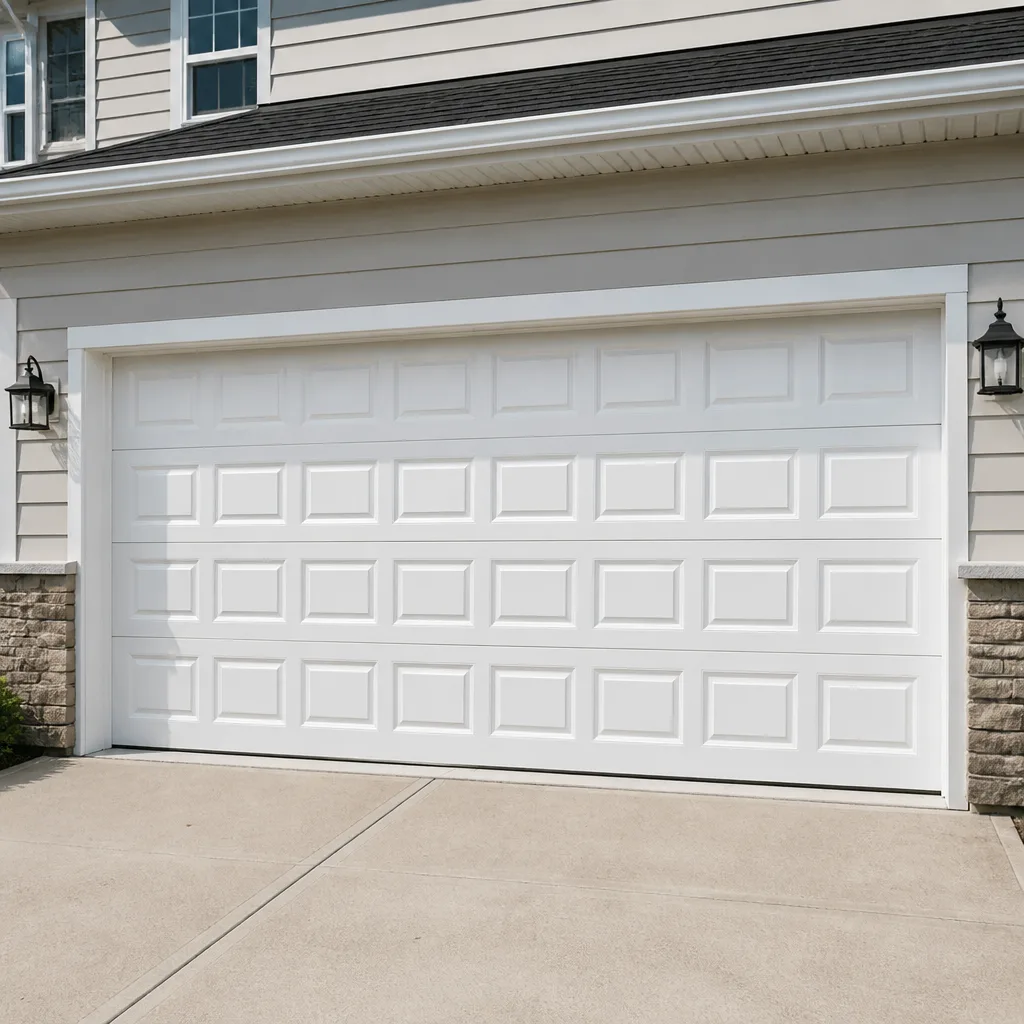 Raised-panel steel
 Carriage house
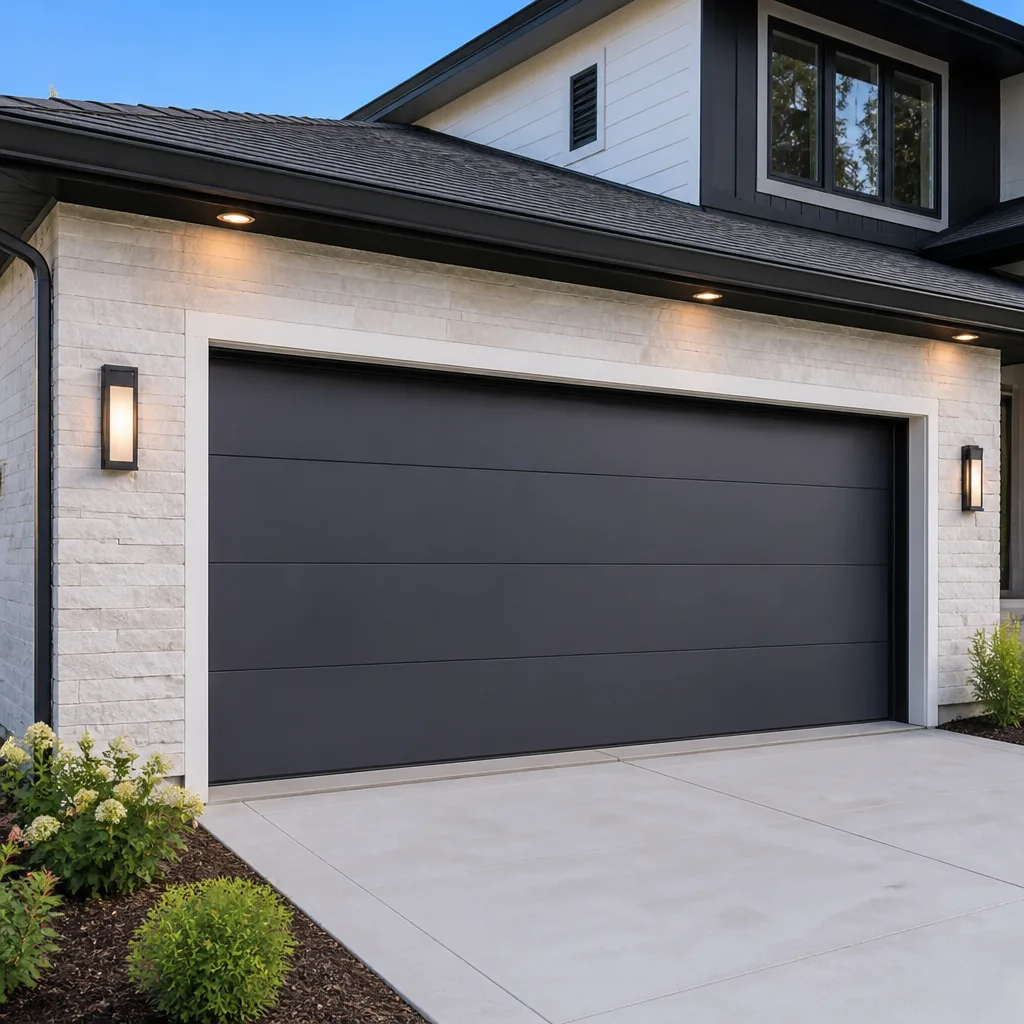 Modern flush
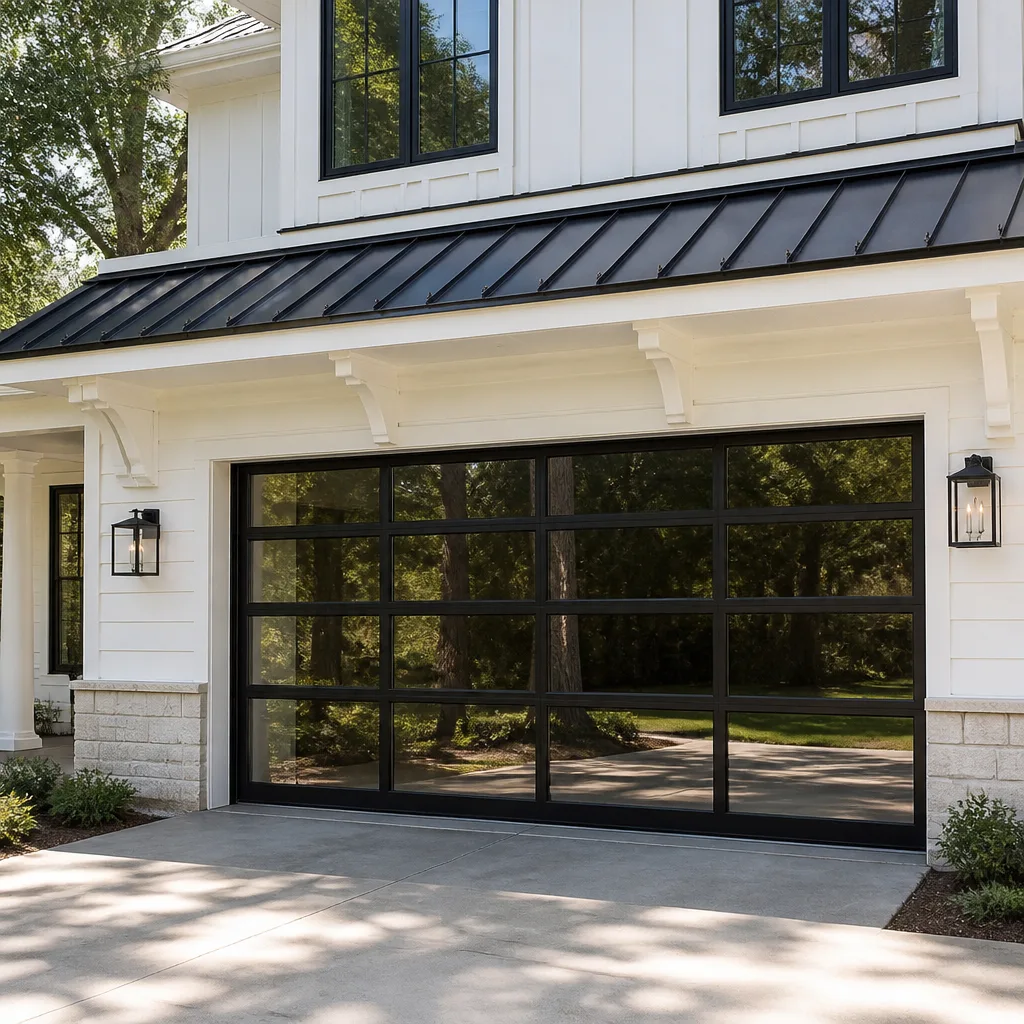 Full-view glass
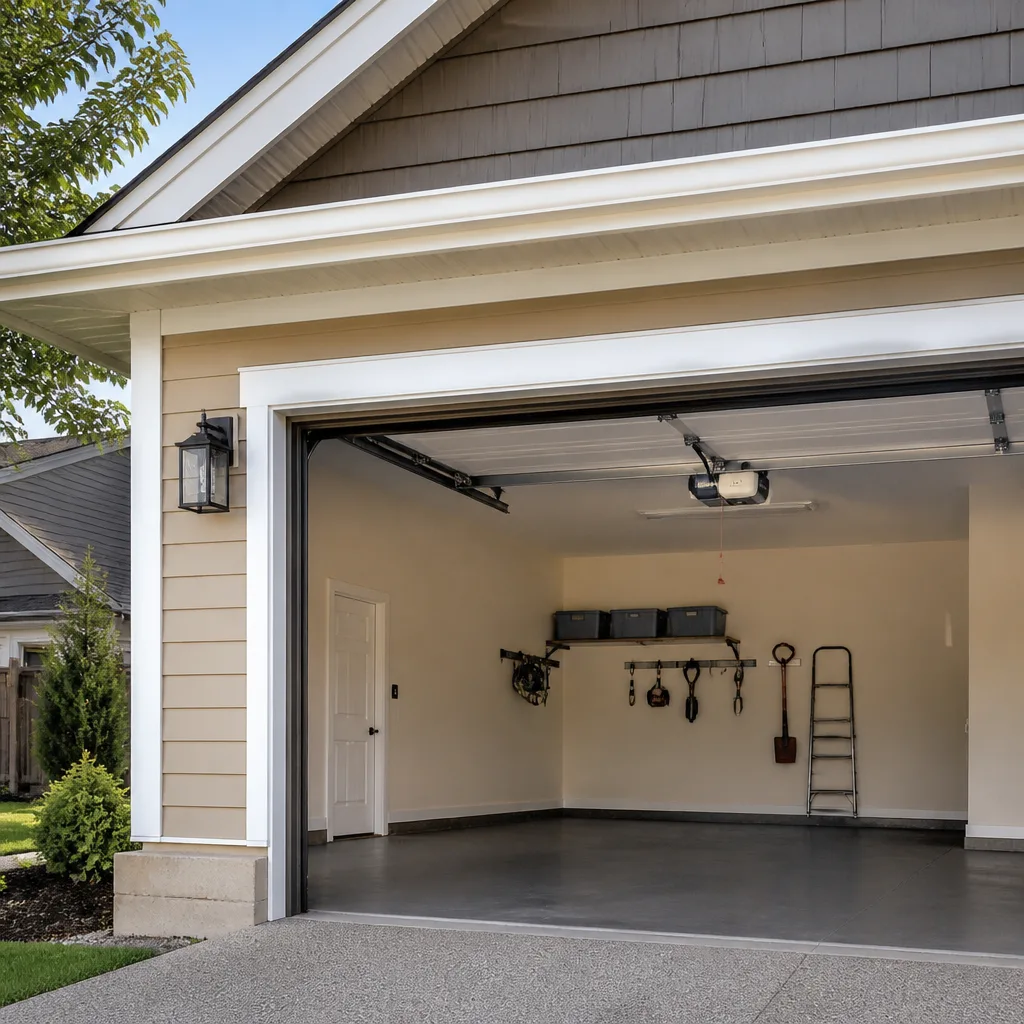 LiftMaster openers
 Chamberlain openers
Full 25-point door and opener safety check with every visit - springs, cables, rollers, tracks, and your LiftMaster or Chamberlain opener included
You get a price before we start. It does not change when the pro arrives.
Get your free estimateGarage Door Warning Signs: A Merritt Island Homeowner’s Reference Guide
Most garage door advice tells you to watch for a door that won’t open. By the time that happens, the repair is already the expensive kind. The warning signs that actually matter show up weeks earlier, and they’re quieter: a half-second hesitation before the door moves, a faint grinding note that wasn’t there last month, a spring coil that looks chalky instead of shiny. In our experience working on Merritt Island doors, the homeowners who catch these early signals spend far less than the ones who wait for a bang. This guide walks through each subtle sign, explains the specific mechanical failure it predicts, and shows you how to check your own door safely in Merritt Island without touching the parts that can hurt you.
Quick Answer
The earliest garage door warning signs are a brief hesitation before the door moves, uneven or jerky travel, a grinding or popping sound, cables that look fuzzy or rusted, and a door that feels heavier than it should when you lift it by hand with the opener disengaged. Any one of these points to a specific part wearing out, and most are far cheaper to fix before they fail completely. Visual and sound clues almost always show up before the door stops working.
Styles & brands we work with
- Raised-panel steel
- Carriage house
- Modern flush
- Full-view glass
- LiftMaster openers
- Chamberlain openers
Table of Contents
- Why the Subtle Signs Matter More Than the Obvious Ones
- Reading the Three Sounds: Grinding, Popping, and Screeching
- A Visual Inspection Guide for Cables, Springs, and Rollers
- The “Door Feels Heavy” Test and What It Tells You
- Opener and Sensor Warning Signs: Electrical vs. Mechanical
- How Florida Humidity and Heat Create Hidden Warning Signs
- A Simple Monthly Checklist for Merritt Island Homeowners
- When to Call a Professional
Why the Subtle Signs Matter More Than the Obvious Ones
A garage door is a system under constant tension. The springs hold the weight, the cables transmit that force, and the opener mostly just guides the door up and down. When one part starts to wear, the others compensate, which is exactly why the first symptoms are so easy to miss. The door still opens. It just opens a little differently than it did last year.
On Merritt Island, where the garage is often the main way in and out of the house, that slow drift matters. A door that hesitates for half a second before rising is not simply “getting old.” That hesitation usually means the torsion spring has lost some of its tension, so the opener is doing more of the lifting than it was designed to do. Left alone, that extra strain shows up as a cable wearing faster, a roller riding off its track, or a spring that finally snaps.
We see the pattern constantly. The homeowner noticed something months ago but wrote it off. Then a spring breaks and the door comes down hard. When that happens, the same homeowner calls for emergency service on a door that could have been serviced on a normal day for a fraction of the disruption. The repair is always cheaper before the failure.
This isn’t about scaring anyone into a service call. It’s about giving you a decoder ring. Read the rest of this guide and you’ll know which sounds are harmless, which clues are urgent, and what to say when you pick up the phone.
Reading the Three Sounds: Grinding, Popping, and Screeching
Every garage door makes noise. A well-running door produces a steady, low mechanical hum with a soft rattle from the panels. That’s normal. What you’re listening for is a change, and three distinct sounds each point to a different mechanical problem.
Grinding. A grinding noise, especially near the top of the door travel, usually comes from the rollers. When a roller’s bearing dries out or the nylon wheel wears down, the metal housing starts scraping the track instead of rolling through it. Grinding can also come from a torsion spring that has lost its lubrication and is binding against itself. Rollers and spring lubrication are both inexpensive fixes. Ignore the grind and the roller can seize, which puts sideways pressure on the track and bends it.
Popping. A single sharp pop, or a series of pops as the door opens, is the most serious of the three. Popping often signals a torsion spring that is losing coils or a cable that has jumped its drum. On an extension-spring door, popping can mean a spring has stretched to the point where its safety cable is catching. This is one of the few sounds that warrants stopping use of the door until a technician looks at it. Popping is often the last noise before a spring breaks.
Screeching. A high-pitched screech, usually at the start or end of the cycle, points to metal-on-metal contact. The most common source is the opener’s rail or a dry hinge, but it can also come from a bent track rubbing against a roller. Screeching is rarely an emergency, but it speeds up wear on everything it touches.
Here’s the practical takeaway: grinding means “fix this soon,” popping means “stop using the door,” and screeching means “lubrication and adjustment are overdue.” If you can describe the sound accurately to the person on the phone, you’ll get a far more accurate estimate before anyone arrives. Our garage door repair technicians can usually narrow down the source from a good description alone.
A Visual Inspection Guide for Cables, Springs, and Rollers
You don’t need to be technical to do a useful visual check. You just need to know what to look at, and what to describe. Walk into your garage, leave the door closed, and look at these three areas.
Cables. Look at the steel cables that run along each side of the door. A healthy cable is tight, straight, and consistent. A failing cable shows one of three things: fraying (tiny broken wires sticking out, making the cable look fuzzy), rust (brown or orange streaks along the strand), or slack (the cable sags or sits loose against the drum). Fraying is serious because a cable with broken strands has lost strength. If you see fraying or a slack cable, keep the door down and call a technician.
Springs. There are two kinds. A torsion spring is the coil above the door, mounted to a shaft. An extension spring runs along the horizontal track on each side. For a torsion spring, look at the coil’s surface. A shiny, uniform coil is healthy. A coil that’s chalky, flaking, or shows a distinct gap where two coils used to touch is under strain. For an extension spring, look for a visible gap in the coil or a stretched, sagging shape. Never reach up to touch a spring while checking. Look, don’t touch.
Rollers. These are the small wheels in the track on each side. A good roller is round, smooth, and spins freely. A worn roller looks flat-sided, cracked, or dry with a white, powdery residue at the bearing. Worn rollers are the single most common cause of grinding and uneven travel.
Write down what you see in plain words. “The cable on the left side looks rusted about halfway up” gives a technician a much clearer picture than “the door is acting weird.” If you want to schedule a look, our garage door spring repair team handles the dangerous side of this work, so you don’t have to.
The “Door Feels Heavy” Test and What It Tells You
This is the single most valuable test a homeowner can run, because it tells you how much life is left in your springs without you touching a single mechanical part. Do it carefully and only with the door closed and the opener disengaged.
- Close the door fully. The door must be all the way down on the floor.
- Pull the emergency release cord. This is the red cord hanging from the opener rail. Pulling it disconnects the door from the opener, so the door can move freely by hand.
- Lift the door slowly about a foot. Use the bottom panel’s handle, not the edges between panels.
- Let go and observe. A door with healthy springs should stay roughly where you left it, or rise gently. If it drops back down quickly or feels unusually heavy, the springs are no longer balancing the door’s weight.
- Re-engage the opener. Run the opener once to reconnect the carriage. Check that the door operates normally afterward.
Do not put your hands anywhere near the springs, cables, or the shaft during this test. A door that feels heavy is a door whose springs are working harder than they should, and that’s the state in which they’re most likely to fail. A heavy door on Merritt Island is often the last warning before a spring breaks. It’s also a clear sign to call a technician rather than wait. This test, done monthly, is worth more than any checklist you’ll find online.
Opener and Sensor Warning Signs: Electrical vs. Mechanical
Opener problems fall into two categories, and the distinction matters because one you can wait on and the other you shouldn’t. Electrical problems tend to be intermittent and puzzling. Mechanical problems tend to be consistent and loud.
Electrical warning signs usually show up as intermittent behavior. The door opens halfway and stops. The opener clicks but the door doesn’t move. The remote works from the driveway but not two feet closer. These symptoms point to the opener’s logic board, a failing sensor, or a weak transformer, not to the door itself. On older Craftsman and Genie units, these symptoms often appear during humid weather when a sensor lens fogs up. On modern LiftMaster and Chamberlain systems, you’ll see them as flaky app connectivity or a wall control that responds slowly. Electrical problems rarely strand you without warning, so you have some time to schedule a diagnostic.
Mechanical warning signs show up as consistent physical symptoms: the door grinds every time, or the opener strains audibly but the door barely moves. Those point to the door’s hardware, not the electronics. Older Raynor and Craftsman openers also fail mechanically when the drive gear inside the unit wears down, producing a steady clicking sound with no movement. That’s a mechanical failure inside the opener itself, not a sensor issue.
One test narrows things down quickly. Press the wall control while watching the opener’s light. If the light comes on but the door doesn’t move, the opener is receiving power but failing to drive the door: a mechanical problem. If the light doesn’t come on, the opener isn’t getting power or the control is disconnected: an electrical problem. Either way, our garage door opener repair technicians work on LiftMaster, Chamberlain, Genie, Craftsman, and Raynor systems regularly, so the unit you already own is the one that gets repaired.
How Florida Humidity and Heat Create Hidden Warning Signs
Merritt Island’s climate does something specific to garage doors, and it’s the source of many warning signs homeowners misread as cosmetic. Warm, humid air holds moisture against steel parts inside the garage. That moisture doesn’t cause dramatic damage. It causes quiet, gradual wear.
Spring coils grow a surface oxidation. The spring looks dull and slightly chalky instead of shiny, and the surface feels rougher than it should. Many homeowners assume this is just age. What it actually signals is that the coil’s steel is losing surface integrity, and the spring is often under more tension than its design allows. A chalky, dull spring has a shorter service life than a shiny one.
Cable strands corrode from the inside. This is the one that catches people off guard. A cable can look fine from the outside while individual strands inside the strand bundle are weakening. The visible warning comes when the outer surface starts to show rust spotting or the cable looks slightly swollen. At that point, the cable’s strength has already dropped. We’ve seen cables fail with no prior visible fray because the inner strands went first.
Rollers dry out faster than they would elsewhere. Humidity accelerates bearing grease breakdown, so Merritt Island rollers tend to squeal and grind earlier than a homeowner might expect.
The heat also matters. Panels expand and contract through the day, and the panel’s metal slightly expands outward. Over years, the hinges and the top bracket take more load than they should. That’s the reason you’ll see a hinge screw backing out of the door’s panel on Merritt Island more often than you would in a drier climate. These details aren’t cosmetic. Each one is an early warning about a part that’s already working harder than it should. Our Merritt Island Garage Door Repair Pros team treats these as real signals, not cosmetic concerns.
A Simple Monthly Checklist for Merritt Island Homeowners
Running a full inspection takes about ten minutes, and the pattern is easy to remember. Here’s the routine we recommend.
- Run the door and listen. Cycle it once and pay attention to any new sound. Compare it to what you heard last month.
- Look at both cables and both springs. Note any rust, fraying, or chalky surfaces.
- Look at the rollers in both tracks. Tug each one gently. It should spin smoothly with no wobble.
- Do the door-feels-heavy test described earlier.
- Test both safety sensors. Walk through the door’s path with the door closing. It should reverse. Then press the wall control with the door open and put a hand in the beam’s path. The door should not close.
- Check the opener’s light and the wall control. If either is sluggish, that’s an electrical note.
- Wipe the sensor lenses with a soft cloth, since moisture fogging is common in Merritt Island.
Write one sentence about anything odd. That log is worth more than any service call description, and it makes the conversation with a technician faster and more accurate. It also helps you spot the exact moment a small thing becomes a real problem, which is the whole point of this approach.
Common Mistakes to Avoid
We’ve seen the same handful of mistakes cost homeowners time, money, and sometimes a whole door. Here’s what to watch for.
- Assuming the noise is “just age.” A new grinding or popping sound is never just age. It’s a specific part telling you it’s worn out. Waiting doesn’t make the repair cheaper.
- Lubricating tracks instead of rollers. Spraying grease into the track itself attracts grit from Merritt Island’s warm, humid air, which turns into a paste and accelerates roller wear. The correct target is the roller bearings and hinges, not the track surface.
- Trying to adjust a torsion spring by yourself. Springs are under enormous tension and are one of the most hazardous parts of the trade. Never touch one with tools. If a spring looks wrong, call a technician.
- Cutting the safety cable on an extension-spring door. The safety cable is what catches a spring if it breaks. Some homeowners remove it during a DIY repair, which turns a spring break into a dangerous event. Leave it in place.
- Ignoring a single tiny movement on the door. If the door sags or hesitates and then catches itself, it may be a loose hinge or an unbalanced spring. Small movements are the same failure that leads to bigger ones.
- Assuming a Flushing or Orlando pattern applies to Merritt Island. Weather, humidity, and local code are different. Registers and hardware from other climates don’t account for what your door actually goes through. Local symptoms need local eyes.
- Using a handyman instead of a garage door specialist. Springs, cables, and torsion assembly work are a specific trade. We repair garage doors and openers only, not general home repairs. A specialist diagnoses the problem correctly the first time.
When to Call a Professional
Some repairs are safe for a homeowner with a screwdriver. Others need a trained technician, and knowing the difference prevents real injuries. Call a professional when you see a frayed or slack cable, a spring that shows a gap or flaking, a door that feels heavy after the gap test, a door that makes a popping sound, or an opener that runs but doesn’t move the door.
Emergency service is worth calling when a door won’t close or won’t open and the garage is the main entry, or when a spring breaks and the door drops. Prompt service also makes sense when you’ll be away and can’t watch the door. We work on LiftMaster, Chamberlain, Genie, Craftsman, Raynor, Clopay, Amarr, and Wayne Dalton products, so the unit you already own gets the right part the first time. A technician with up to 11 years of experience can usually diagnose the problem before arriving. Merritt Island Garage Door Repair Pros offers free estimates in Merritt Island. Call (855) 337-1671.
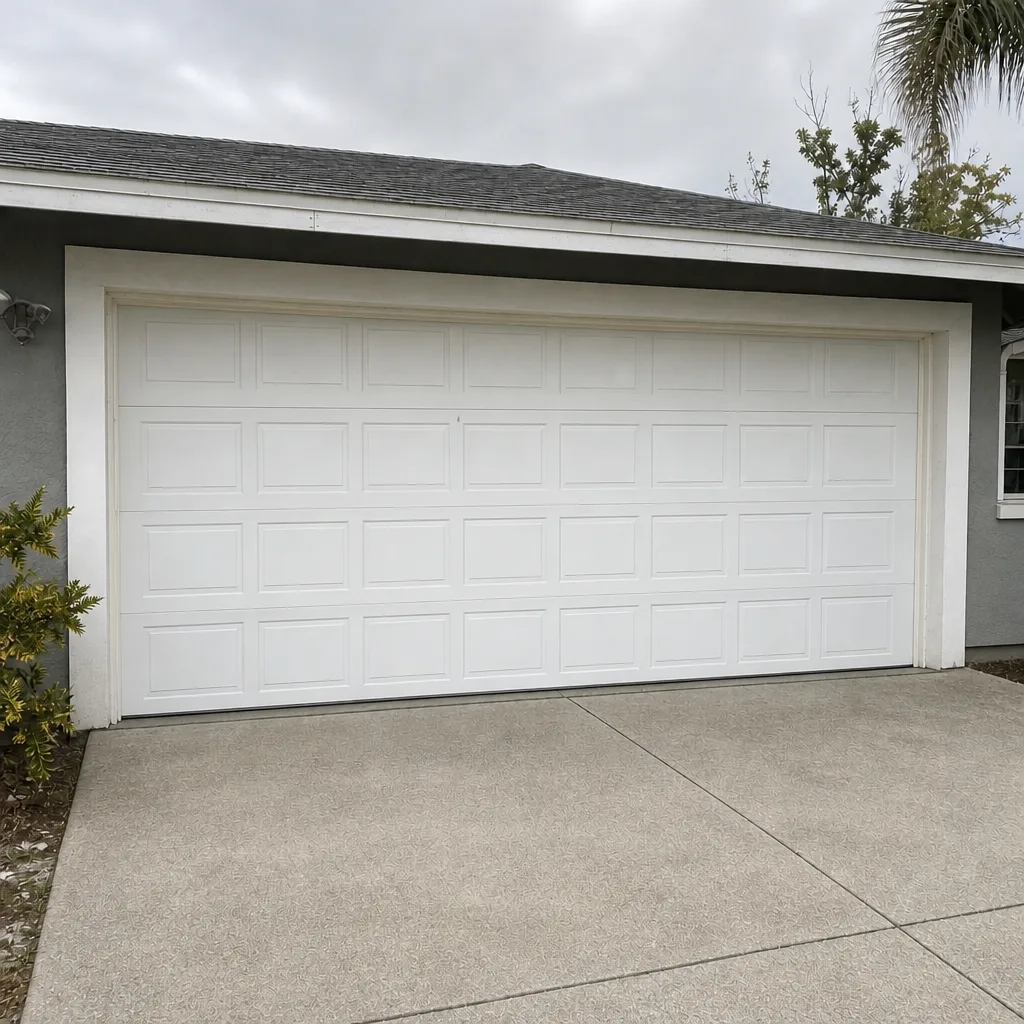
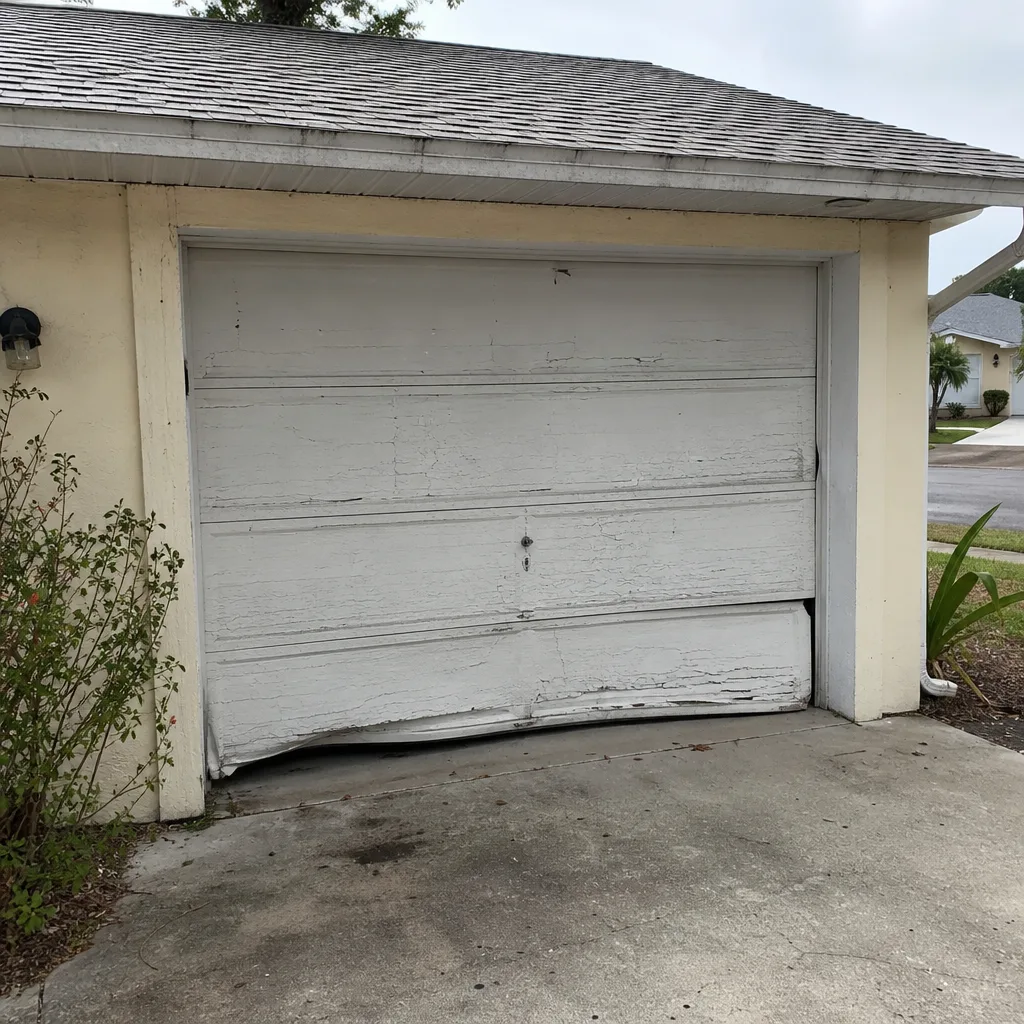
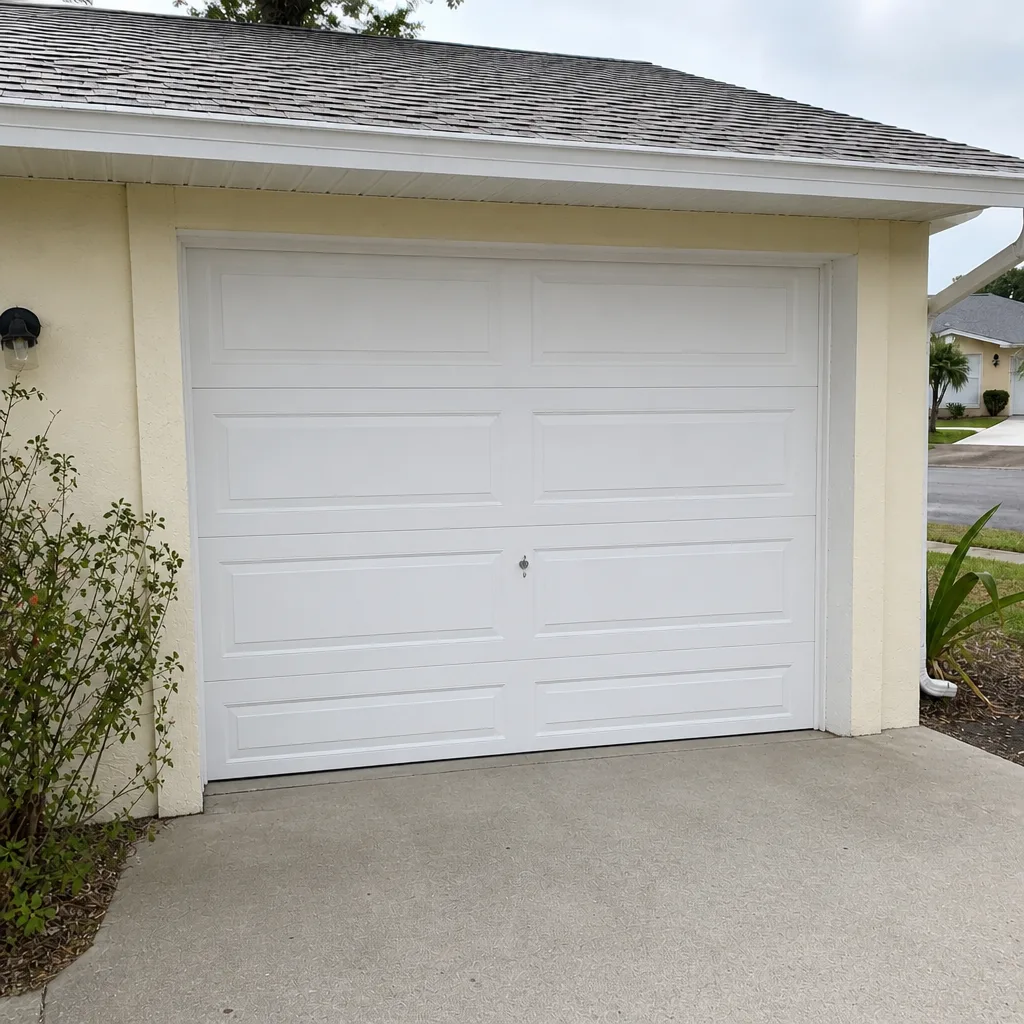
See the difference
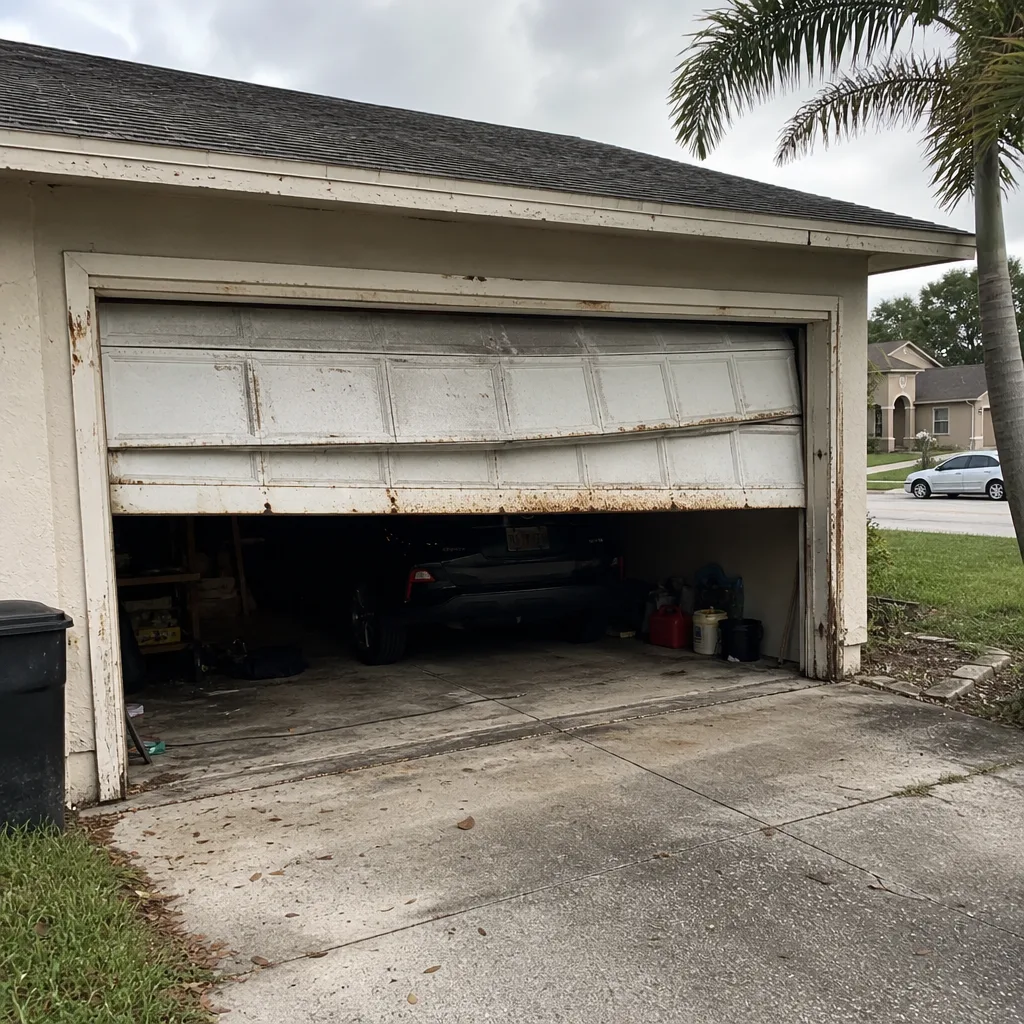 Before
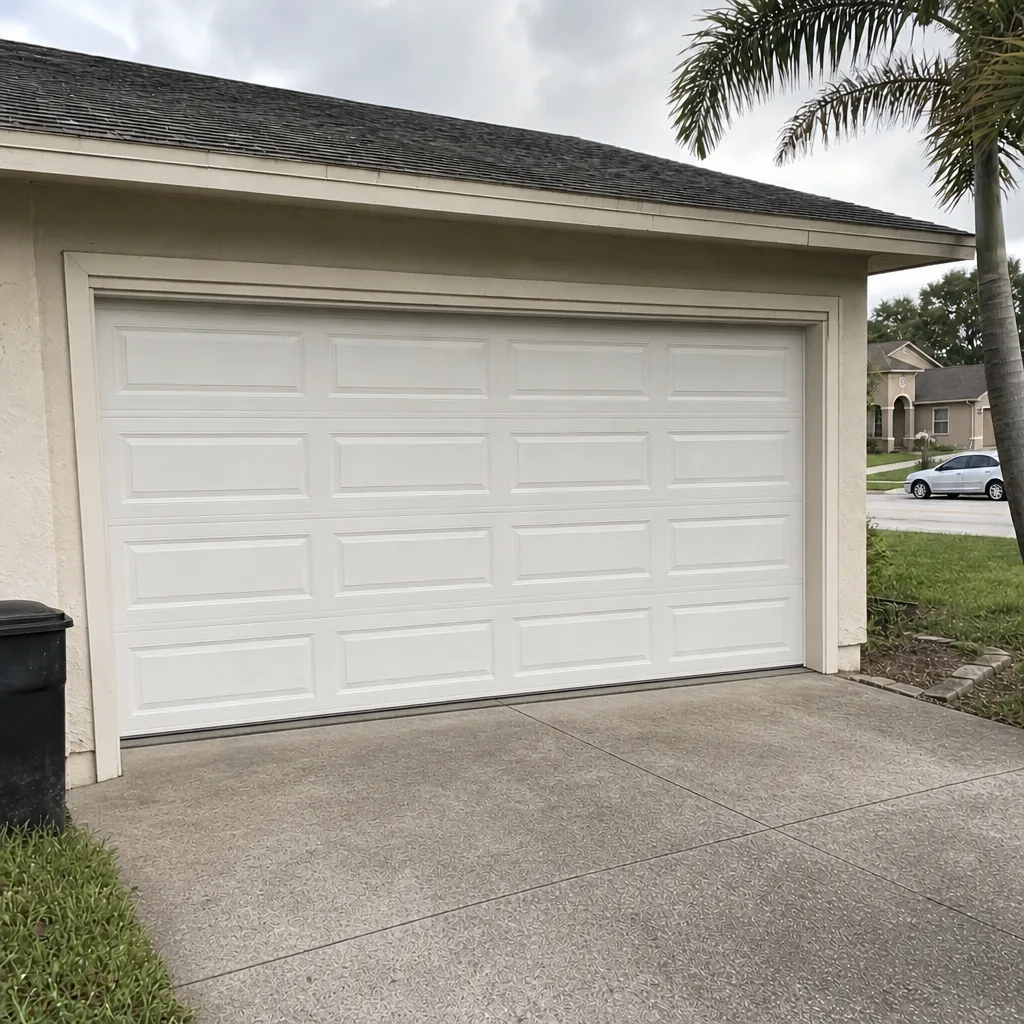 After
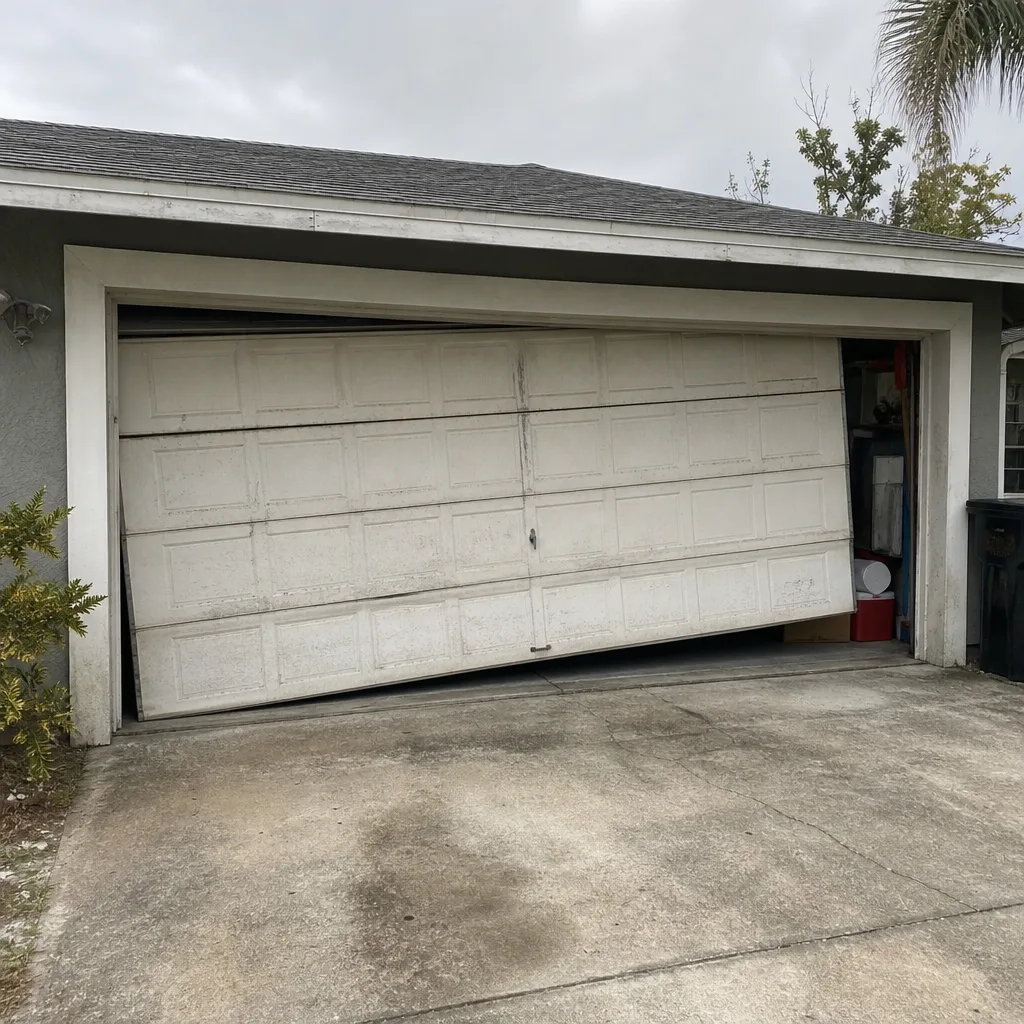 Before
 After
 Before
 After
Frequently Asked Questions
The earliest sign is a brief hesitation before the door starts to move, often paired with a duller, flatter sound than the door used to make. The door itself may seem to pause for half a second before it rises. That hesitation means the spring is no longer fully counterbalancing the weight. If you also hear a pop or see a chalky surface on the coil, the door should stay down until a technician has looked at it. Call (855) 337-1671 for a free estimate on a replacement; estimates are free.
No. A well-maintained door should be quiet. Grinding usually comes from worn rollers or a dry hinge, which is a repair worth scheduling. Popping is more serious and usually means the torsion spring or a cable has jumped. If you hear a pop, don’t run the door. Call us for a diagnostic. Call (855) 337-1671 and we’ll book a diagnostic visit; estimates are free.
Watch the opener light. If the light comes on and the door doesn’t move, the problem is mechanical inside the door or the opener’s drive. If the light doesn’t come on, the problem is electrical. That simple test saves a lot of shopping for parts you don’t need. If you’d like a technician to look, our opener service covers LiftMaster, Chamberlain, Genie, Craftsman, and Raynor systems. Call (855) 337-1671; estimates are free.
A center sag usually points to two things: a worn top-bracket or a worn hinge, or a spring that’s no longer balancing the door’s weight on one side. Florida heat causes the door panels to expand and contract through the day, which puts more load on the vertical hinge points. A technician can usually tell which is causing your sag in a single visit. Call (855) 337-1671; estimates are free.
Yes, if you follow the steps exactly and don’t touch the springs, cables, or shaft. Close the door, pull the emergency release, lift the bottom panel about a foot, and let go. If it drops or feels heavy, stop and call a technician. Do not re-engage the opener if the door feels heavy. Call (855) 337-1671; estimates are free.
Use plain location words: “left side,” “top of the door,” “halfway down the cable.” Name the symptom: rusted, frayed, chalky, loose, grinding, or popping. That description gets you a much closer estimate before anyone arrives. If you’re not sure what you’re seeing, a photo sent at the time of the call helps a lot. Call (855) 337-1671 and describe it to us; estimates are free.
The Bottom Line
The signs that matter most are the quiet ones: a half-second hesitation, a new grinding note, a spring coil that’s gone dull instead of shiny, a door that feels heavy after the gap test. Each one tells you which part is wearing out and how soon it needs attention. On Merritt Island, heat and humidity accelerate every one of these, so the schedule that works elsewhere doesn’t apply here. Learn to read your own door and describe what you see, and you’ll catch a small problem before it becomes a full spring failure or a door repair. Our team works on every major brand – LiftMaster, Chamberlain, Genie, Clopay, Craftsman, Raynor, Amarr, and Wayne Dalton – so the door you already have is the one we fix. Contact Merritt Island Garage Door Repair Pros at (855) 337-1671 for a free estimate.
Written by the team at Merritt Island Garage Door Repair Pros.