Last updated November 23, 2026
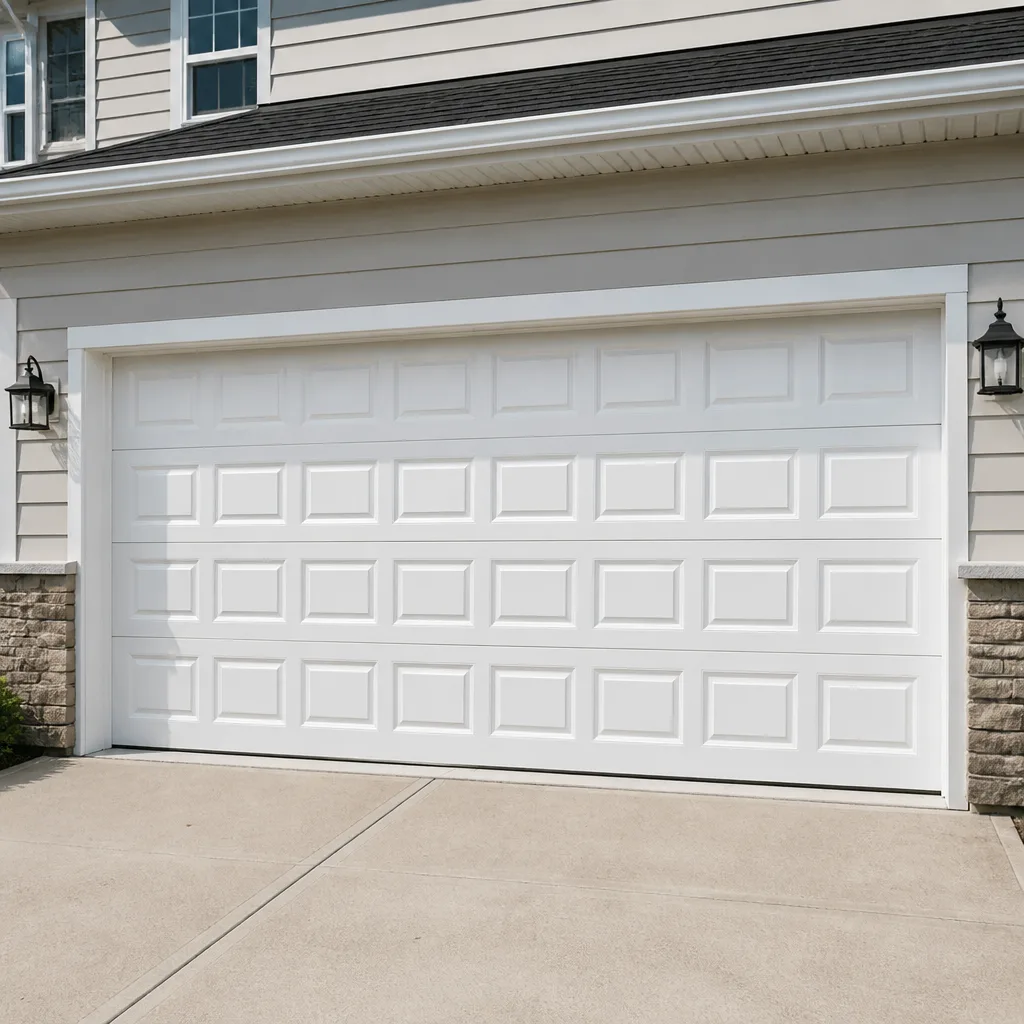 Raised-panel steel
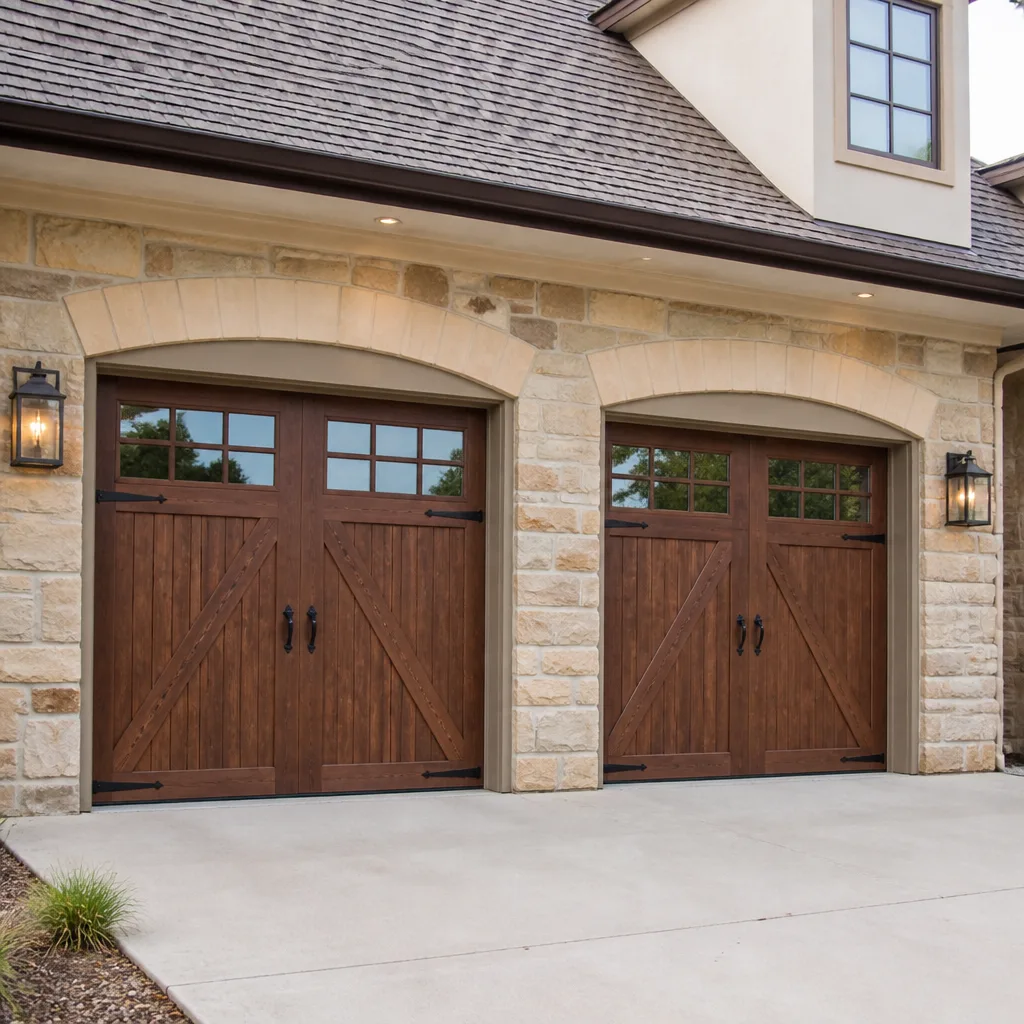 Carriage house
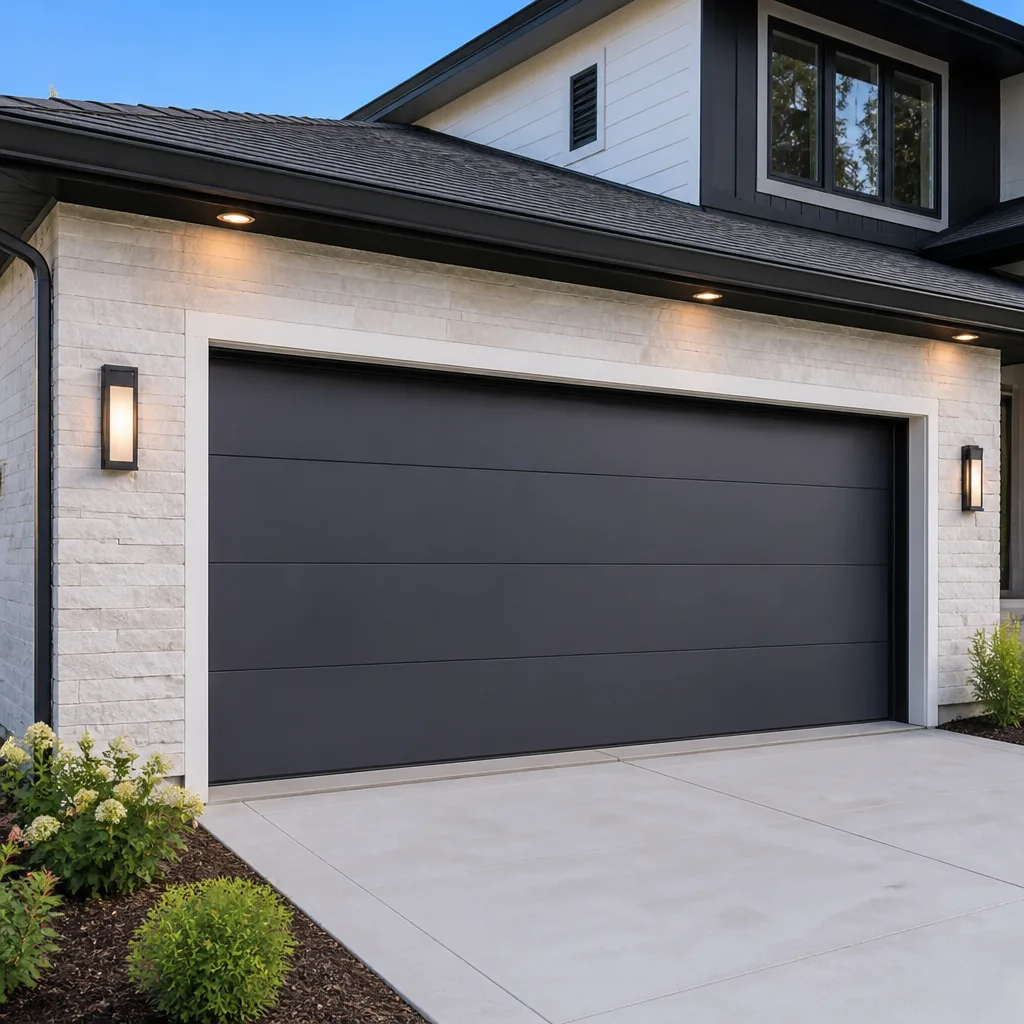 Modern flush
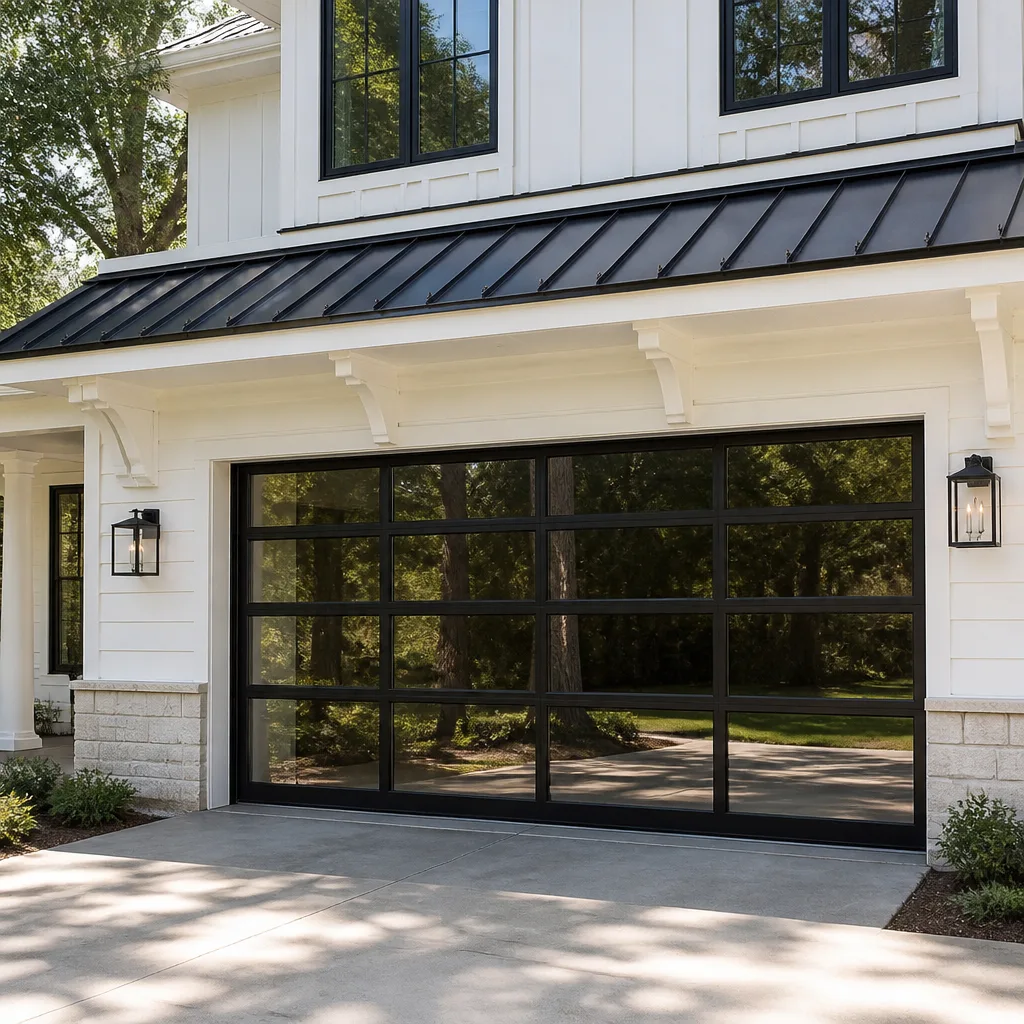 Full-view glass
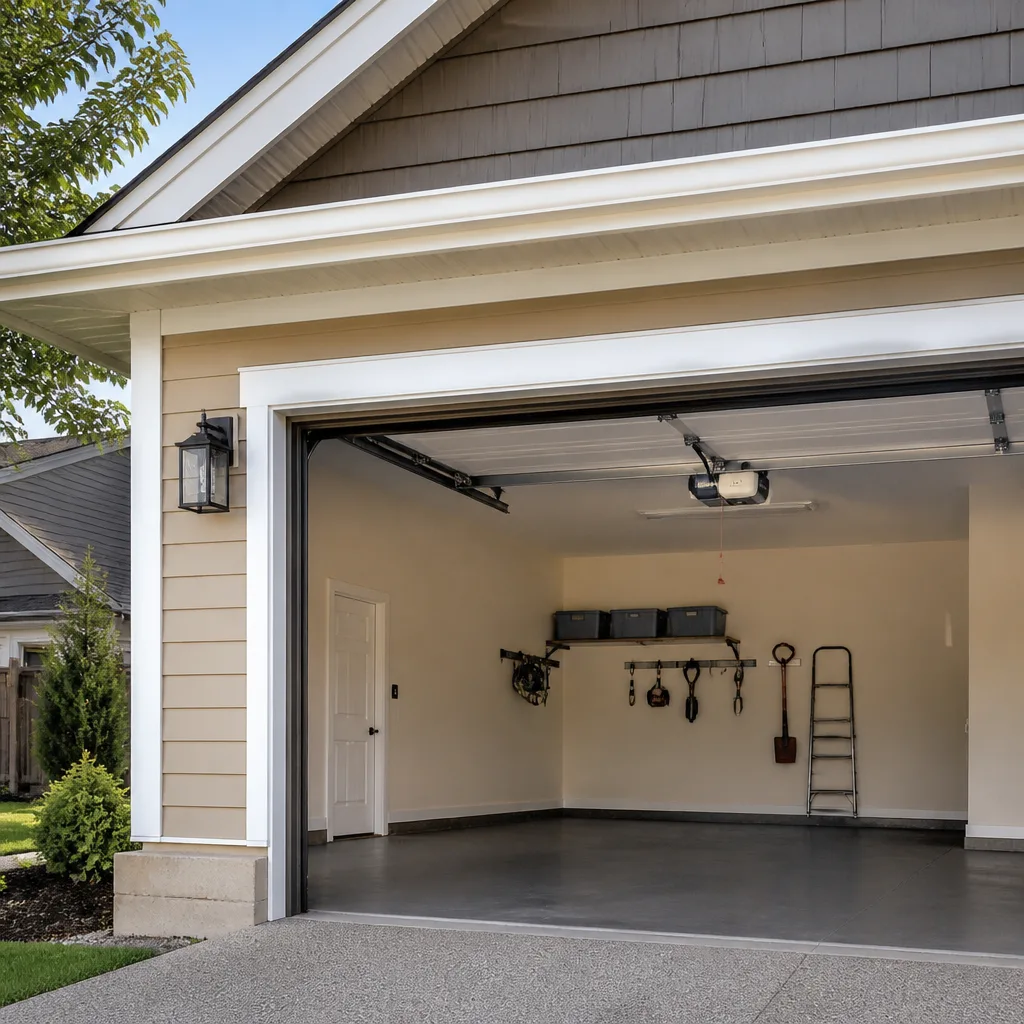 LiftMaster openers
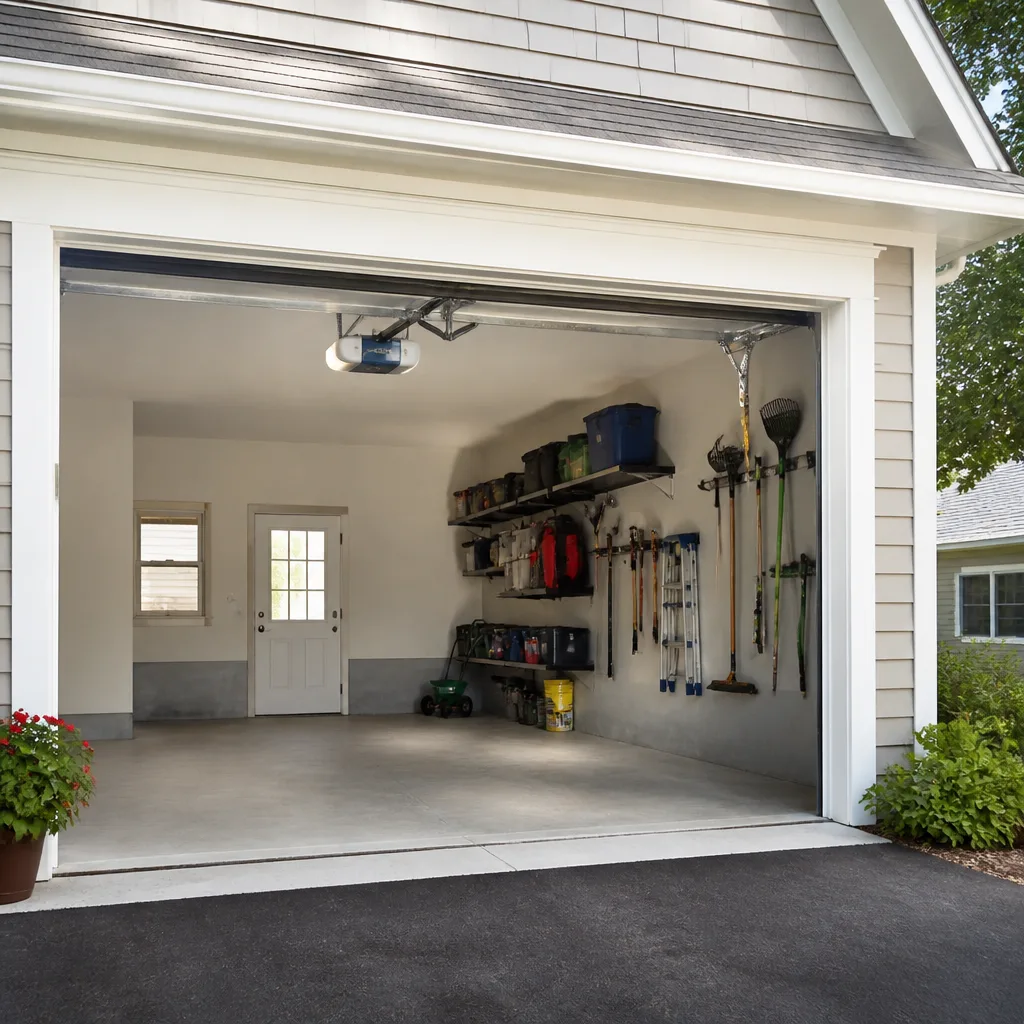 Chamberlain openers
Full 25-point door and opener safety check with every visit - springs, cables, rollers, tracks, and your LiftMaster or Chamberlain opener included
You get a price before we start. It does not change when the pro arrives.
Get your free estimateSeasonal Garage Door Care for Merritt Island: Year-Round Homeowner’s Guide
Most garage door maintenance advice you’ll find online assumes a climate with four traditional seasons, and almost none of it fits Merritt Island. The common misconception is that a door either works or it doesn’t, and that the only thing you need to do is call someone when it stops. The reality is that this barrier island runs on a different calendar: a hurricane prep season, a long stretch of peak heat and humidity, a brief dry-and-cool window, and a spring transition. Each one puts a different kind of stress on springs, cables, panels, sensors, and openers. The homeowners who get the longest life out of their doors aren’t the ones who fix things fastest. They’re the ones who match the task to the season. In this guide we’ll walk through what to check and when, so you can plan the work instead of reacting to it.
Quick Answer
Seasonal garage door care in Merritt Island means tuning your maintenance to the local cycle rather than the standard four-season model. The critical windows are April through May for pre-hurricane hardware and weatherstripping checks, June through September for humidity and heat monitoring, September through November for post-storm inspection, and December through February for the hardware work that holds best in dry, cool air. Doing the right task in the right window is what keeps a door running quietly and safely year after year.
Styles & brands we work with
- Raised-panel steel
- Carriage house
- Modern flush
- Full-view glass
- LiftMaster openers
- Chamberlain openers
Table of Contents
- Why Merritt Island’s Seasons Don’t Match the Standard Four-Season Model
- Pre-Hurricane Season Checklist: April Through May
- Peak Heat and Humidity Season: June Through September
- Post-Storm Inspection: September Through November
- The Dry-and-Cool Window: December Through February
- The Spring Transition Period: March
- UV and Oxidation Patterns Unique to a Space Coast Barrier Island
- A Simple Year-Round Maintenance Rhythm
Why Merritt Island’s Seasons Don’t Match the Standard Four-Season Model
Standard garage door advice is written for places that freeze. It warns about ice in the tracks, salt on the roads, and the spring thaw. None of that applies here. Merritt Island’s winters are mild, and the real enemies of a garage door in this climate are heat, humidity, ultraviolet light, and wind events, not cold.
That changes the whole maintenance calendar. In a cold climate, the hardest season on a door is winter. Here, the hardest season is the wet, hot stretch from June through September, when humidity sits high for months and temperatures push the metal and the lubricants on it. The annual hurricane season, which runs June through November, adds a separate set of concerns: wind pressure on panels, debris against the door, and the question of whether the hardware is tight enough to hold through a named storm.
So instead of spring, summer, fall, and winter, we think in four practical windows:
- Pre-hurricane season (April through May): hardware, cable, and weatherstripping checks before the storm window opens.
- Peak heat and humidity (June through September): watching for wood swelling, sensor drift, and opener overheating.
- Post-storm inspection (September through November): what to check right after a wind event, and what can wait.
- Dry-and-cool window (December through February): the best time for spring replacement, panel painting, and cable work.
There’s also a short spring transition in March, when temperatures rise and the first stretch of humid air arrives. It’s a good moment for a general tune-up before the heavy season. If you keep these four windows in mind, you’ll never be guessing about when to do what on a Merritt Island door.
Pre-Hurricane Season Checklist: April Through May
April and May are the last calm, dry-ish weeks before the storm season opens. This is when the hardware on your door should be checked, because a loose bracket or a frayed cable that’s fine in a light breeze can fail under wind load. The goal here isn’t to make the door hurricane-proof – no garage door is – but to make sure the parts that hold it together are sound.
Here’s the checklist we walk through before storm season:
- Test the balance of the door. Disconnect the opener and lift the door halfway by hand. A balanced door stays put. If it drops or rises on its own, the springs are tired and the door is fighting the opener, which is a problem before any storm.
- Check the cables for fraying or slack. Look along the length of each cable for broken strands, kinks, or looseness. Cables under tension are dangerous to handle, so this is a look-only check; leave any adjustment to a trained technician.
- Inspect the hinges and rollers. Worn rollers and loose hinge plates create play in the panels, and play is what wind exploits. Tighten what’s loose and replace rollers that are flat-spotted or cracked.
- Look at the weatherstripping along the bottom and sides. A torn bottom seal lets wind-driven rain in and lets conditioned air out. If the seal is cracked or coming away, replace it before the rains start.
- Confirm the door closes flush and seals evenly. A door that closes with a gap at one corner is a door that will rattle and leak in a storm. Adjust the travel limits on the opener and check the track alignment.
- Test the auto-reverse safety feature. Place a small object in the door’s path and confirm the door reverses on contact. This is a safety requirement and a good proxy for whether the opener is working correctly.
If any of this feels beyond a visual check, that’s a reasonable point to bring in a professional. A pre-season garage door repair visit in Merritt Island during April or May usually catches the small problems before they become storm-season failures. The price for the visit is quoted and agreed before any work starts, so there’s no surprise on the invoice.
One more thing worth doing in this window: clear the area around the door. Debris, stored items leaning against the door, and anything that could become a projectile in wind should be moved. The door itself is only as protected as the space around it.
Peak Heat and Humidity Season: June Through September
June through September is the stretch that does the most quiet damage to a garage door on Merritt Island. Humidity stays high for months, temperatures climb, and the door cycles in and out of a hot garage several times a day. Three problems come up again and again in this window.
Wood door panel swelling
If you have a wood or wood-composite door, the panels absorb moisture when the air is heavy. The panels swell slightly, and the door can start to bind in the tracks or close unevenly. You’ll notice it as a door that sticks partway down or needs a nudge. The fix isn’t to force it. It’s to check the track alignment and the hinges, and to keep the door’s finish intact so moisture has less chance to get into the wood. A painted or sealed surface is a moisture barrier, and repainting is a job best saved for the dry window later in the year.
Sensor misalignment from thermal expansion
The safety sensors at the bottom of the tracks are aimed at each other across a narrow beam. Heat makes metal and plastic expand, and the brackets that hold the sensors can shift just enough to break the beam. That’s why a door that worked all spring suddenly won’t close in July. Before you assume the opener has failed, check that the sensors are lined up and that nothing (a broom, a bin, a fallen leaf) is in the beam path. If realignment doesn’t fix it, the garage door opener repair visit will sort out whether it’s the sensor, the wiring, or the logic board.
Opener overheating
An opener motor in a hot garage works harder than the same motor in a cool one. Modern units from LiftMaster and Chamberlain have thermal protection that pauses the motor if it gets too hot, which is why a door sometimes refuses to move for a few minutes on a hot afternoon. Older Craftsman and Genie units can simply strain. If the opener is cutting out repeatedly in the heat, have it checked; it may be a sign the door is out of balance and the opener is doing work the springs should be doing.
During this window, keep the tracks clean and lightly lubricated with a product made for garage door hardware, not household oil. And listen. A door that starts to squeal or groan in July is telling you something is dry or loose.
Post-Storm Inspection: September Through November
After a wind event, the first question is always whether the door is safe to use. The answer depends on what the storm did, and the best approach is to separate what to check immediately from what can wait for a scheduled service call.
What to check immediately after a storm
- Look at the door from a distance before you touch anything. If a panel is buckled, a track is bent, or the door is hanging off one side, do not operate it. A door under spring tension that has been knocked out of alignment can come down hard.
- Check for debris in the tracks. Leaves, twigs, and blown grit are common after a storm and can jam the door. Clear what you can reach safely with the door closed and the opener off.
- Inspect the cables and springs visually only. If a spring looks stretched, kinked, or separated, or a cable is hanging loose, call a professional. Do not try to adjust or remove them.
- Test the safety sensors. Storms shake the brackets, and a sensor that’s been knocked out of line will stop the door from closing. Re-aim if needed.
- Run the door once and listen. If it moves smoothly and closes flush, it likely came through fine. If it grinds, hesitates, or reverses on its own, stop and book a service call.
What can wait for a scheduled visit
Cosmetic dents, scuffed paint, a slightly noisy roller, and weatherstripping that’s a little worn are all things that can be handled on a normal appointment rather than treated as an emergency. If the door opens and closes safely, you don’t need same-day service for a dent.
The line between “check now” and “book later” is whether the door still operates safely. If it doesn’t, that’s a genuine safety and security problem, and it’s exactly when emergency garage door service makes sense. We offer it as a real part of what we do, not as an upsell. If a storm has left you with a door you can’t close, call us at (855) 337-1671 and we’ll get it sorted.
The Dry-and-Cool Window: December Through February
This is the part of the Merritt Island year almost no homeowner takes advantage of. December through February is dry and mild, and that combination is ideal for the hardware work that’s fussy in humid weather. Humidity is at its lowest, so lubricants cure properly instead of staying tacky, and wood components are at their minimum swell. A door that fit tightly in July will fit a little differently in January, and that’s the window to work with it.
Three jobs belong in this window:
- Spring replacement. Torsion and extension springs are the most mechanically dangerous parts of a garage door, and they’re under constant tension. Replacing them in dry, cool conditions lets the new springs settle predictably and lets the technician work without fighting humidity. If your door is hard to lift or the springs are past their service life, this is the time to have them replaced.
- Panel painting and finish work. Paint and sealant need dry air and moderate temperatures to cure correctly. A wood or composite door painted in December or January holds its finish far better than one painted in the middle of a humid summer, and that finish is what protects the wood through the wet season.
- Cable replacement. Like springs, cables are inspected and replaced at their best in the cool, dry months, so the new cables and the hardware around them aren’t fighting moisture as they settle.
This is also the window to schedule the general tune-up you skipped in the fall. A garage door spring repair visit in Merritt Island is never something to handle yourself – the springs store enormous energy and can cause serious injury if they let go during handling. Trained technicians know how to release and re-tension them safely. The same goes for cables. We name spring repair as a service because we want homeowners to know we handle the dangerous part of the trade, not hand it off.
If you’re planning a full door replacement, the dry-and-cool window is also when measurements, ordering, and installation are simplest to schedule, since the work isn’t competing with storm-season emergency calls.
The Spring Transition Period: March
March is the bridge month. Temperatures climb, the first humid air arrives, and the door starts its transition from the dry season into the wet one. It’s a short window, but it’s a useful one for a general inspection before the heavy months.
What to look at in March:
- The door’s balance. Test it by hand with the opener disconnected. Any change from how it felt in January is worth noting.
- The seals and weatherstripping. Winter dryness can crack rubber seals; look for splits before the rains find them.
- The opener’s response. Cycle the door a few times and listen for changes in sound. A new rattle or grind is easier to fix now than in July.
- The sensor alignment. After months of temperature swings, the sensors may have drifted a little. A quick re-aim now saves a call later.
March is also a good time to schedule any repair that wasn’t urgent in the dry season but shouldn’t wait until summer. If you noticed a roller getting noisy in February, get it handled now. The goal is to enter June with a door that’s tight, quiet, and ready for the heavy season.
UV and Oxidation Patterns Unique to a Space Coast Barrier Island
A barrier island environment puts a specific kind of wear on a garage door, and it’s not the wear you read about in generic maintenance guides. The two forces that matter most are ultraviolet light and airborne oxidation, and both act on the door’s surface and its moving parts year-round.
UV light breaks down paint, sealants, and the plastic components on the door and opener over time. West-facing doors take the most sun, and their finish dulls and chalks first. Once the finish is compromised, moisture gets into wood or composite panels more easily, and the door starts to swell and bind in the wet season. The fix is to keep the finish intact: repaint or reseal when the surface starts to look chalky, and use a product made for exterior wood or composite. This is why we put panel painting in the dry-and-cool window: a finish applied in dry air holds up far longer against the UV load here.
Airborne oxidation affects the metal parts – hinges, rollers, tracks, and the small hardware that holds everything together. Left alone, oxidation turns into sticky residue that attracts grit, and grit wears rollers and rollers wear tracks. The practical countermeasure is simple: keep the moving parts clean and lightly lubricated with a garage-door-specific product, and wipe down the hardware when you notice buildup. A little attention in the dry months prevents a lot of noise and drag by summer.
Together, these two forces explain a pattern we see often on Merritt Island: a door that looks fine from the street but has a dull, chalky finish and stiff hardware. The damage is gradual and easy to ignore until the door starts to bind or the opener starts to strain. Interrupting it early – with a repaint, a hardware clean-up, and fresh lubrication – is far cheaper than dealing with the structural problems it leads to.
For homeowners with modern openers, this is also the season to check the app-connected features. A LiftMaster or Chamberlain unit with Wi-Fi and app control can log a door that opened more slowly than usual, and that log is a useful early warning. Legacy Craftman and Genie units don’t have that, which is why the visual and audio checks matter more. For a full picture of the parts and repair options on the door you already own, the Merritt Island Garage Door Repair Pros team can talk you through what’s worth doing and what can wait.
A Simple Year-Round Maintenance Rhythm
If you take one thing from this guide, make it a calendar. The work below is what we’d recommend for any Merritt Island homeowner who wants a door that runs quietly and safely all year.
- April through May: Pre-hurricane hardware check – balance, cables (visual only), hinges, rollers, weatherstripping, safety sensors, and a clear area around the door.
- June through September: Watch for wood swelling, sensor misalignment, and opener overheating. Keep tracks clean and hardware lightly lubricated.
- September through November: After any wind event, do the immediate checks. Book cosmetic and minor repairs for a scheduled visit.
- December through February: Spring replacement, cable replacement, panel painting, and a general tune-up, all in dry, cool conditions.
- March: Transition inspection – balance, seals, opener response, sensor alignment – before the heavy season.
That rhythm covers the whole year and matches the way the climate here actually behaves. If you’d rather not track it yourself, a scheduled tune-up in the dry window covers most of the important checks, and a quick pre-season inspection in the spring catches what the tune-up missed.
Common Mistakes to Avoid
- Treating the standard four-season schedule as gospel. Advice written for a freezing climate tells you to worry about ice in the tracks and salt on the road. Neither applies here, and following that schedule means you’ll do the wrong jobs at the wrong time and skip the ones that matter.
- Ignoring the dry-and-cool window. December through February is the best time for spring, cable, and paint work in Merritt Island, and most homeowners never use it. The result is that necessary work gets pushed into the humid season, where finishes cure poorly and hardware is harder to handle.
- Forcing a stuck door. A door that binds in July is usually a swelling wood panel or a misaligned track, not a stuck motor. Forcing it can bend panels and damage the opener. Find the cause before you make it move.
- Adjusting springs or cables yourself. These parts store dangerous energy and are the most common source of serious garage door injury. A visual check is fine; any adjustment or replacement should be done by a trained technician.
- Letting the finish chalk without intervening. Once UV has broken down the paint on a Merritt Island door, moisture gets in and the door starts to swell and bind. Repainting when the surface first looks dull is far cheaper than repairing the structural damage later.
- Skipping the post-storm check because the door “looks fine.” Bent tracks, stretched springs, and misaligned sensors don’t always show from a distance. A quick inspection after a wind event catches problems while they’re still minor.
- Assuming the opener is at fault when the door won’t close. Thermal expansion, a misaligned sensor, or a door that’s out of balance can all make the opener look bad. Diagnose the door before replacing the opener.
See the difference
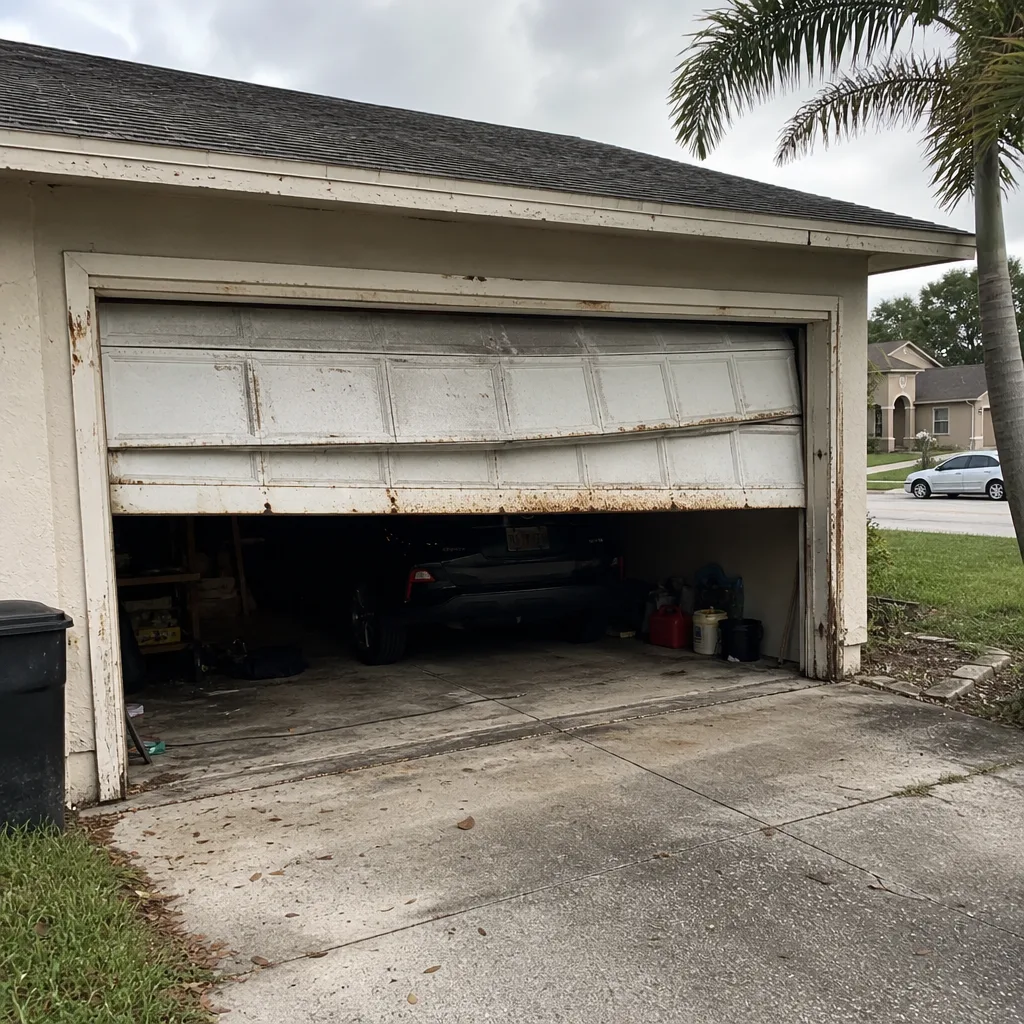 Before
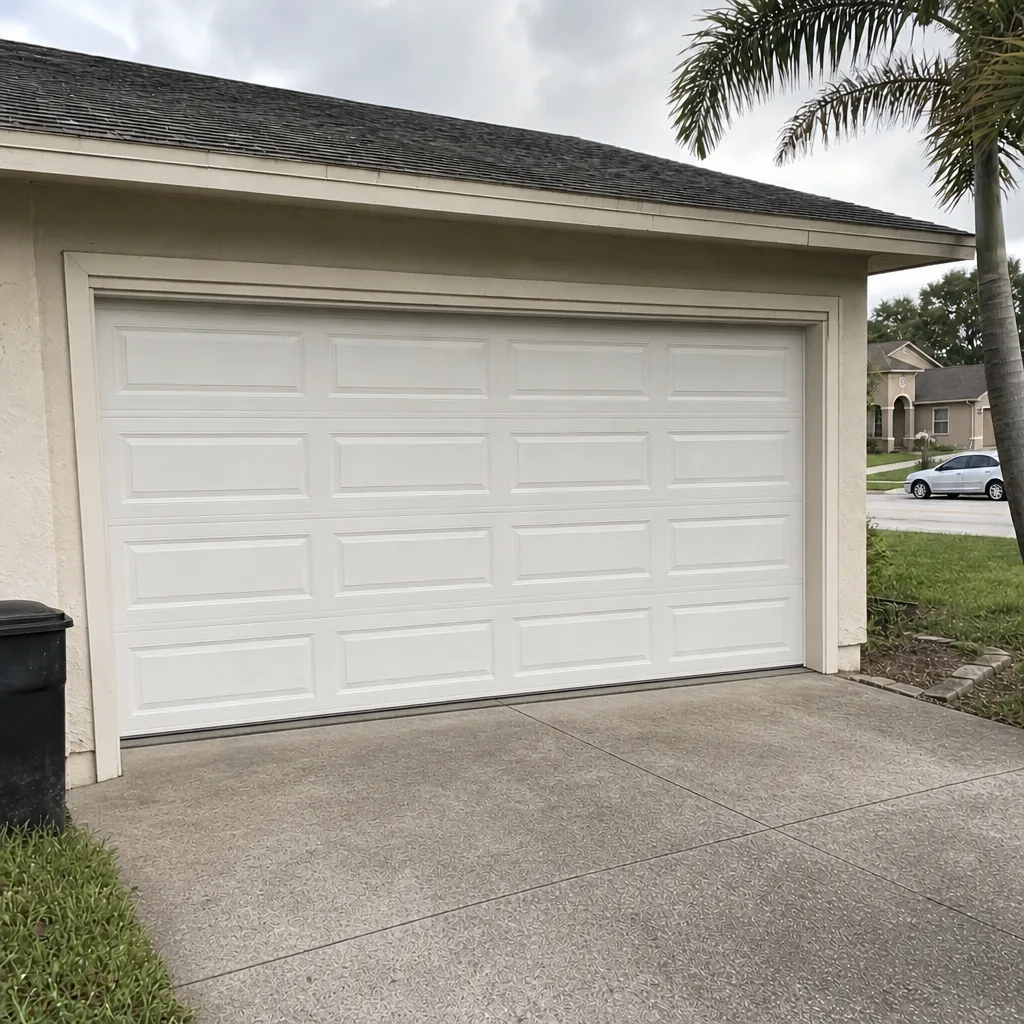 After
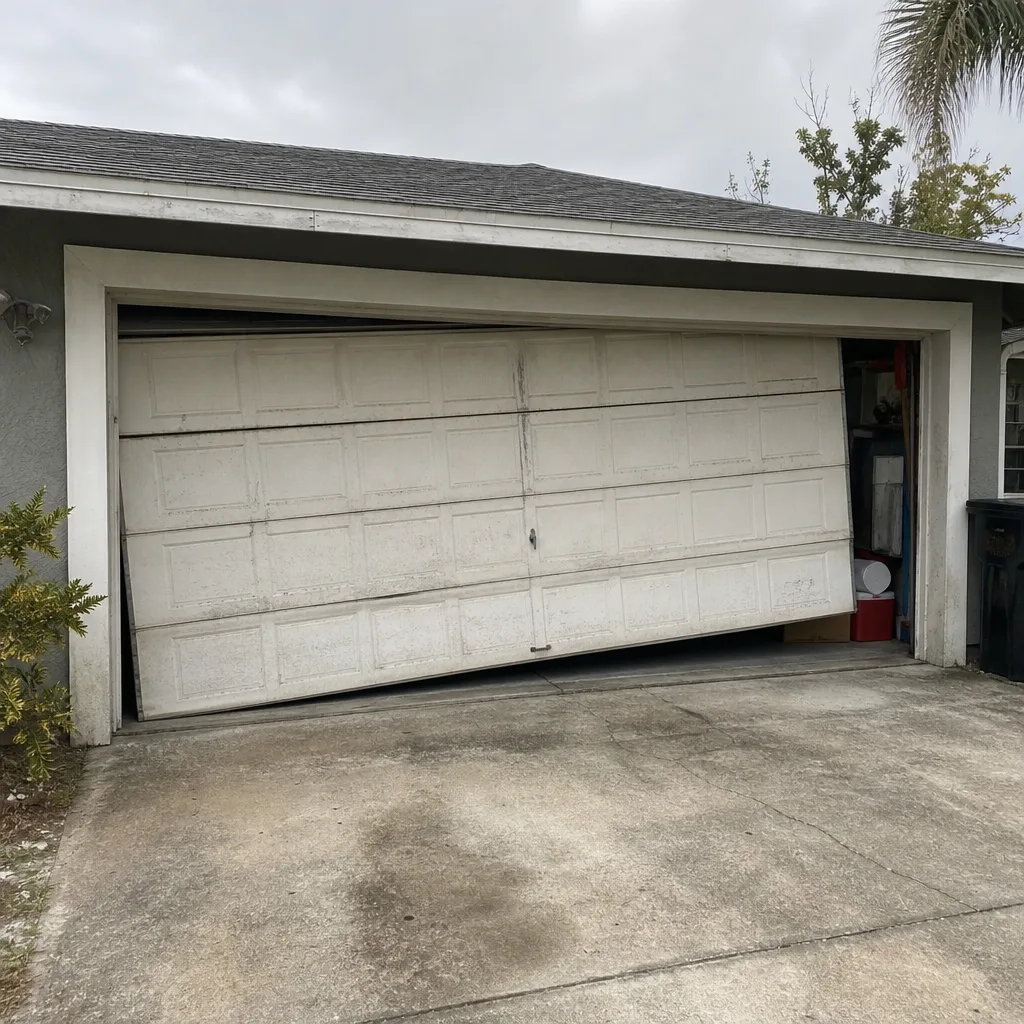 Before
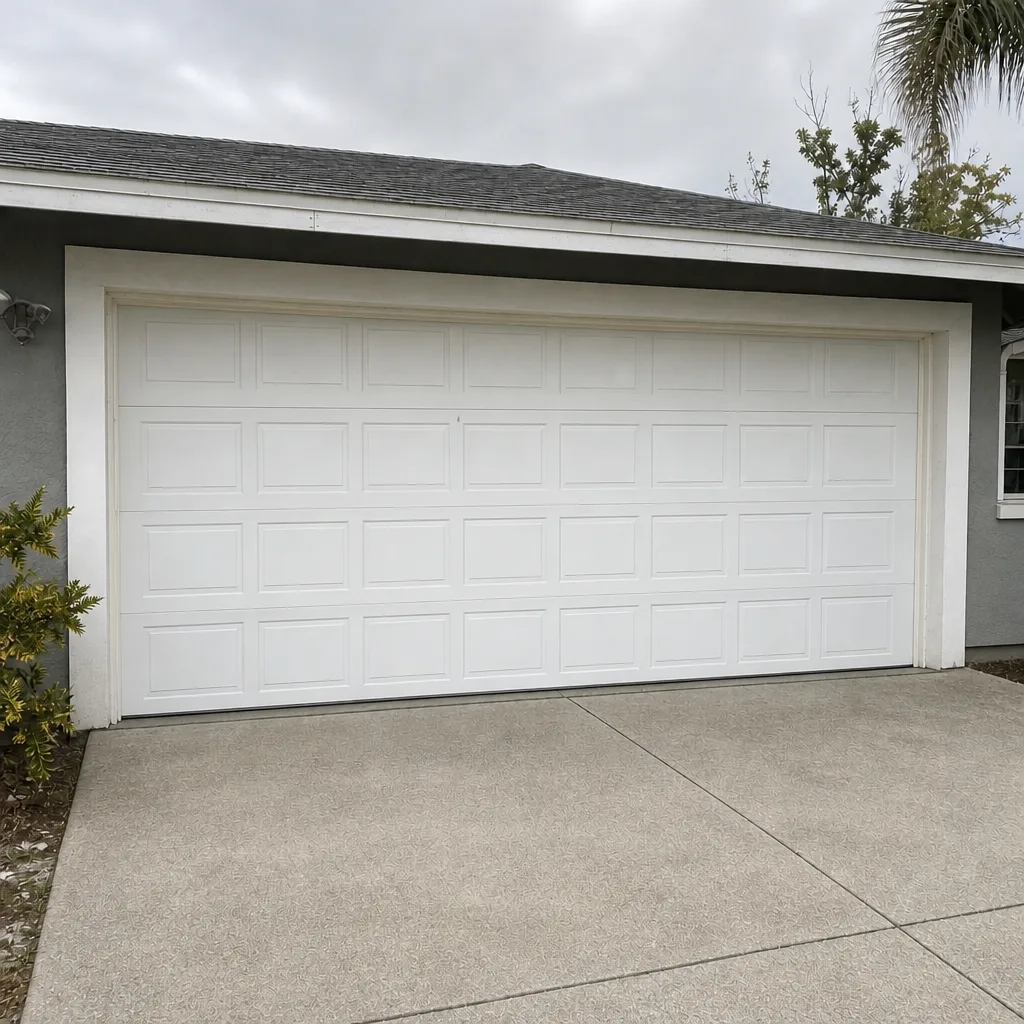 After
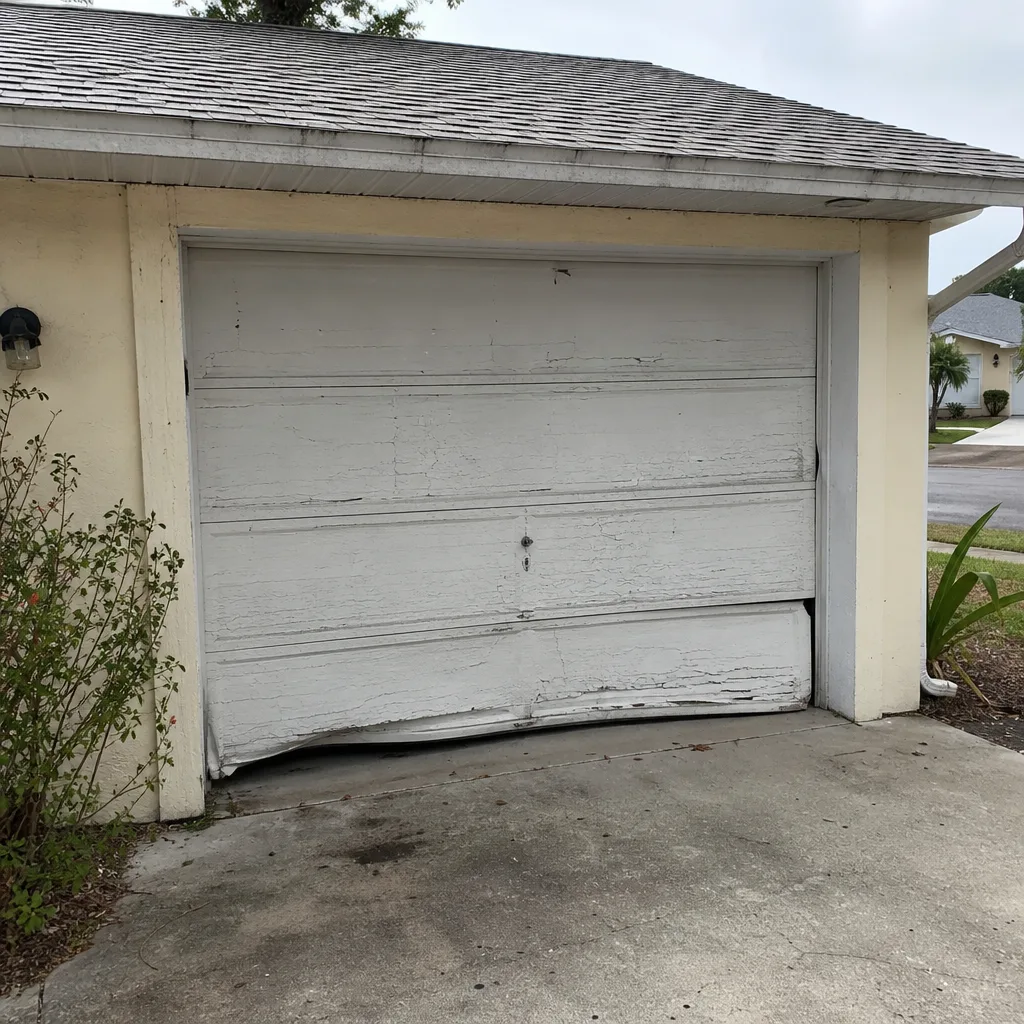 Before
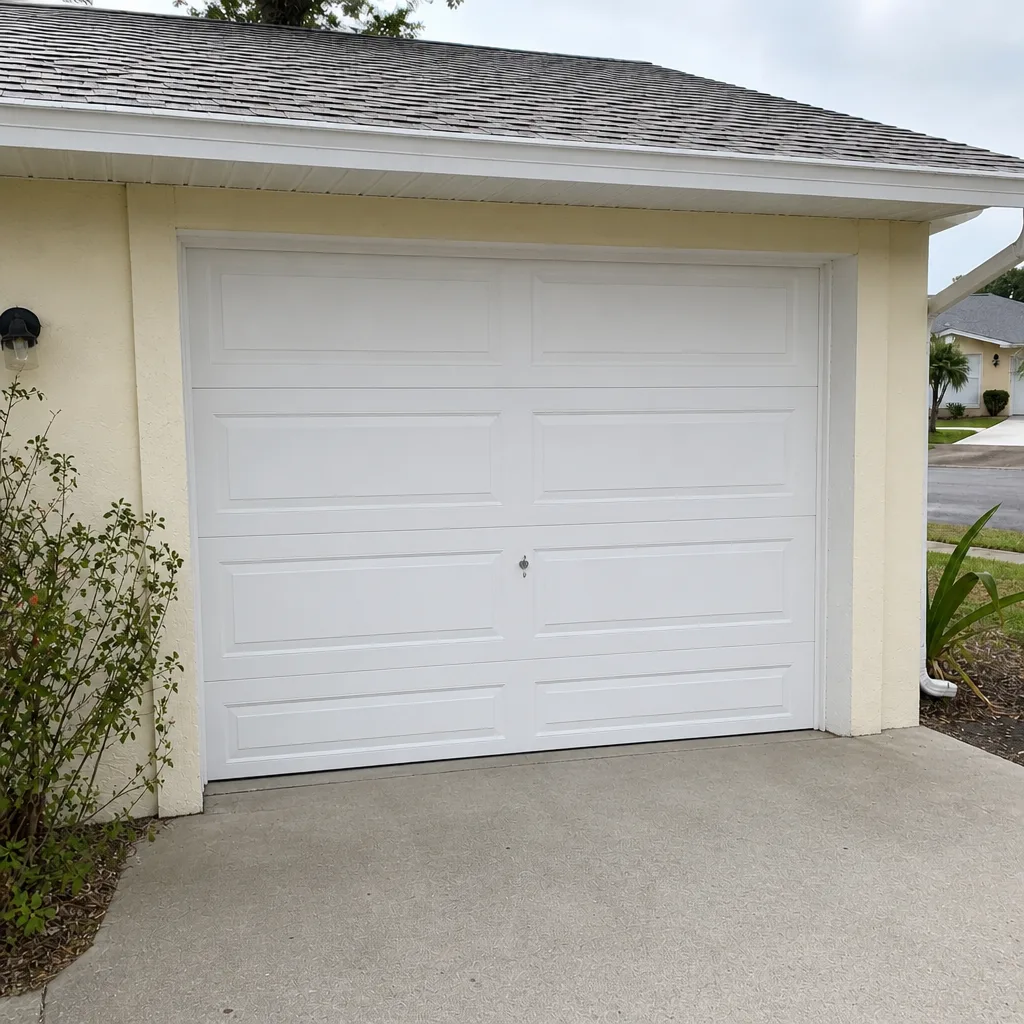 After
When to Call a Professional
Some jobs are safe to handle yourself: clearing debris from the tracks, cleaning and lubricating hardware, re-aiming the safety sensors, and testing the door’s balance by hand. Others aren’t. Call a professional if a spring looks stretched, kinked, or broken; if a cable is frayed or loose; if the door has come off its tracks or is hanging unevenly; if the opener cuts out repeatedly or refuses to close; or if the door has been damaged in a wind event and no longer operates smoothly.
The point of seasonal care is to catch these problems before they turn into emergency calls. If you’ve found something in this guide that you’d rather not handle, that’s what we’re here for. Merritt Island Garage Door Repair Pros offers free estimates in Merritt Island – call (855) 337-1671. We work on the brand you already have, and one call covers repair, opener, spring, or full installation.
Frequently Asked Questions
The best time is December through February, the dry-and-cool window. Humidity is at its lowest, so the new springs settle predictably and the hardware around them isn’t fighting moisture as it cures. That said, a broken spring is a safety issue and shouldn’t wait for the calendar. If a spring has failed, call for a same-day or emergency visit whenever it happens. Call (855) 337-1671 for an exact quote – estimates are free.
A tune-up is priced per job based on the door and what it needs, and the exact figure depends on whether parts like rollers or weatherstripping are replaced. We quote and agree the price before any work starts, so the written estimate is what you pay. Call (855) 337-1671 for an exact quote – estimates are free.
Yes, same-day and emergency service is a real part of what we offer. A door stuck open is a security problem, and a door stuck closed can trap a car or block access, so we prioritize those calls. Call (855) 337-1671 and we’ll get you booked for today if we can. Call (855) 337-1671 for an exact quote – estimates are free.
Probably not. The most common cause of a door that refuses to close in the heat is misaligned safety sensors from thermal expansion. Before you replace the opener, check that the sensors at the bottom of the tracks are lined up and that nothing is in their path. If realignment doesn’t fix it, a technician can sort out whether it’s the sensor, the wiring, or the logic board.
No. We quote and agree the price before any work starts. If the inspection turns up additional work beyond the original scope, we’ll discuss it with you and get your approval before touching anything. The written estimate sets the final price. Call (855) 337-1671 for an exact quote – estimates are free.
The local professional we connect you with is licensed and insured as their state requires. Our technicians have up to 11 years of experience, and we work on the brand of door and opener you already own, including LiftMaster, Chamberlain, Genie, and Raynor. Call (855) 337-1671 for an exact quote – estimates are free.
The Bottom Line
Seasonal garage door care in Merritt Island is about matching the job to the window, not following a generic four-season checklist. The pre-hurricane months are for hardware and weatherstripping checks. The hot, humid months are for watching wood swelling, sensor drift, and opener strain. The post-storm weeks are for immediate safety checks followed by scheduled repairs. And the dry-and-cool window from December through February is the best time for spring replacement, cable work, and repainting, a window most homeowners never use. Keep that rhythm and your door lasts longer, runs quieter, and fails less often at the worst possible moment.
Written by the team at Merritt Island Garage Door Repair Pros.