Last updated November 23, 2026
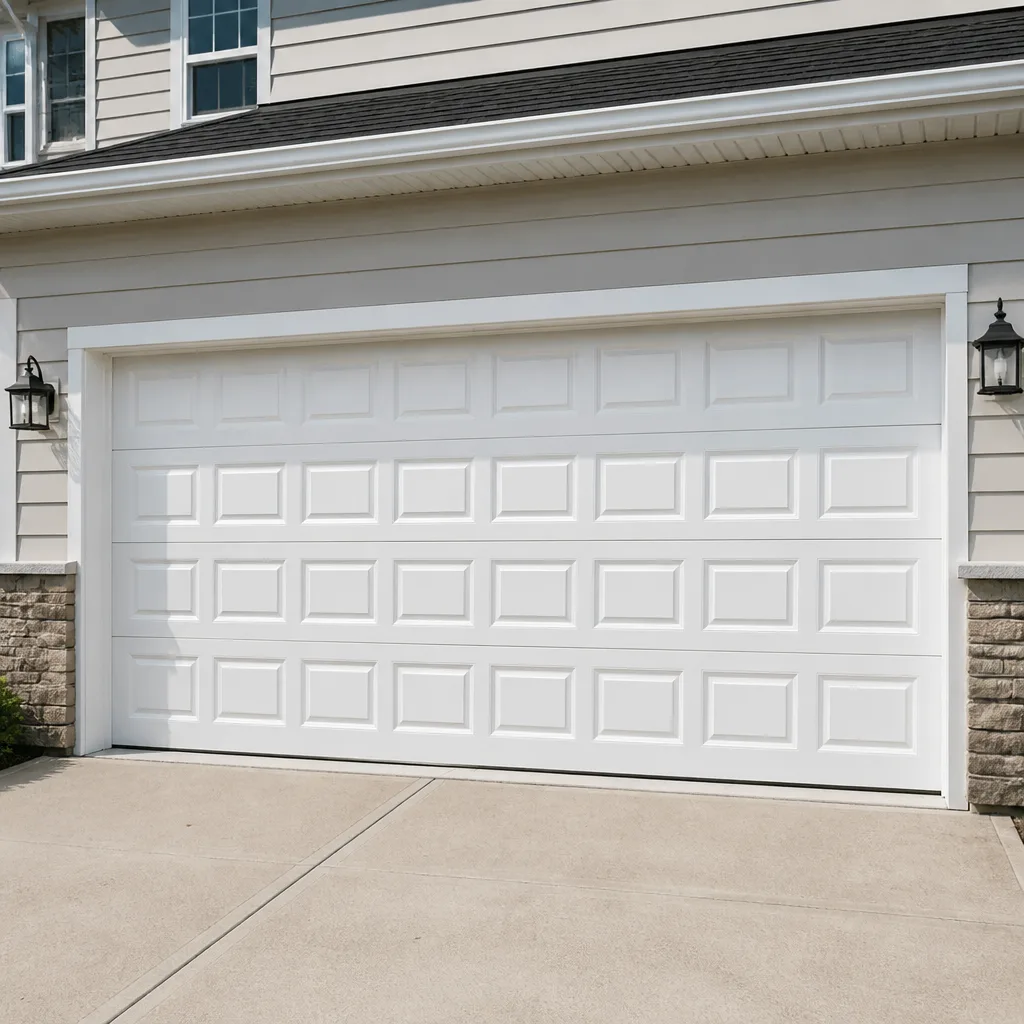 Raised-panel steel
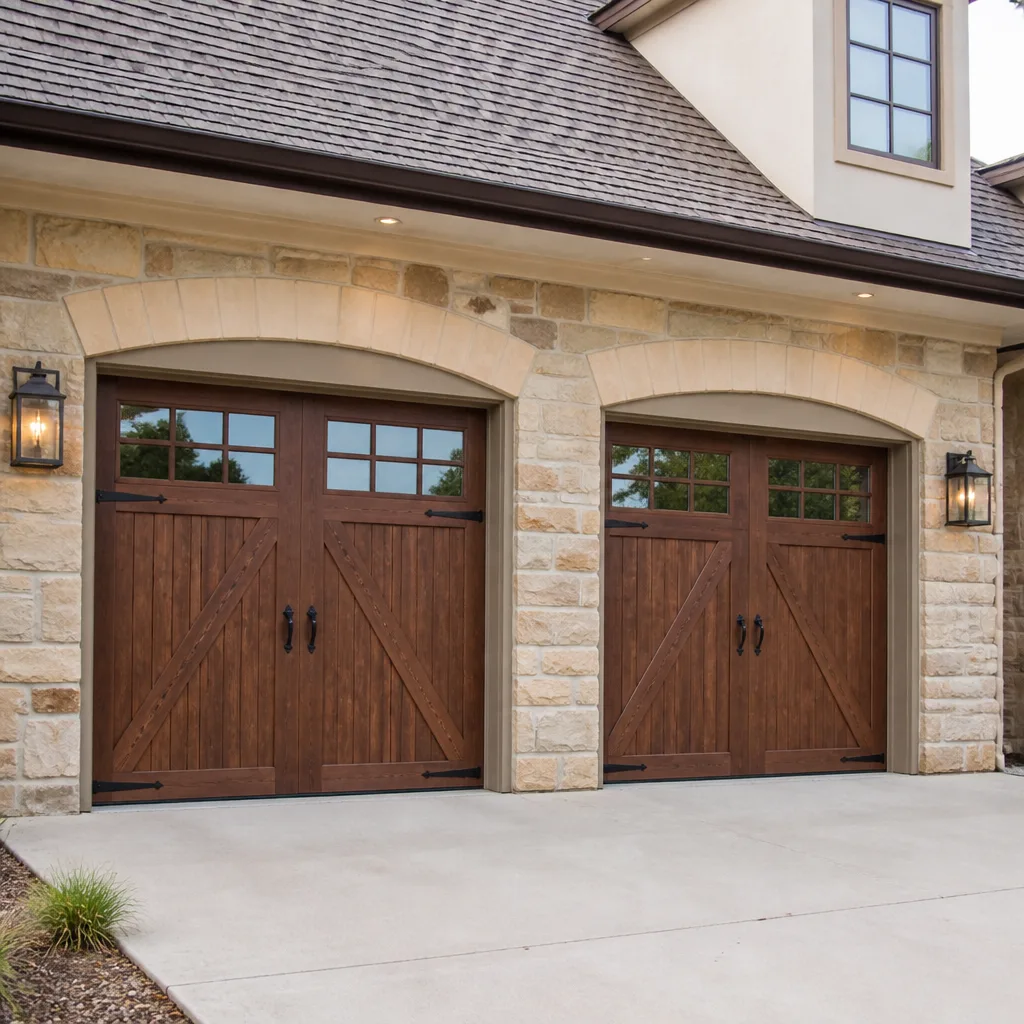 Carriage house
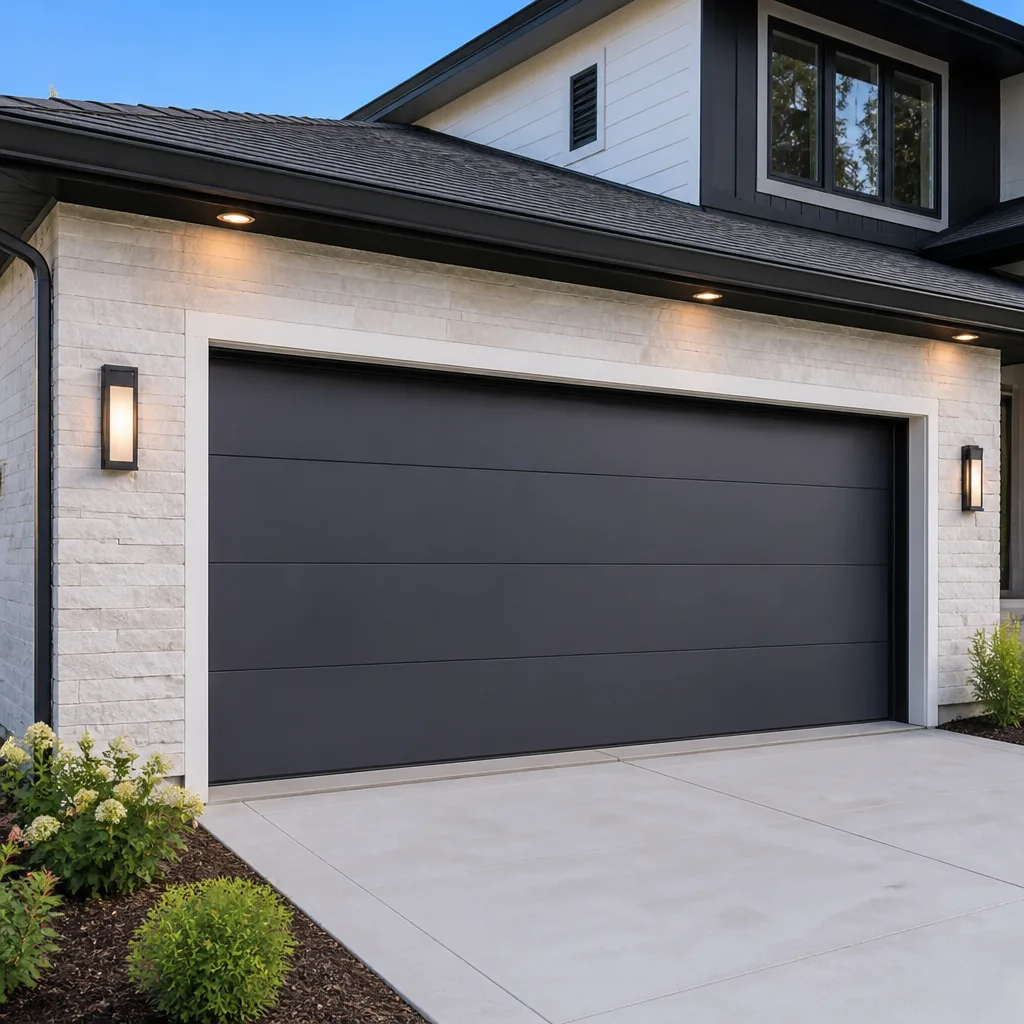 Modern flush
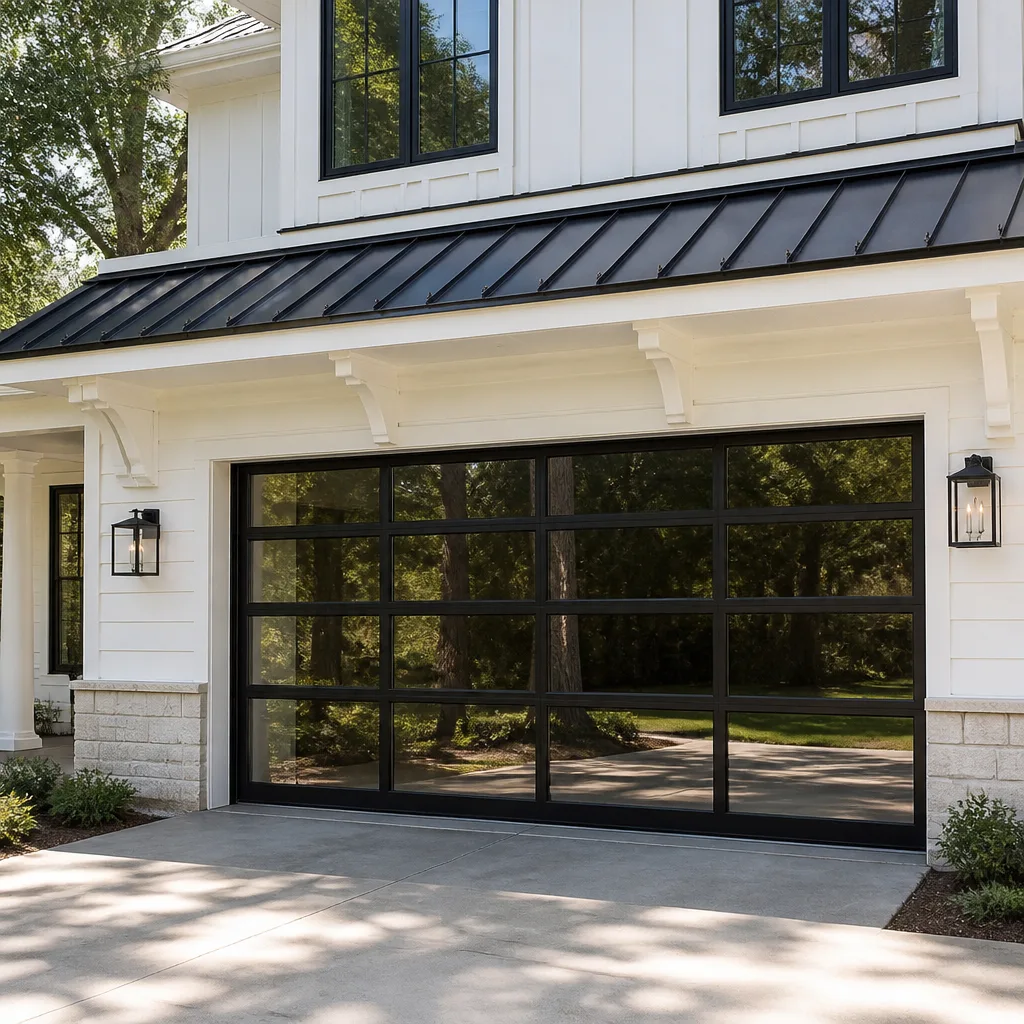 Full-view glass
 LiftMaster openers
 Chamberlain openers
Full 25-point door and opener safety check with every visit - springs, cables, rollers, tracks, and your LiftMaster or Chamberlain opener included
You get a price before we start. It does not change when the pro arrives.
Get your free estimateThe Complete Guide to Garage Doors in Merritt Island
Most garage door advice you’ll find online was written for a house in Ohio. It assumes snow, ice and a sealed-up winter house. None of that applies to a Merritt Island garage. Here, a door fights year-round humidity, intense sun and the airborne salt that rides in off the Indian River Lagoon. That salt is the part almost every generic guide leaves out. It’s why a steel door installed with the wrong hardware can start rusting at the hinges and bottom brackets well before the finish film even thinks about fading. This guide treats Merritt Island’s climate and wind exposure as the starting point, not a footnote. You’ll learn which materials last here, what wind-load ratings actually mean for Brevard County, how to compare lifecycle cost instead of sticker price, which opener drives survive the humidity, and how often a lagoon-side home really needs service.
Quick Answer
The best garage door for a Merritt Island home is one built for a humid, salt-air, hurricane-exposed climate: aluminum or fiberglass for corrosion resistance, or steel with galvanized and corrosion-resistant hardware, rated for the local wind zone. Choose belt-drive openers in humid air for quieter, smoother operation, and plan on servicing springs, rollers and hardware more often than an inland homeowner would. The written estimate is what sets your final price, and the local professional you work with quotes that before any work starts.
Styles & brands we work with
- Raised-panel steel
- Carriage house
- Modern flush
- Full-view glass
- LiftMaster openers
- Chamberlain openers
Table of Contents
- Why Merritt Island Is a Different Garage Door Climate
- Which Door Materials Hold Up on the Island
- Florida Building Code and Wind-Load Ratings for Brevard County
- Lifecycle Cost: Comparing Materials in Humidity and UV
- Choosing an Opener for High-Humidity Air
- How Often Your Door Really Needs Service Near the Lagoon
- Common Failures and What Repair Involves
- Buying a New Door: A Step-by-Step Process
Why Merritt Island Is a Different Garage Door Climate
A garage door on Merritt Island lives in conditions that inland Florida homes simply don’t see. The island sits between the Indian River Lagoon and the Atlantic, and that geography sets the daily rules: warm, damp air most of the year, strong sun on west-facing doors, and salt carried on the breeze. Salt doesn’t need a splash to do damage. Airborne chloride settles on hinges, track, springs and bottom brackets, then the humidity holds the moisture against the metal. That combination is what drives corrosion.
Wind is the second variable. Merritt Island takes hurricane-season exposure that shapes both code and common sense. A door that performs fine on a calm day can rack, bow or lose a panel when a strong storm pushes against it – which is why wind rating isn’t a technicality here, it’s central to the buying decision.
What this means in practice
- Hardware corrodes first. Hinges, rollers, springs and bottom brackets fail before the door’s face does. Corrosion-resistant or galvanized hardware extends the whole door’s life.
- Lubrication dries out faster than you’d think. Heat and humidity work against the grease in the rollers and hinges, so a schedule built for a mild climate runs behind here.
- UV is relentless. A door in full afternoon sun takes a beating on paint, seals and any plastic or rubber parts.
- Storms test the install, not just the door. Correct anchoring and a proper wind-rated system matter more on an exposed island than in a sheltered subdivision.
None of this makes Merritt Island garages hard to own. It just means the right choices here are a little different from the generic checklist. The rest of this guide walks through each one.
Which Door Materials Hold Up on the Island
Material choice is the single biggest lever on how a door ages in Merritt Island’s air. The three families that matter most are steel, aluminum and fiberglass, plus wood for a specific kind of buyer. Here’s how they behave under salt, humidity and sun.
- Aluminum: The most naturally corrosion-resistant of the common metals. It won’t rust the way steel does, and it holds paint well. It’s lighter, which is easier on springs and openers. The trade-off is that aluminum dents more easily than steel, so it suits homeowners who want low maintenance over maximum impact resistance.
- Fiberglass: Won’t corrode and won’t dent from a stray ball or a bump. It resists salt air well and can be finished to look like wood. Panels can crack under a hard impact, though, and lower-grade fiberglass can chalk or fade in heavy UV, so finish quality matters.
- Steel: The most common door in Florida, and a good one – if the hardware is right. A steel door is only as good as its fasteners and finish. Galvanized or otherwise corrosion-resistant hinges, brackets and rollers are what keep a steel door alive on the island. Cheap hardware will rust and stain the door even when the steel panel itself is fine.
- Wood: Beautiful and warm, but it’s the highest-maintenance choice in a humid, salt-air climate. It needs regular sealing and attention to keep moisture from swelling and warping it. Wood suits a homeowner who genuinely wants to maintain it, not one who wants to forget it.
A note on brands and hardware
Material matters, but the maker’s hardware spec matters just as much. A Wayne Dalton steel door with the right corrosion-resistant components performs very differently from a bargain door with bare fasteners. When you’re comparing doors, ask specifically what the hinges, rollers and bottom brackets are made of, not just what the panel is. That question is where the real durability lives in Merritt Island’s air.
Florida Building Code and Wind-Load Ratings for Brevard County
Wind-load ratings are where a lot of Merritt Island homeowners get quietly caught out. The common misconception is that any door rated for Florida is rated for here. That’s not how it works. Wind-load requirements are set by location, and a door specified for an inland address isn’t automatically rated for an exposed island site. A door rated for a sheltered spot won’t necessarily meet what Merritt Island’s wind zone calls for.
What “wind-rated” actually means
- The door, its track, its reinforcement and its anchoring are rated as a system. A strong panel on weak anchoring isn’t a wind-rated installation.
- Exposure category and building height change the number a door has to meet. Two homes a short drive apart can have different requirements.
- Permits and inspections confirm the install. Most jurisdictions require a permit for a new or replaced garage door, so ask your city’s building department what applies to your address before you buy.
Step-by-step: getting the wind rating right
- Confirm the requirement for your exact address. Ask the local building department, or have the professional handling your install confirm it, because exposure varies across the island.
- Match the door system to that number. The rating has to cover the door, hardware and anchoring, not just the panel.
- Insist on a proper install. Correct fasteners, correct reinforcement and correct anchoring are what make the rating real.
- Keep the documentation. Product approval and installation records are worth holding onto.
We work on wind-rated systems from Clopay, Amarr and Raynor regularly, and the difference between a properly specified install and a mismatched one shows up the first time a real storm pushes against the door.
Lifecycle Cost: Comparing Materials in Humidity and UV
Purchase price is the number everyone compares, and it’s the least useful one. A door in Merritt Island faces years of humidity, UV and salt, and the material that’s cheapest up front is often the most expensive over a decade of maintenance. Here’s a realistic way to weigh it, using the cost ranges below as a starting point. These are typical estimates only, and the written quote from your local professional is what sets the final price.
- Repair: Typically around $150 to $400 depending on the part and the door, most often well under $400 for common fixes.
- New opener installed: Roughly $300 to $800 depending on drive type and features.
- One torsion spring, replaced: Around $180 to $340 for a single spring. Springs are usually paired, and a matched pair runs about twice that.
- New door, installed: Broadly $900 to $4,000+ depending on material, size and wind rating, with aluminum, fiberglass and steel each landing in different parts of that range.
How the math shifts in humidity and sun
The cheapest steel door with basic hardware may need hinge, roller and bracket attention sooner in salt air, and it holds the highest risk of early rust. An aluminum or well-specified steel door costs more up front but asks for less ongoing attention and holds its finish longer in UV. Wood sits at the far end: gorgeous, but it demands regular sealing work that adds up over a decade. A fiberglass door resists both salt and dents, so its upkeep is mostly about finish quality. Over the life of the door, the material that resists corrosion and sun usually wins on total cost even when it loses on sticker price. If you’re weighing repair versus replacement, garage door repair is often the smarter call until the door’s panels, structure or safety are compromised.
Choosing an Opener for High-Humidity Air
Opener drive type matters more in humid air than most buyers expect. The three common drives behave differently when the air is damp and warm most of the year, and the right pick for a Merritt Island garage leans toward smooth, quiet, low-wear operation.
- Belt drive: The quietest and smoothest, with a steel-reinforced rubber belt. Belts don’t need greasing, they don’t corrode, and they’re gentler on the door over years of daily cycles. For a humid climate, this is usually the most trouble-free pick, and it’s the best fit for a door under living space.
- Chain drive: Durable and proven, but noisier. The steel chain needs periodic lubrication to run smoothly, and in humid air that maintenance is easy to fall behind on. It lasts a long time but demands more attention.
- Screw drive: Fewer moving parts than chain, and generally reliable. It’s noisier than belt and can get louder with age. Its simpler mechanism handles humidity reasonably, but it’s not as smooth as a belt.
Smart features and brand support
If you want app control, LiftMaster and the Chamberlain/myQ ecosystem cover the two most common connected systems, so a modern Wi-Fi opener here can be monitored and operated from a phone. Older manual setups from Craftsman and Genie are just as common on the island, and we service both the connected and the traditional. When an opener acts up rather than needs replacing, garage door opener repair usually solves it without a new unit.
How Often Your Door Really Needs Service Near the Lagoon
Here’s where “more frequent” needs real numbers. A homeowner in a sheltered inland spot might service hardware and lubrication twice a year. On Merritt Island, closer to the lagoon with salt-laden air, plan on checking hardware, lubricating rollers and hinges, and inspecting for corrosion roughly every three to four months. In practice that means two to three additional visits’ worth of attention per year compared with an inland schedule.
What to check, and when
- Every three to four months: lubricate hinges and rollers, look for rust on fasteners and bottom brackets, and listen for new noise in the opener or door.
- Before and after storm season: confirm the door is balanced, the safety reverse works, and the anchors and reinforcement are intact. This is a check, not a DIY repair.
- Annually: have a technician look at springs, cables and the balance of the door, since these are the parts that fail without much warning and are the dangerous ones to touch.
A door facing full afternoon sun will show finish wear sooner, so west-facing garages benefit from inspecting seals and paint on a similar cadence. If you’re close to the water, keep a light eye on the bottom brackets, which sit lowest and take the most airborne salt. The right question isn’t “does my door need service this season?” but “does my Merritt Island door need service this quarter?”
Common Failures and What Repair Involves
What actually breaks on a Merritt Island door tends to cluster. Corrosion weakens hardware; humidity and missed lubrication wear the rollers; and springs, the hardest-working parts on any door, eventually reach their cycle limit. An opener that strains or reverses for no reason is a frequent complaint too. garage door spring repair is the repair we treat with the most caution, because springs are stored energy under heavy tension.
Safety note on springs and cables
Torsion and extension springs and their cables are the genuinely dangerous component of any garage door. They can release suddenly and with serious force, and inexperienced adjustment is how people get badly hurt. We handle spring repair with trained technicians and the right tools, and we’d steer any homeowner away from adjusting springs or cables themselves. What you can safely do is listen, watch and call – not touch.
Other repairs we see regularly
- Openers: logic board faults, dead sensors, worn gears and remote issues across brands from Genie to LiftMaster.
- Panels and tracks: dents from impacts, bent track after a storm, and misaligned doors.
- Hardware: rusted hinges, worn rollers and corroded bottom brackets, common in salt air.
- Weather seals: degraded by sun and heat, letting humidity and pests in.
When a door won’t open or close and it’s creating a safety or security problem, emergency service is a real offering here, not a marketing line. Call and we’ll diagnose it, quote the repair, and only then start work.
Buying a New Door: A Step-by-Step Process
Buying a door is a measured project, not an emergency, so the pace is different from a repair. The right sequence keeps you from paying for a door that fights the climate or misses the wind rating.
- Confirm your wind requirement and permit. Check with the city’s building department for your address, and confirm the door system meets the wind zone before choosing materials.
- Choose material for the climate. Weigh aluminum and fiberglass for corrosion resistance, steel with proper hardware for value, or wood if you’ll commit to upkeep.
- Match the opener to the door and the air. Belt drive for quiet, low-maintenance operation; chain or screw if you prefer the trade-offs. Confirm the opener handles the door’s weight.
- Get a free measure and a written price. Because the door is ordered for your opening, you’ll get a measurement and a written estimate that sets the final price before any work is scheduled.
- Have it installed to the rated system. Correct fasteners, reinforcement and anchoring are what make the wind rating real.
- Set up a maintenance rhythm. Three-to-four-month hardware checks keep a new Merritt Island door out of trouble.
We install doors from Amarr, Raynor, Clopay and Wayne Dalton with wind ratings that fit local requirements, so you’re not handed a door specified for a different part of the state.
Common Mistakes to Avoid
- Buying a door with bare steel hardware. On Merritt Island, basic fasteners and bottom brackets rust fast and stain the door. Insist on galvanized or corrosion-resistant hardware.
- Assuming any Florida-rated door fits here. Wind-load requirements are location-specific. A door rated for an inland address isn’t automatically rated for an exposed island site, so confirm the spec for your exact address.
- Skipping lubrication because “it’s Florida, not winter.” Heat and humidity dry grease out and speed wear. Missing the three-to-four-month schedule quietly shortens the door’s life.
- Adjusting springs yourself to save a call. Springs and cables are dangerous under tension. This is the repair you pay an expert for.
- Comparing sticker price only. The cheapest door often costs the most over a decade in maintenance and early hardware failure. Look at lifecycle cost in humidity and UV.
- Putting a chain-drive opener under a bedroom. Belt drive is quieter and easier on the door, which matters even more in daily use.
- Forgetting the permit. Most jurisdictions require one for a new or replaced door. Ask the building department and keep the paperwork.
See the difference
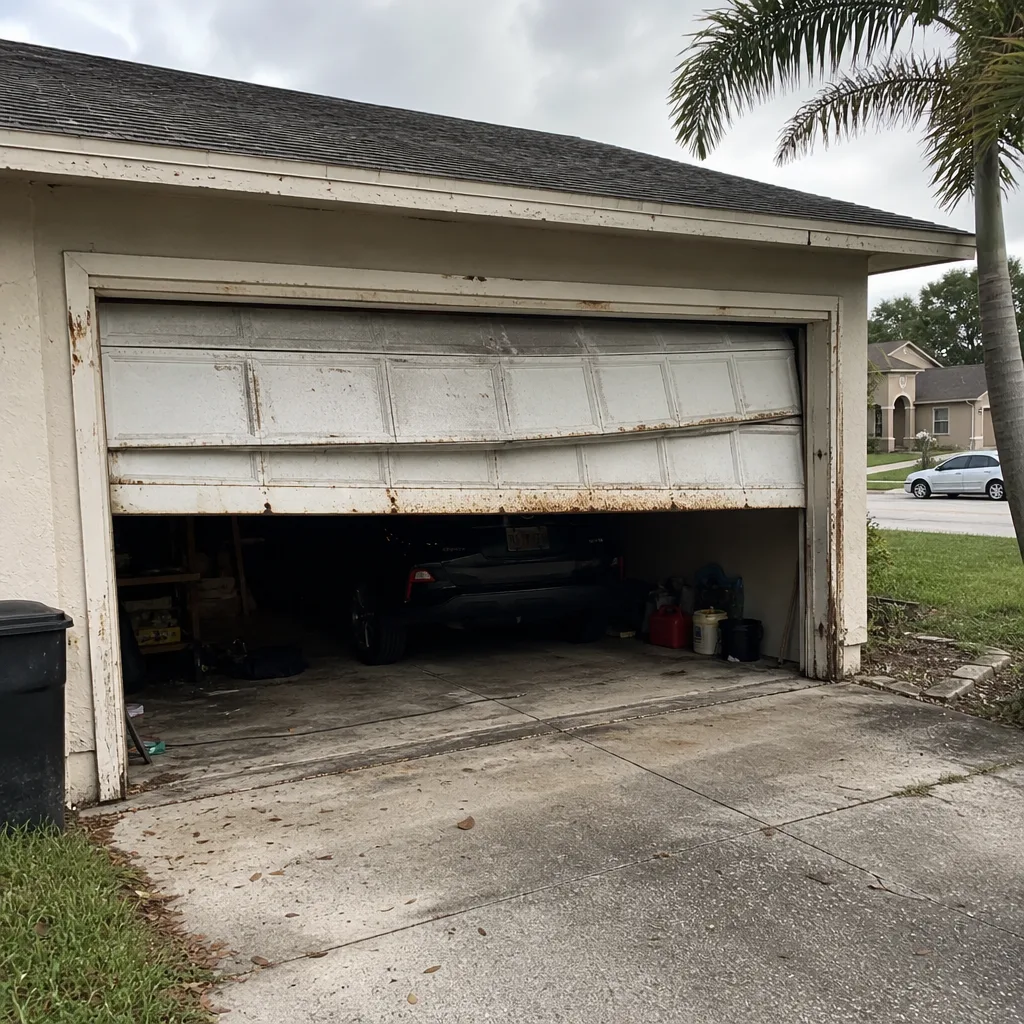 Before
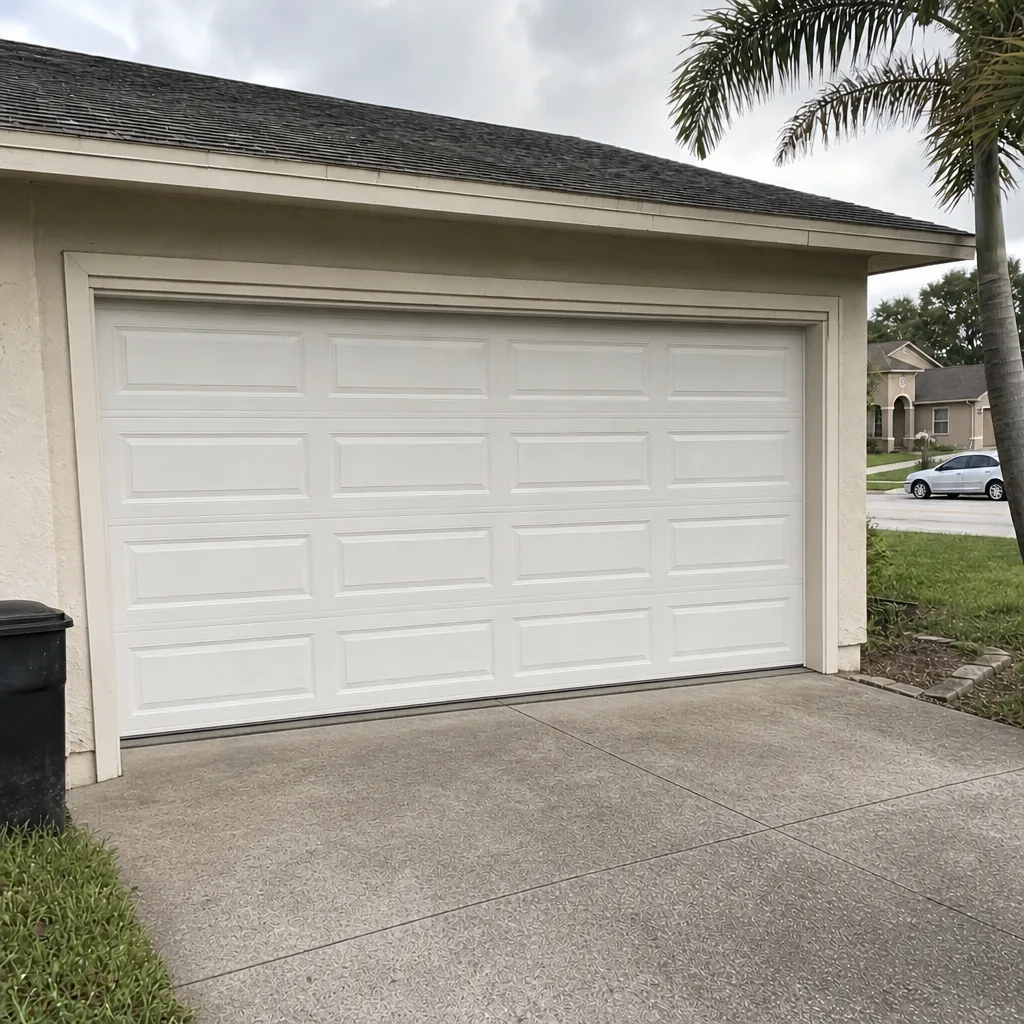 After
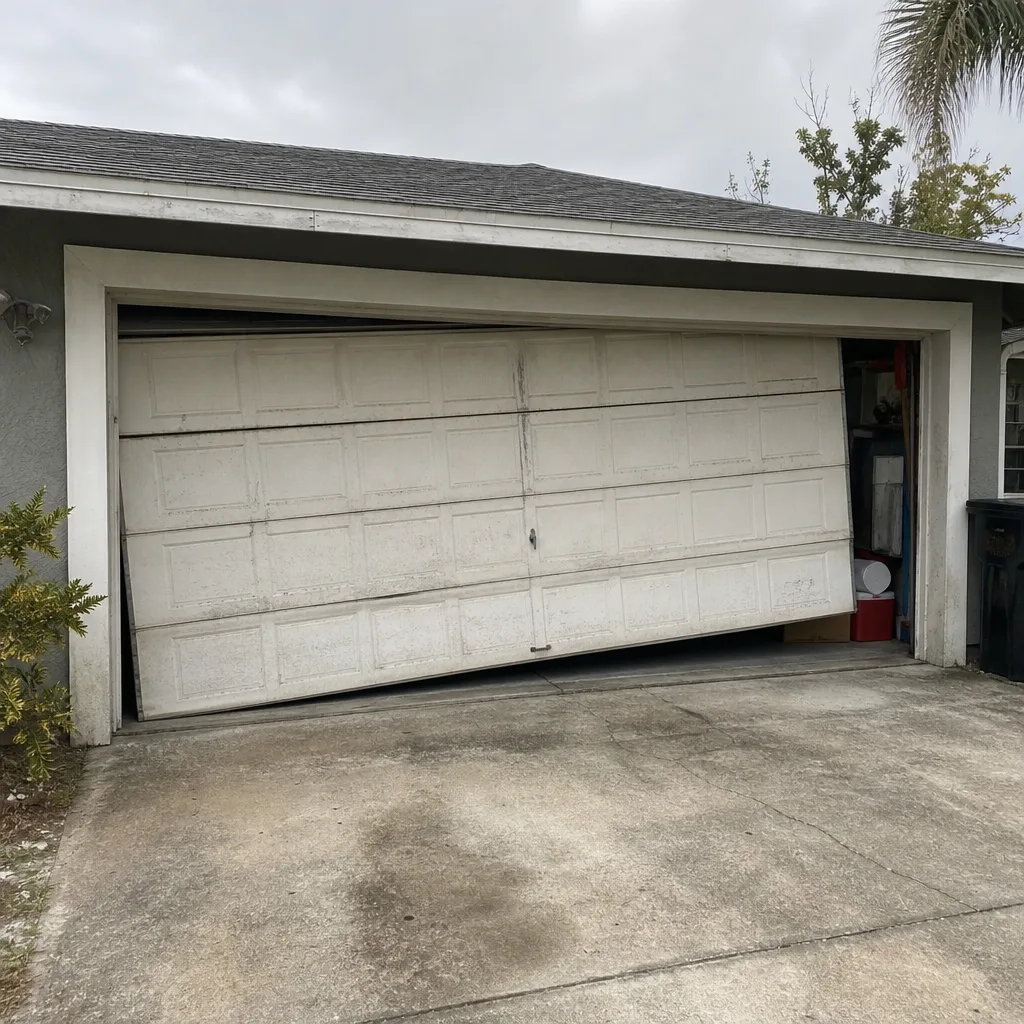 Before
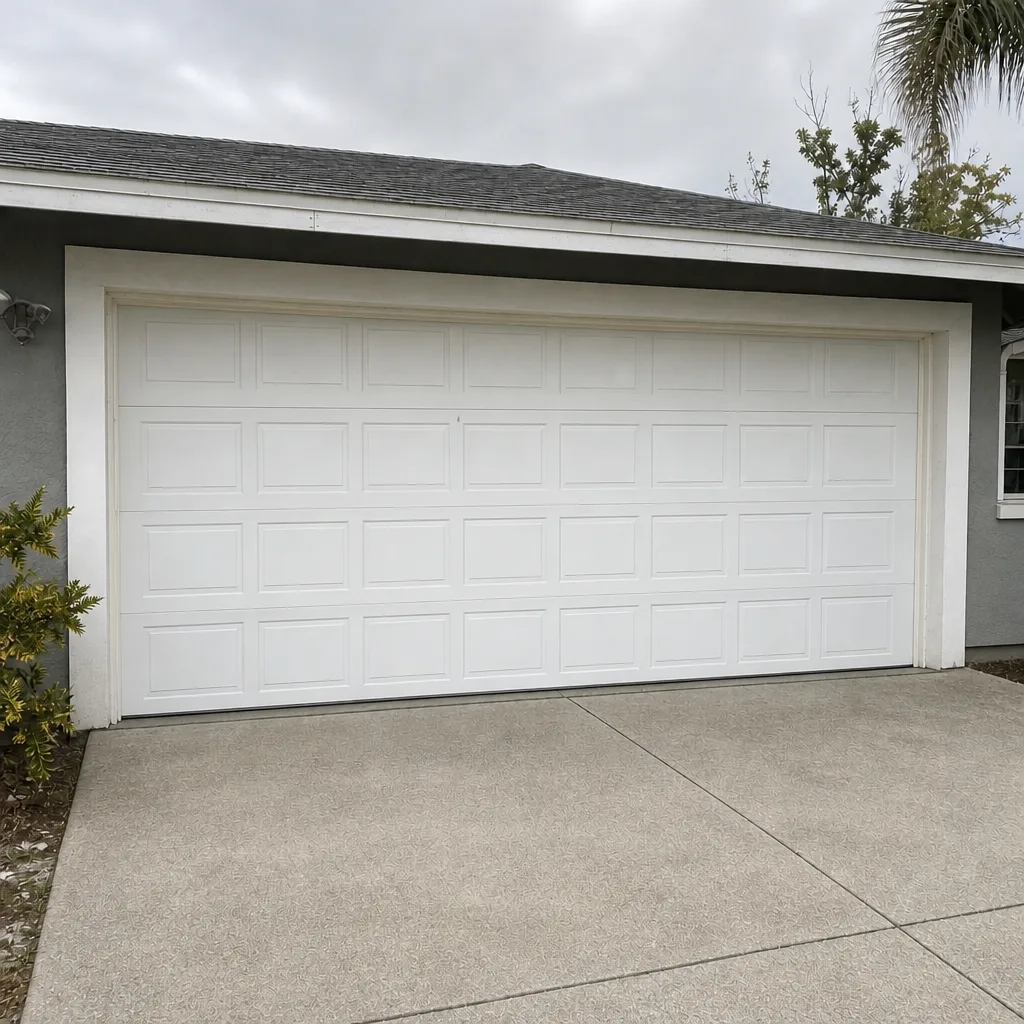 After
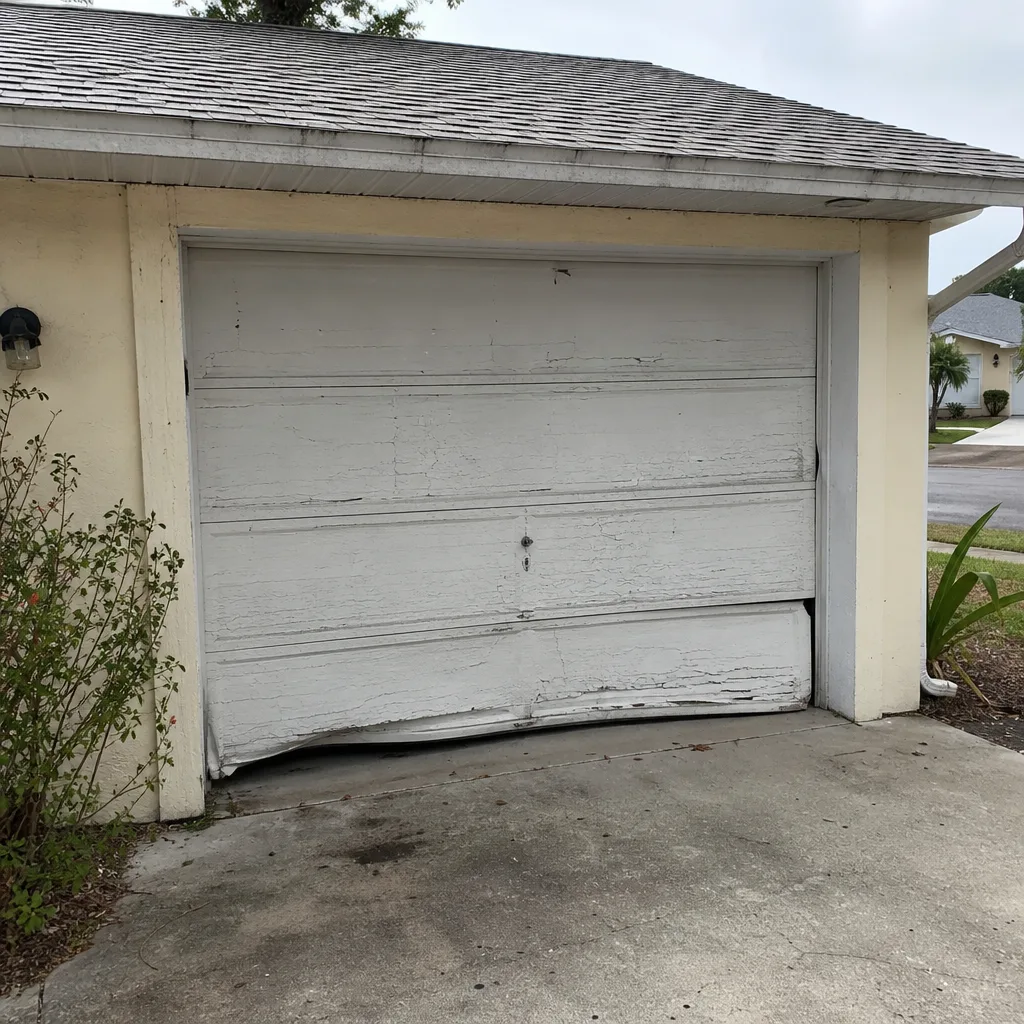 Before
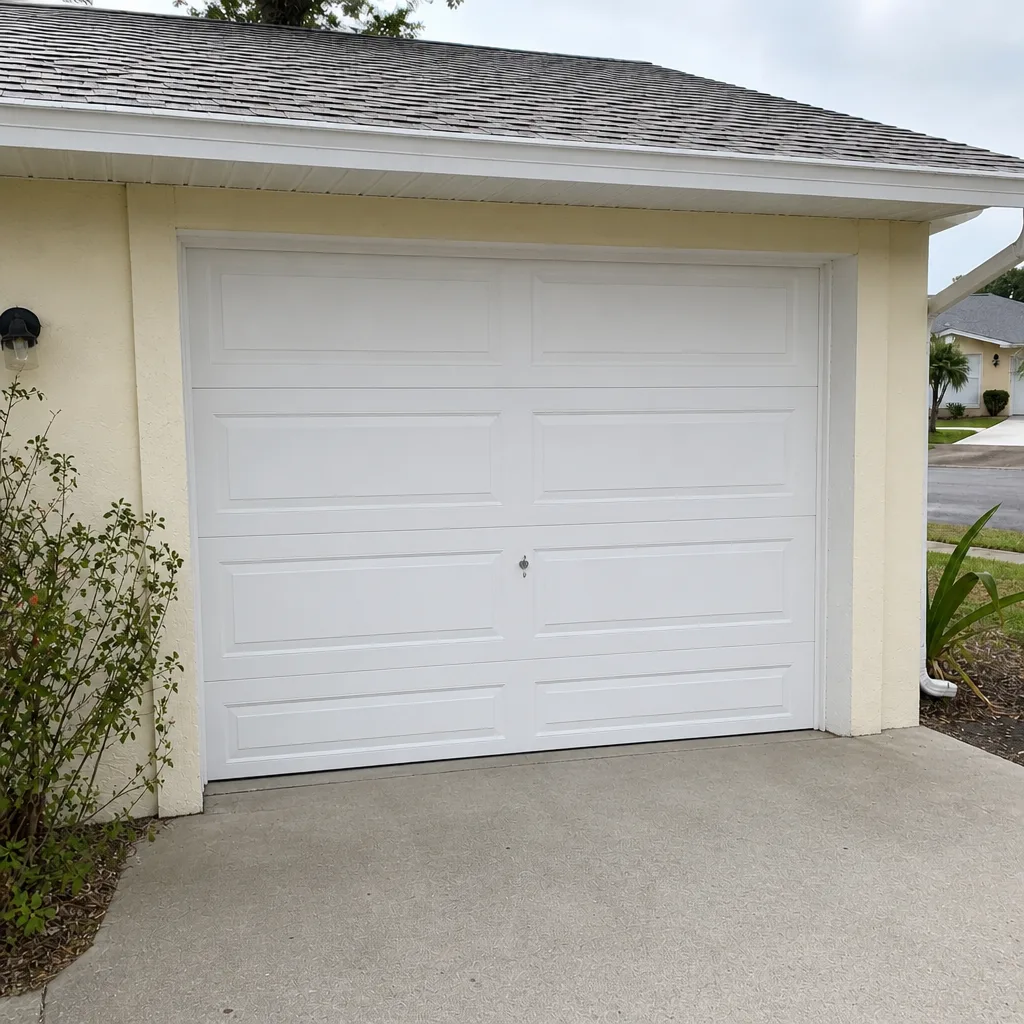 After
When to Call a Professional
Some situations clearly need a trained technician, and it’s worth knowing them. Call when a door won’t open or close and it’s blocking your main entry or leaving the garage insecure – that’s what emergency service exists for. Call if you see or hear a spring snap, or if the door feels unusually heavy or slams down. Call for any work on springs or cables, full stop. Call if the opener reverses for no reason, strains, or stops responding. Call if a storm has bent the track or racked the door. And call for a free measure and written quote when you’re planning a new door or weighing a repair against replacement. Merritt Island Garage Door Repair Pros offers free estimates in Merritt Island – call (855) 337-1671. The local pro you work with is licensed and insured as the state requires, quotes the price before work begins, and stands behind the result. Our technicians have up to 11 years of experience.
Frequently Asked Questions
New garage doors in Merritt Island typically run about $900 to $4,000+ installed, depending on material, size and wind rating, with aluminum, fiberglass and steel landing in different parts of that range. The written estimate sets your final price, and if you’re not sure whether a new door is needed, ask whether garage door repair would solve it first. Call (855) 337-1671 for a free estimate.
No – springs are the most dangerous part of a garage door and should only be handled by trained technicians. Torsion and extension springs store enormous force and can release suddenly. A single spring replacement in Merritt Island typically costs about $180 to $340, and a matched pair runs about twice that. Call (855) 337-1671 for a safe, quoted repair.
Aluminum and fiberglass resist salt air and humidity best, while steel with galvanized, corrosion-resistant hardware offers strong value if specified correctly. Wood is beautiful but needs the most upkeep in this climate. The local professional you work with can match a material and wind rating to your address and quote it before work starts.
Most jurisdictions require a permit for a new or replaced garage door, so ask your city’s building department what applies to your address. The door system should also meet the wind-load requirement for that location. Confirming both before you order keeps the install compliant. Call (855) 337-1671 with questions about the process.
A door near the Indian River Lagoon should get hardware, lubrication and corrosion checks about every three to four months – roughly two to three extra touchpoints a year compared with an inland schedule. Springs, cables and balance are worth an annual technician review. Call (855) 337-1671 to book an inspection.
Belt drive is usually the best pick in humid air: it’s quiet, doesn’t corrode, needs no greasing and is gentle on the door. Chain is durable but noisier and needs lubrication; screw has fewer parts but isn’t as smooth. We service LiftMaster, Chamberlain, Genie and Craftsman systems, modern or traditional. Call (855) 337-1671 for a free estimate.
The Bottom Line
A garage door in Merritt Island lives in a climate and wind zone that generic guides ignore. The doors that last here share three traits: corrosion-resistant hardware, a wind rating that matches the actual address, and a maintenance rhythm closer to quarterly than twice a year. Compare materials on lifecycle cost, not sticker price. Pick a belt drive if quiet, low-maintenance operation matters. Treat springs and cables as work for trained technicians only. And get the price in writing before any work begins. If you’re at the Merritt Island Garage Door Repair Pros stage of deciding between repair and replacement, or a door just failed, one call covers repair, opener, spring or full installation. Call (855) 337-1671 for a free estimate – same-day and emergency service are available when a door can’t wait.
Written by the team at Merritt Island Garage Door Repair Pros.